Roleplaying Queer Futures: How “Paralives” Is Rewriting Life Sims With Explicit LGBTQ+ Inclusion
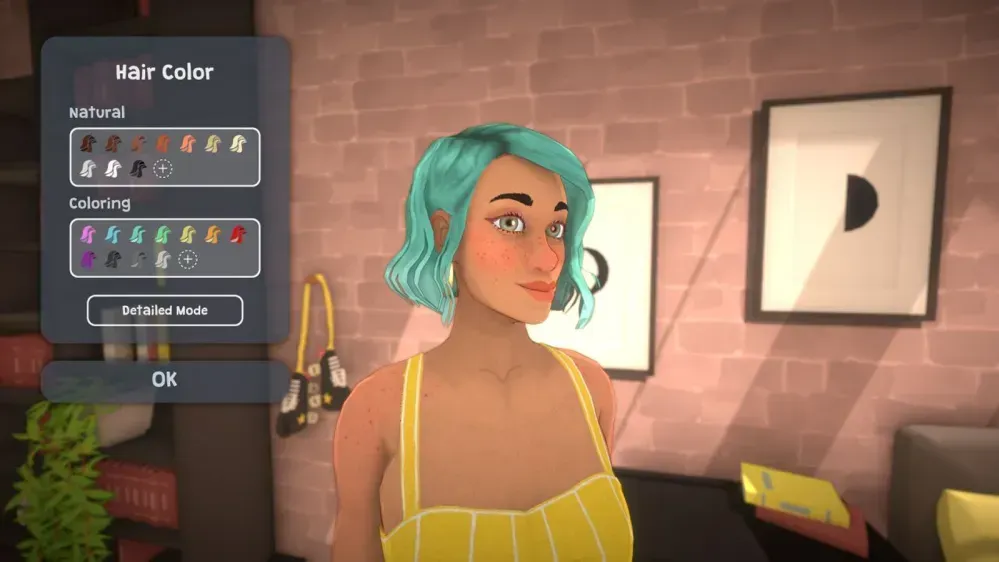
Photo Credit: Paralives Studio
by Chris Tremblay Mar 17
8 MIN READ
When life simulation game “Paralives” enters early access on Steam in late May 2026, it will do so under unusually clear expectations: this is a game that has publicly and repeatedly promised to be “very, very queer-inclusive. ” From its earliest social media teasers to dedicated community Q&A sessions, developer Paralives Studio has framed diversity in gender, sexuality, and relationships not as an optional feature but as a foundational pillar of its design.
“Paralives” is an independent life simulation and sandbox game under development by Paralives Studio, a small Canadian team led by creator and programmer Alex Massé. The title allows players to build homes, neighborhoods, and communities, then guide the lives of virtual characters—called “Parafolks”—through careers, relationships, and everyday activities, in a structure broadly comparable to the long‑running “The Sims” franchise.
The game is planned as a PC release, with early access launching on the digital platform Steam on 2026-05-25, according to a preview of queer‑inclusive games for the year published by LGBTQ+ outlet Pride. Paralives Studio has consistently promoted the title as a single‑purchase game without paid expansion packs, an approach that aims to keep core features—including identity and relationship options—available to all players without additional cost.
Visually, “Paralives” uses a colorful, stylized art direction with soft shading and rounded forms, giving the world and its inhabitants a painterly look that contrasts with more photorealistic life sims. Mechanical highlights in early previews include a highly flexible build mode with adjustable walls, furniture scaling, and detailed object placement, as well as character‑creation tools that foreground body diversity and personality traits.
From a representation standpoint, “Paralives” stands out less for adding one or two identifiable LGBTQ+ characters and more for the way it structurally decouples gender, appearance, and attraction, letting players define Parafolks across a broad spectrum of identities and relationships.
In public feature lists and community posts, Paralives Studio has described several inclusive systems:
- The character creator is designed to allow a wide range of gender presentations, including hairstyles, clothing, and body types that are not locked to a binary male/female category.
- Players can set pronouns separately from body type or voice, enabling non‑binary and gender‑diverse Parafolks whose pronouns align with their identities rather than with rigid character templates.
- Romantic and sexual attraction is not limited to heterosexual pairings, and promotional materials have highlighted the ability to form queer relationships between Parafolks across genders.
- Relationship structures are being developed to support varied dynamics, with the studio indicating that it wants to accommodate different forms of partnership beyond traditional monogamous couples, though details may continue to evolve throughout early access.
In its 2026 preview of lesbian and sapphic games, Pride described “Paralives” as a “very, very queer-inclusive” indie life sim and noted that the developers had “gone out of their way to highlight queer relationships and dynamics in their marketing, ” signaling that LGBTQ+ content is an explicit selling point rather than incidental background flavor.
That marketing has included developer diaries, feature breakdowns, and social posts emphasizing that queer players will be able to build “second queer lives” within the game’s universe, language that Pride echoed when expressing anticipation for the title’s launch.
Unlike narrative‑driven titles that follow a fixed protagonist, “Paralives” leans into player‑authored storytelling, which shifts representation from individual characters to the tools players receive. In this model, the inclusion or exclusion of gender‑diverse and queer experiences depends on whether the systems themselves recognize and support those possibilities.
Paralives Studio has repeatedly framed its design choices in terms of autonomy and self‑expression. In FAQ materials, the team notes that one of its goals is to let people “create themselves, their friends, and their communities as faithfully as possible, ” explicitly name‑checking transgender people and non‑binary people as groups they want to see affirmed on screen.
This perspective shapes several aspects of the game:
- Pronoun customization allows players to align language with a Parafolk’s identity, including options beyond standard he/she/they sets, which can be especially meaningful for non‑binary players who rarely see their pronouns normalized in mainstream games.
- Body sliders and clothing options are shared rather than divided into rigid masculine/feminine categories, making it possible to create transgender characters with a range of transition stages or gender expressions without workarounds.
- Open relationship mechanics—including the ability to form queer couples and families—reflect a design philosophy where sexuality is treated as a normal part of the simulation, rather than a special case or unlockable bonus.
By building these choices into early systems, the game positions queer representation not as something added late in development but as a core assumption of how its simulated world works.
Life simulation games have long been important to many LGBTQ+ players, who use them to explore relationships and identities that might feel constrained in offline life. Titles like “The Sims” introduced same‑gender romance options years before they were commonplace in mainstream games, but these features have at times been limited, inconsistent, or dependent on specific expansion content.
Pride’s characterization of “Paralives” as a potential new home for queer players arrives at a moment when some fans have expressed concern that queer representation in “The Sims” may be more vulnerable to corporate shifts or market pressures. Pride noted that the developers of “Paralives” had “gone out of their way” to spotlight queer relationships, describing this as “refreshing” in contrast to fears that “the days of queer representation in ‘The Sims’ may soon be coming to an end. ”
Broader coverage of LGBTQ+ gaming trends has emphasized that queer players are increasingly seeking games where they are not only present but central to design decisions. A 2024 feature from News Is Out highlighted how games like “Life Is Strange” and “The Last of Us Part II” resonated because they wove queer identities into the heart of their narratives, rather than relegating them to side content. The article argued that such titles have “powerful LGBTQ+ stories” that “explore their characters’ identities and relationships in depth, ” setting a bar for authenticity and care.
“Paralives” approaches the same goal from a systems‑driven angle: instead of one canonical queer protagonist, it offers a framework where queer identities can exist anywhere in the simulated neighborhood, authored by players but grounded in affirming design choices.
Even prior to launch, “Paralives” has developed a visible online community that includes many LGBTQ+ players, modders, and streamers who discuss the game in forums, Discord servers, and on social media platforms like Instagram and YouTube.
Game coverage sites that focus on cozy and inclusive titles have begun to fold “Paralives” into their recommendations. A 2025 roundup of “13 Best LGBTQ+ Cozy Games to Play for Pride” from Cozy Game Reviews highlighted the appetite for calm, relationship‑driven experiences featuring queer characters, pointing to games such as “Wylde Flowers” and “Spirit Swap: Lofi Beats to Match‑3” as examples of how developers can center “gays, theys, aces” within comforting mechanics. While “Paralives” was not yet released at the time of that piece, its emphasis on inclusive, low‑conflict life simulation situates it within the same ecosystem of titles queer players use to find affirmation.
Checkpoint Gaming, which runs a recurring “Queer Game of the Month” feature, similarly observed in early 2026 that the upcoming calendar of explicitly queer games—including small indies and larger productions—suggests a growing demand for titles that “center queer stories and mechanics rather than treating them as afterthoughts. ” In that context, “Paralives” is frequently cited as an anticipated release because of its potential to give queer players long‑term, sandbox‑style representation comparable to what “The Sims” has historically provided.
The arrival of “Paralives” comes amid broader industry shifts toward more explicit LGBTQ+ inclusion. Major narrative‑driven titles like “The Last of Us Part II” and “Life Is Strange” have foregrounded lesbian and bisexual protagonists, and games such as “The Outer Worlds” have included asexual characters whose identities are explored thoughtfully in companion quests. These examples demonstrate that large studios can incorporate queer characters into high‑profile releases.
However, systemic representation in open‑ended games remains uneven. The Fabryk’s 2025 overview of LGBTQ+ and queer games noted that independent developers often “lead the way” in building games where themes of “love, acceptance, and identity” are tightly integrated with mechanics, while some larger studios have struggled with either minimizing queer content or confining it to optional story branches.
“Paralives” reflects the indie‑driven approach: its budget and team are comparatively small, yet it has anchored its identity on inclusive systems that serve a spectrum of players, including LGBTQ+ communities. If the game’s early access launch is well‑received, it may strengthen the business case that explicit queer‑inclusive design can coexist with commercial viability in genres long dominated by larger publishers.
For other studios, the title may provide a tangible example of how to:
- Normalize pronoun customization and flexible gender presentation in character creators.
- Build relationship systems that automatically support queer pairings rather than requiring special handling.
- Treat queer players as a core audience in marketing, rather than a niche group addressed only during Pride‑themed campaigns.
These shifts align with broader calls from LGBTQ+ advocacy organizations for media that moves beyond surface‑level diversity to deeper structural inclusion, though specific statements about “Paralives” from such organizations were not identified in recent coverage.
With any project that foregrounds inclusivity, questions can arise about whether representation will feel authentic or merely instrumental. Industry commentators have previously critiqued some games for framing LGBTQ+ content primarily as a marketing hook, especially when that content is limited in scope or contradicted by in‑game systems.
In the case of “Paralives, ” early reporting from Pride, News Is Out, and specialized gaming outlets suggests that its queer‑inclusive stance is closely tied to the studio’s broader design philosophy of player freedom and detailed simulation. Those reports emphasize how inclusive options are interwoven with other quality‑of‑life features, rather than siloed into separate menus.
At the same time, because the game is entering early access, elements of its representation—such as how well everyday interactions will reflect diverse identities, or how narrative events will handle queer families and relationships—remain to be tested by players. Community feedback during early access is likely to play a role in refining these systems, and LGBTQ+ players may scrutinize whether the final implementation aligns with the studio’s public commitments.
There is also the possibility of backlash. Other games featuring prominent queer content have faced harassment campaigns or review‑bombing from players opposed to LGBTQ+ inclusion. While no such campaign has been reported against “Paralives” ahead of its early access release, developers across the industry have noted that centering queer identities can attract targeted negativity alongside community support.
As “Paralives” moves toward its early access debut, its significance for LGBTQ+ representation lies in the kind of play it enables over months and years, not just in any single storyline or character. By designing pronoun systems, relationship mechanics, and character‑creation tools to recognize a wide range of genders and sexualities from the outset, the game offers queer players a space to build long‑running, self‑directed narratives in which their identities are normalized and supported.
For some, that may mean recreating their real‑world communities in digital neighborhoods; for others, it may involve experimenting with possibilities that feel inaccessible offline. Industry coverage of queer‑inclusive games has repeatedly emphasized the importance of such spaces in promoting visibility, understanding, and self‑acceptance.
If “Paralives” succeeds, it could help shift expectations across the life‑sim genre, making systems‑level queer inclusion—rather than limited, character‑specific representation—a new baseline. In doing so, it would not only respond to longstanding desires among LGBTQ+ players but also contribute to a broader transformation in how games imagine everyday life, relationships, and futures where diverse identities are not exceptions, but norms.
The game is planned as a PC release, with early access launching on the digital platform Steam on 2026-05-25, according to a preview of queer‑inclusive games for the year published by LGBTQ+ outlet Pride. Paralives Studio has consistently promoted the title as a single‑purchase game without paid expansion packs, an approach that aims to keep core features—including identity and relationship options—available to all players without additional cost.
Visually, “Paralives” uses a colorful, stylized art direction with soft shading and rounded forms, giving the world and its inhabitants a painterly look that contrasts with more photorealistic life sims. Mechanical highlights in early previews include a highly flexible build mode with adjustable walls, furniture scaling, and detailed object placement, as well as character‑creation tools that foreground body diversity and personality traits.
From a representation standpoint, “Paralives” stands out less for adding one or two identifiable LGBTQ+ characters and more for the way it structurally decouples gender, appearance, and attraction, letting players define Parafolks across a broad spectrum of identities and relationships.
In public feature lists and community posts, Paralives Studio has described several inclusive systems:
- The character creator is designed to allow a wide range of gender presentations, including hairstyles, clothing, and body types that are not locked to a binary male/female category.
- Players can set pronouns separately from body type or voice, enabling non‑binary and gender‑diverse Parafolks whose pronouns align with their identities rather than with rigid character templates.
- Romantic and sexual attraction is not limited to heterosexual pairings, and promotional materials have highlighted the ability to form queer relationships between Parafolks across genders.
- Relationship structures are being developed to support varied dynamics, with the studio indicating that it wants to accommodate different forms of partnership beyond traditional monogamous couples, though details may continue to evolve throughout early access.
In its 2026 preview of lesbian and sapphic games, Pride described “Paralives” as a “very, very queer-inclusive” indie life sim and noted that the developers had “gone out of their way to highlight queer relationships and dynamics in their marketing, ” signaling that LGBTQ+ content is an explicit selling point rather than incidental background flavor.
That marketing has included developer diaries, feature breakdowns, and social posts emphasizing that queer players will be able to build “second queer lives” within the game’s universe, language that Pride echoed when expressing anticipation for the title’s launch.
Unlike narrative‑driven titles that follow a fixed protagonist, “Paralives” leans into player‑authored storytelling, which shifts representation from individual characters to the tools players receive. In this model, the inclusion or exclusion of gender‑diverse and queer experiences depends on whether the systems themselves recognize and support those possibilities.
Paralives Studio has repeatedly framed its design choices in terms of autonomy and self‑expression. In FAQ materials, the team notes that one of its goals is to let people “create themselves, their friends, and their communities as faithfully as possible, ” explicitly name‑checking transgender people and non‑binary people as groups they want to see affirmed on screen.
This perspective shapes several aspects of the game:
- Pronoun customization allows players to align language with a Parafolk’s identity, including options beyond standard he/she/they sets, which can be especially meaningful for non‑binary players who rarely see their pronouns normalized in mainstream games.
- Body sliders and clothing options are shared rather than divided into rigid masculine/feminine categories, making it possible to create transgender characters with a range of transition stages or gender expressions without workarounds.
- Open relationship mechanics—including the ability to form queer couples and families—reflect a design philosophy where sexuality is treated as a normal part of the simulation, rather than a special case or unlockable bonus.
By building these choices into early systems, the game positions queer representation not as something added late in development but as a core assumption of how its simulated world works.
Life simulation games have long been important to many LGBTQ+ players, who use them to explore relationships and identities that might feel constrained in offline life. Titles like “The Sims” introduced same‑gender romance options years before they were commonplace in mainstream games, but these features have at times been limited, inconsistent, or dependent on specific expansion content.
Pride’s characterization of “Paralives” as a potential new home for queer players arrives at a moment when some fans have expressed concern that queer representation in “The Sims” may be more vulnerable to corporate shifts or market pressures. Pride noted that the developers of “Paralives” had “gone out of their way” to spotlight queer relationships, describing this as “refreshing” in contrast to fears that “the days of queer representation in ‘The Sims’ may soon be coming to an end. ”
Broader coverage of LGBTQ+ gaming trends has emphasized that queer players are increasingly seeking games where they are not only present but central to design decisions. A 2024 feature from News Is Out highlighted how games like “Life Is Strange” and “The Last of Us Part II” resonated because they wove queer identities into the heart of their narratives, rather than relegating them to side content. The article argued that such titles have “powerful LGBTQ+ stories” that “explore their characters’ identities and relationships in depth, ” setting a bar for authenticity and care.
“Paralives” approaches the same goal from a systems‑driven angle: instead of one canonical queer protagonist, it offers a framework where queer identities can exist anywhere in the simulated neighborhood, authored by players but grounded in affirming design choices.
Even prior to launch, “Paralives” has developed a visible online community that includes many LGBTQ+ players, modders, and streamers who discuss the game in forums, Discord servers, and on social media platforms like Instagram and YouTube.
Game coverage sites that focus on cozy and inclusive titles have begun to fold “Paralives” into their recommendations. A 2025 roundup of “13 Best LGBTQ+ Cozy Games to Play for Pride” from Cozy Game Reviews highlighted the appetite for calm, relationship‑driven experiences featuring queer characters, pointing to games such as “Wylde Flowers” and “Spirit Swap: Lofi Beats to Match‑3” as examples of how developers can center “gays, theys, aces” within comforting mechanics. While “Paralives” was not yet released at the time of that piece, its emphasis on inclusive, low‑conflict life simulation situates it within the same ecosystem of titles queer players use to find affirmation.
Checkpoint Gaming, which runs a recurring “Queer Game of the Month” feature, similarly observed in early 2026 that the upcoming calendar of explicitly queer games—including small indies and larger productions—suggests a growing demand for titles that “center queer stories and mechanics rather than treating them as afterthoughts. ” In that context, “Paralives” is frequently cited as an anticipated release because of its potential to give queer players long‑term, sandbox‑style representation comparable to what “The Sims” has historically provided.
The arrival of “Paralives” comes amid broader industry shifts toward more explicit LGBTQ+ inclusion. Major narrative‑driven titles like “The Last of Us Part II” and “Life Is Strange” have foregrounded lesbian and bisexual protagonists, and games such as “The Outer Worlds” have included asexual characters whose identities are explored thoughtfully in companion quests. These examples demonstrate that large studios can incorporate queer characters into high‑profile releases.
However, systemic representation in open‑ended games remains uneven. The Fabryk’s 2025 overview of LGBTQ+ and queer games noted that independent developers often “lead the way” in building games where themes of “love, acceptance, and identity” are tightly integrated with mechanics, while some larger studios have struggled with either minimizing queer content or confining it to optional story branches.
“Paralives” reflects the indie‑driven approach: its budget and team are comparatively small, yet it has anchored its identity on inclusive systems that serve a spectrum of players, including LGBTQ+ communities. If the game’s early access launch is well‑received, it may strengthen the business case that explicit queer‑inclusive design can coexist with commercial viability in genres long dominated by larger publishers.
For other studios, the title may provide a tangible example of how to:
- Normalize pronoun customization and flexible gender presentation in character creators.
- Build relationship systems that automatically support queer pairings rather than requiring special handling.
- Treat queer players as a core audience in marketing, rather than a niche group addressed only during Pride‑themed campaigns.
These shifts align with broader calls from LGBTQ+ advocacy organizations for media that moves beyond surface‑level diversity to deeper structural inclusion, though specific statements about “Paralives” from such organizations were not identified in recent coverage.
With any project that foregrounds inclusivity, questions can arise about whether representation will feel authentic or merely instrumental. Industry commentators have previously critiqued some games for framing LGBTQ+ content primarily as a marketing hook, especially when that content is limited in scope or contradicted by in‑game systems.
In the case of “Paralives, ” early reporting from Pride, News Is Out, and specialized gaming outlets suggests that its queer‑inclusive stance is closely tied to the studio’s broader design philosophy of player freedom and detailed simulation. Those reports emphasize how inclusive options are interwoven with other quality‑of‑life features, rather than siloed into separate menus.
At the same time, because the game is entering early access, elements of its representation—such as how well everyday interactions will reflect diverse identities, or how narrative events will handle queer families and relationships—remain to be tested by players. Community feedback during early access is likely to play a role in refining these systems, and LGBTQ+ players may scrutinize whether the final implementation aligns with the studio’s public commitments.
There is also the possibility of backlash. Other games featuring prominent queer content have faced harassment campaigns or review‑bombing from players opposed to LGBTQ+ inclusion. While no such campaign has been reported against “Paralives” ahead of its early access release, developers across the industry have noted that centering queer identities can attract targeted negativity alongside community support.
As “Paralives” moves toward its early access debut, its significance for LGBTQ+ representation lies in the kind of play it enables over months and years, not just in any single storyline or character. By designing pronoun systems, relationship mechanics, and character‑creation tools to recognize a wide range of genders and sexualities from the outset, the game offers queer players a space to build long‑running, self‑directed narratives in which their identities are normalized and supported.
For some, that may mean recreating their real‑world communities in digital neighborhoods; for others, it may involve experimenting with possibilities that feel inaccessible offline. Industry coverage of queer‑inclusive games has repeatedly emphasized the importance of such spaces in promoting visibility, understanding, and self‑acceptance.
If “Paralives” succeeds, it could help shift expectations across the life‑sim genre, making systems‑level queer inclusion—rather than limited, character‑specific representation—a new baseline. In doing so, it would not only respond to longstanding desires among LGBTQ+ players but also contribute to a broader transformation in how games imagine everyday life, relationships, and futures where diverse identities are not exceptions, but norms.
Copyright EDGE Media Network. All rights reserved. This material may not be published, broadcast, rewritten, or redistributed.