Celta Vigo's Borja Iglesias Highlights Homophobia's Chilling Effect on Gay Footballers Coming Out
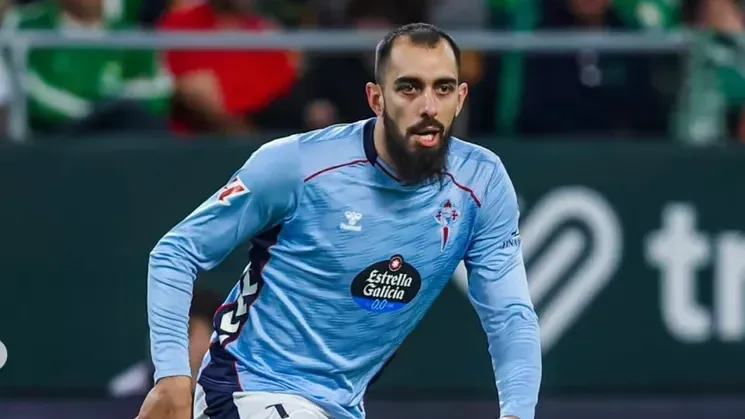
Photo Credit: Borja Iglesias / Instagram
by Chris Tremblay Mar 18
2 MIN READ
Celta Vigo forward Borja Iglesias, a 33-year-old Spain international, has reiterated that homophobia in men's professional football creates an environment where gay players feel unable to come out. Speaking to French newspaper L’Equipe, Iglesias, who identifies as heterosexual, described how abusive fan reactions make it "unacceptable" for LGBTQ+ individuals to live authentically in the sport.
Iglesias has long used personal gestures to challenge discrimination, beginning with painting his fingernails during the COVID-19 pandemic as a form of self-expression and later in support of Black Lives Matter and anti-homophobia efforts. This practice drew homophobic insults from opposing fans and online trolls, including after a La Liga match against Sevilla in January 2026, when he gave his shirt to a supporter.
The abuse initially impacted Iglesias personally, but he reframed it through therapy and reflection. "The first few times it affected me; I took it personally. After reflecting on it, I see things differently," he told L’Equipe. "Calling me a f****t, I don’t consider that an insult. When a guy says that, I think I’d be happier being gay than being like him, with nothing better to do than insult people at the end of a match. What bothers me is that a gay person is afraid to come out because of these kinds of reactions."
In response to the January 2026 incident, Celta Vigo fans and staff showed solidarity by painting their nails en masse before the next match, turning the slur into a symbol against homophobia. La Liga officials also reacted to the slurs, underscoring growing institutional awareness.
Iglesias linked the issue to football's historical culture, describing it as a "men’s sport" that glorifies "strength and virility," positioning players as embodiments of a patriarchal system. He praised figures like David Beckham and Guti for redefining masculinity and fostering freer expressions in the sport. Despite progress, he expressed sadness over the absence of openly gay male professionals: "It saddens me that it still seems impossible for gay footballers to come out. They must feel... that if they spoke about it, they would lose everything they’ve gained."
The striker's advocacy extends to viral campaigns, including a social media video where he "came out" as heterosexual to highlight LGBTQ+ pressures, which he ranks among his proudest achievements. "Sometimes, football struggles to include certain sections of society, and I think it really helped to make football reach a wider audience and to create a nice environment," he said. Iglesias credits therapy—introduced via Villarreal's youth teams—for building resilience and promoting emotional openness in a sport often resistant to vulnerability.
His recent goal secured Celta's return to UEFA competitions after nine years, blending on-field success with off-field impact. Iglesias believes the sport is "closer than ever" to change but emphasizes ongoing work against homophobia to ensure gay players can "be yourself and love who you want." Community responses like Celta's fan campaign signal potential shifts, offering hope for greater LGBTQ+ inclusion in football.
The abuse initially impacted Iglesias personally, but he reframed it through therapy and reflection. "The first few times it affected me; I took it personally. After reflecting on it, I see things differently," he told L’Equipe. "Calling me a f****t, I don’t consider that an insult. When a guy says that, I think I’d be happier being gay than being like him, with nothing better to do than insult people at the end of a match. What bothers me is that a gay person is afraid to come out because of these kinds of reactions."
In response to the January 2026 incident, Celta Vigo fans and staff showed solidarity by painting their nails en masse before the next match, turning the slur into a symbol against homophobia. La Liga officials also reacted to the slurs, underscoring growing institutional awareness.
Iglesias linked the issue to football's historical culture, describing it as a "men’s sport" that glorifies "strength and virility," positioning players as embodiments of a patriarchal system. He praised figures like David Beckham and Guti for redefining masculinity and fostering freer expressions in the sport. Despite progress, he expressed sadness over the absence of openly gay male professionals: "It saddens me that it still seems impossible for gay footballers to come out. They must feel... that if they spoke about it, they would lose everything they’ve gained."
The striker's advocacy extends to viral campaigns, including a social media video where he "came out" as heterosexual to highlight LGBTQ+ pressures, which he ranks among his proudest achievements. "Sometimes, football struggles to include certain sections of society, and I think it really helped to make football reach a wider audience and to create a nice environment," he said. Iglesias credits therapy—introduced via Villarreal's youth teams—for building resilience and promoting emotional openness in a sport often resistant to vulnerability.
His recent goal secured Celta's return to UEFA competitions after nine years, blending on-field success with off-field impact. Iglesias believes the sport is "closer than ever" to change but emphasizes ongoing work against homophobia to ensure gay players can "be yourself and love who you want." Community responses like Celta's fan campaign signal potential shifts, offering hope for greater LGBTQ+ inclusion in football.
Copyright EDGE Media Network. All rights reserved. This material may not be published, broadcast, rewritten, or redistributed.