Non-Binary Olympian Nikki Hiltz Slams IOC's New Genetic Sex Testing Policy for Women's Events
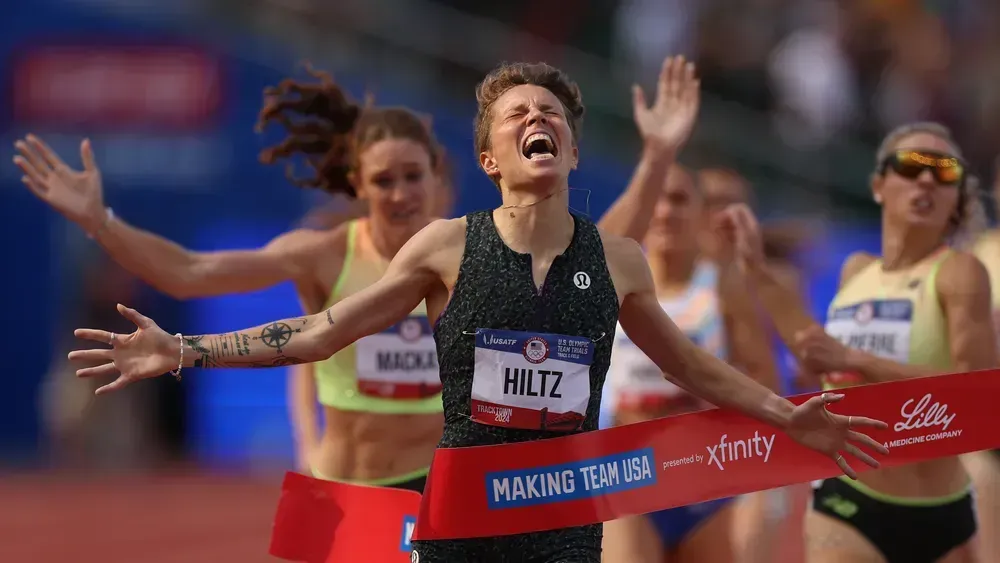
Photo Credit: (Photo by Patrick Smith/Getty Images)
by Chris Tremblay Mar 30
3 MIN READ
Non-binary American middle-distance runner Nikki Hiltz, a prominent figure in track and field who competed in the 2024 Paris Olympics, has sharply criticized the International Olympic Committee's newly announced policy on eligibility for women's sporting categories. Hiltz, who identifies as transgender non-binary, took to Instagram Stories on March 26, 2026, the same day the policy was revealed, to voice their opposition.
The IOC unveiled its policy on March 26, 2026, stating that eligibility for events in the women's category will be limited to biological females, determined through a one-time SRY gene screening. The SRY gene, typically found on the Y chromosome, will be tested via methods such as saliva, cheek swab, or blood sample, with screening required only once in an athlete's lifetime. Athletes possessing the SRY gene will be deemed not biologically female and thus ineligible for women's competitions, a rule that also extends to intersex athletes who have undergone male puberty.
The policy takes effect for the LA28 Olympic Games and beyond, with the IOC describing it as "evidence-based and expert-informed" to protect fairness, safety, and integrity in the female category. IOC President Kirsty Coventry emphasized that the measures were developed after consultation with a panel of medical experts and are grounded in science. Coventry stated, "The policy that we have announced is based on science and has been led by medical experts." She further noted that enabling biological males in women's sports is "not safe," particularly in contact sports, and that small margins in Olympic competition make fairness essential.
The IOC's announcement highlighted broader goals, including equality by providing equal opportunities for female athletes, enhancing Olympic values through men's and women's finals in every sport, and increasing visibility for female athletes to inspire women and girls worldwide. Coventry added that every athlete must be treated with dignity and respect, with clear education, counseling, and expert medical advice provided around the screening process.
Hiltz, who has a notable record including a silver medal at the 2024 World Indoor Championships and gold at the 2019 Pan American Games, competed in the 2024 Paris Olympics in the 1500m event. In their Instagram post, Hiltz wrote: "All Olympic athletes competing in women's sports are now required to undergo genetic sex testing. Attacks on trans people have consistently led to more policing and regulation of ALL women's bodies. Everyone is hurt by transphobia."
Hiltz continued: "Y’all already know where I stand on this but this policy is so f---ing stupid and is not solving a problem that exists. I don't know who needs to hear this but ZERO trans women competed in the Paris Olympics. Only ONE trans woman weightlifter competed in Tokyo 2021 and she did not win a medal. Can we please stop obsessing over trans people? And idk maybe focus our time, energy, and resources into real problems women's sports face?" Hiltz positioned the policy as an overreach that harms all women by increasing bodily regulation, while questioning its necessity given the limited participation of transgender women in recent Olympics.
As a high-profile advocate for transgender rights, Hiltz has used their platform to speak on issues affecting LGBTQ+ athletes. Their response has drawn attention from LGBTQ+ media outlets, amplifying discussions on the policy's implications for transgender and intersex athletes.
The IOC's policy shift comes amid ongoing global debates over transgender participation in sports, particularly in categories divided by sex. Previous Olympics saw minimal transgender women competitors: none in Paris 2024 and one in Tokyo 2021 who did not medal. Hiltz's critique echoes concerns from LGBTQ+ advocates that such measures stigmatize transgender people and lead to heightened scrutiny of all women's bodies.
LGBTQ+ outlets have framed Hiltz's statement as a call to redirect resources toward genuine challenges in women's sports, such as funding and access, rather than perceived threats from transgender athletes. The policy's inclusion of intersex athletes has raised additional questions about its scope, with Hiltz and others highlighting potential harm to diverse gender identities.
Coventry's comments underscore the IOC's commitment to dignity for all athletes, but Hiltz's response illustrates tensions between fairness arguments and inclusion for transgender and non-binary people. As preparations for LA28 advance, the policy is expected to influence international sports governance and spark further dialogue on equity for LGBTQ+ athletes.
The policy takes effect for the LA28 Olympic Games and beyond, with the IOC describing it as "evidence-based and expert-informed" to protect fairness, safety, and integrity in the female category. IOC President Kirsty Coventry emphasized that the measures were developed after consultation with a panel of medical experts and are grounded in science. Coventry stated, "The policy that we have announced is based on science and has been led by medical experts." She further noted that enabling biological males in women's sports is "not safe," particularly in contact sports, and that small margins in Olympic competition make fairness essential.
The IOC's announcement highlighted broader goals, including equality by providing equal opportunities for female athletes, enhancing Olympic values through men's and women's finals in every sport, and increasing visibility for female athletes to inspire women and girls worldwide. Coventry added that every athlete must be treated with dignity and respect, with clear education, counseling, and expert medical advice provided around the screening process.
Hiltz, who has a notable record including a silver medal at the 2024 World Indoor Championships and gold at the 2019 Pan American Games, competed in the 2024 Paris Olympics in the 1500m event. In their Instagram post, Hiltz wrote: "All Olympic athletes competing in women's sports are now required to undergo genetic sex testing. Attacks on trans people have consistently led to more policing and regulation of ALL women's bodies. Everyone is hurt by transphobia."
Hiltz continued: "Y’all already know where I stand on this but this policy is so f---ing stupid and is not solving a problem that exists. I don't know who needs to hear this but ZERO trans women competed in the Paris Olympics. Only ONE trans woman weightlifter competed in Tokyo 2021 and she did not win a medal. Can we please stop obsessing over trans people? And idk maybe focus our time, energy, and resources into real problems women's sports face?" Hiltz positioned the policy as an overreach that harms all women by increasing bodily regulation, while questioning its necessity given the limited participation of transgender women in recent Olympics.
As a high-profile advocate for transgender rights, Hiltz has used their platform to speak on issues affecting LGBTQ+ athletes. Their response has drawn attention from LGBTQ+ media outlets, amplifying discussions on the policy's implications for transgender and intersex athletes.
The IOC's policy shift comes amid ongoing global debates over transgender participation in sports, particularly in categories divided by sex. Previous Olympics saw minimal transgender women competitors: none in Paris 2024 and one in Tokyo 2021 who did not medal. Hiltz's critique echoes concerns from LGBTQ+ advocates that such measures stigmatize transgender people and lead to heightened scrutiny of all women's bodies.
LGBTQ+ outlets have framed Hiltz's statement as a call to redirect resources toward genuine challenges in women's sports, such as funding and access, rather than perceived threats from transgender athletes. The policy's inclusion of intersex athletes has raised additional questions about its scope, with Hiltz and others highlighting potential harm to diverse gender identities.
Coventry's comments underscore the IOC's commitment to dignity for all athletes, but Hiltz's response illustrates tensions between fairness arguments and inclusion for transgender and non-binary people. As preparations for LA28 advance, the policy is expected to influence international sports governance and spark further dialogue on equity for LGBTQ+ athletes.
Copyright EDGE Media Network. All rights reserved. This material may not be published, broadcast, rewritten, or redistributed.