Rosie O’Donnell Says She Was “So Nervous” Filming Intimate Scene With Cynthia Nixon
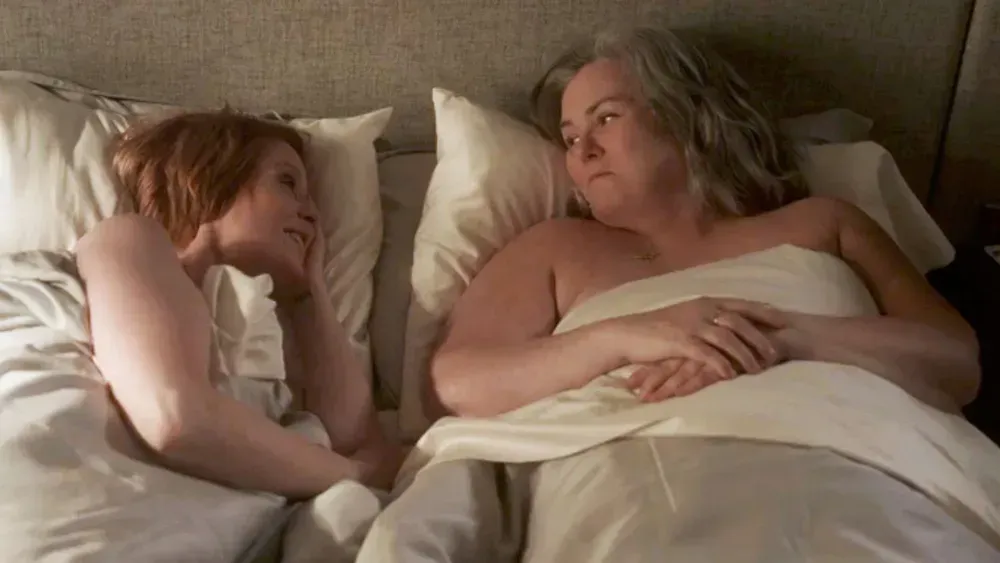
Photo Credit: HBO
by Chris Tremblay Aug 13
3 MIN READ
Rosie O’Donnell said she was “so nervous” while filming an intimate bed scene with Cynthia Nixon for 'And Just Like That…', despite her affection and longstanding friendship with the actor.
O’Donnell made the comments during the Aug. 11 episode of Good Hang With Amy Poehler, a podcast hosted by comedian and actor Amy Poehler.
Asked about the experience, O’Donnell characterized the scene as “horrifying” and immediately added, “I was so nervous.”
The sequence was not a depiction of the characters having sex on camera, but a postcoital scene set after the characters’ sexual encounter.
O’Donnell said the kissing itself was not difficult; what made her uncomfortable was lying in bed under the sheets and being asked to behave as though the characters had just had sex.
“I was nervous with Cynthia,” O’Donnell said, recalling the production, before explaining that creator Michael Patrick King encouraged the performers to make the scene somewhat more suggestive.
O’Donnell said she responded internally that she could not make the scene “a little bit more,” adding that she considers herself “a little immature” when it comes to portraying that kind of intimacy.
O’Donnell appeared in the third season of And Just Like That…, the sequel series to Sex and the City, as Mary, a nun visiting New York City.
In the season-three premiere, Mary meets Miranda Hobbes, played by Nixon, at a lesbian bar. The characters later go to Mary’s hotel room, where Mary has her first sexual experience.
Mary subsequently tells Miranda that she is a nun and that the encounter was her first time having sex.
The character’s religious identity is central to the episode’s premise, but O’Donnell’s recent comments focused on the practical and emotional awkwardness of filming the aftermath of the encounter rather than on the storyline’s religious elements.
O’Donnell said Nixon contacted her about the role after King wrote a scene involving the two performers.
According to O’Donnell’s account, Nixon asked whether she would take part in the project and explained that King had written a scene specifically involving them. O’Donnell said she agreed before reading the script.
She said that reading the script changed her understanding of what the job would involve: she discovered that the scene placed her character in bed with Nixon’s character, covered only by sheets.
“I love her,” O’Donnell said of Nixon, adding that she has “so much respect” for her.
The performers’ existing relationship was also part of O’Donnell’s earlier discussion of the role. In 2025, she told *Variety* that working with Nixon was a major attraction and joked that she did not need to act in love with her because she had been in love with Nixon for many years.
Nixon previously said that King had been trying to create a role for O’Donnell on the series for several seasons before the opportunity finally came together.
During the podcast episode, Nixon said that O’Donnell’s character was vulnerable but that O’Donnell did not play the role solely for comedy.
Nixon described O’Donnell as funny, centered and sincere in the role, according to the episode transcript.
Earlier coverage of the casting reported that Nixon viewed O’Donnell’s performance as both humorous and emotionally affecting.
The contrast between the characters’ sexual encounter and Mary’s inexperience is part of the episode’s comic setup, while the postcoital scene requires the performers to convey intimacy after the encounter has occurred.
O’Donnell’s remarks also highlighted the difference between agreeing to a scene in general terms and discovering the specific physical and emotional requirements after reading the script.
The comments were published and reported on Aug. 11 and Aug. 12, 2026, within three weeks of this article’s date.
Neither O’Donnell nor Nixon described the scene as a conflict between them. Instead, O’Donnell’s account presented her nervousness as a reaction to the intimacy being portrayed with a close friend and to the demands of performing a postcoital moment.
The podcast discussion did not report any dispute about the production or allege misconduct connected with the filming.
O’Donnell’s comments therefore center on her own discomfort and comic self-description, while Nixon’s remarks emphasize the trust and creative relationship between the performers.
Asked about the experience, O’Donnell characterized the scene as “horrifying” and immediately added, “I was so nervous.”
The sequence was not a depiction of the characters having sex on camera, but a postcoital scene set after the characters’ sexual encounter.
O’Donnell said the kissing itself was not difficult; what made her uncomfortable was lying in bed under the sheets and being asked to behave as though the characters had just had sex.
“I was nervous with Cynthia,” O’Donnell said, recalling the production, before explaining that creator Michael Patrick King encouraged the performers to make the scene somewhat more suggestive.
O’Donnell said she responded internally that she could not make the scene “a little bit more,” adding that she considers herself “a little immature” when it comes to portraying that kind of intimacy.
The Role on *And Just Like That…*
O’Donnell appeared in the third season of And Just Like That…, the sequel series to Sex and the City, as Mary, a nun visiting New York City.
In the season-three premiere, Mary meets Miranda Hobbes, played by Nixon, at a lesbian bar. The characters later go to Mary’s hotel room, where Mary has her first sexual experience.
Mary subsequently tells Miranda that she is a nun and that the encounter was her first time having sex.
The character’s religious identity is central to the episode’s premise, but O’Donnell’s recent comments focused on the practical and emotional awkwardness of filming the aftermath of the encounter rather than on the storyline’s religious elements.
Nixon Invited O’Donnell to Join the Series
O’Donnell said Nixon contacted her about the role after King wrote a scene involving the two performers.
According to O’Donnell’s account, Nixon asked whether she would take part in the project and explained that King had written a scene specifically involving them. O’Donnell said she agreed before reading the script.
She said that reading the script changed her understanding of what the job would involve: she discovered that the scene placed her character in bed with Nixon’s character, covered only by sheets.
“I love her,” O’Donnell said of Nixon, adding that she has “so much respect” for her.
The performers’ existing relationship was also part of O’Donnell’s earlier discussion of the role. In 2025, she told *Variety* that working with Nixon was a major attraction and joked that she did not need to act in love with her because she had been in love with Nixon for many years.
Nixon previously said that King had been trying to create a role for O’Donnell on the series for several seasons before the opportunity finally came together.
Nixon’s View of the Performance
During the podcast episode, Nixon said that O’Donnell’s character was vulnerable but that O’Donnell did not play the role solely for comedy.
Nixon described O’Donnell as funny, centered and sincere in the role, according to the episode transcript.
Earlier coverage of the casting reported that Nixon viewed O’Donnell’s performance as both humorous and emotionally affecting.
The contrast between the characters’ sexual encounter and Mary’s inexperience is part of the episode’s comic setup, while the postcoital scene requires the performers to convey intimacy after the encounter has occurred.
O’Donnell’s remarks also highlighted the difference between agreeing to a scene in general terms and discovering the specific physical and emotional requirements after reading the script.
The comments were published and reported on Aug. 11 and Aug. 12, 2026, within three weeks of this article’s date.
Neither O’Donnell nor Nixon described the scene as a conflict between them. Instead, O’Donnell’s account presented her nervousness as a reaction to the intimacy being portrayed with a close friend and to the demands of performing a postcoital moment.
The podcast discussion did not report any dispute about the production or allege misconduct connected with the filming.
O’Donnell’s comments therefore center on her own discomfort and comic self-description, while Nixon’s remarks emphasize the trust and creative relationship between the performers.
Copyright EDGE Media Network. All rights reserved. This material may not be published, broadcast, rewritten, or redistributed.