Denée Benton Leads Queer Road-Trip Drama 'Dreams in Nightmares' Into Theatrical Release
by Chris Tremblay Aug 31
4 MIN READ
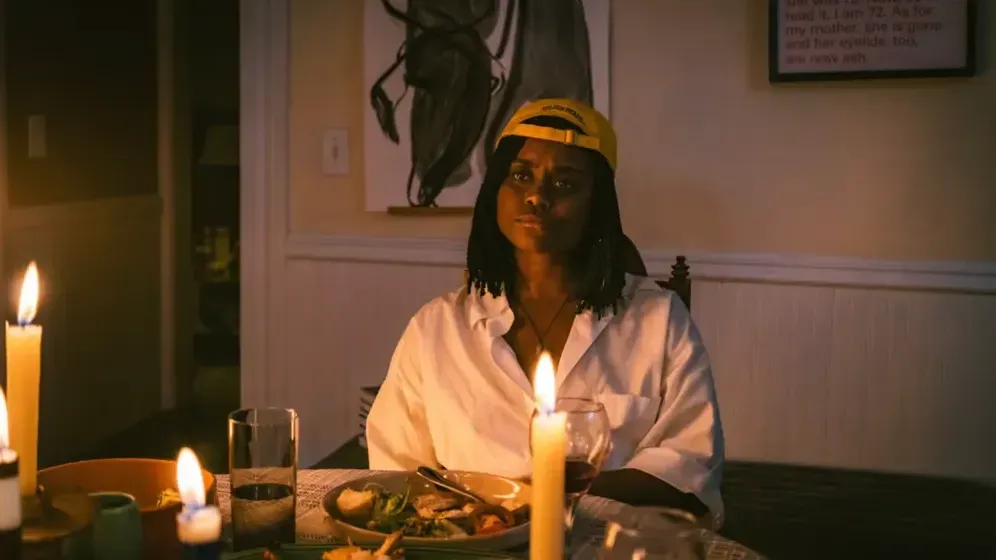
Denée Benton is leading Dreams in Nightmares, an independent comedy-drama written and directed by Shatara Michelle Ford. The film opened in New York on August 21, 2026, followed by a Los Angeles opening on August 28.
Benton plays Z, a Los Angeles-based writer who has recently lost her job as a professor. The role gives Benton the film’s central perspective as Z confronts professional uncertainty, creative ambitions and questions about what kind of future she wants to build.
The film marks a major feature-film showcase for Benton, who is known for her work in The Gilded Age and onstage in productions including Hamilton and Natasha, Pierre & the Great Comet of 1812. In Dreams in Nightmares, she is part of an ensemble centered on queer Black friendship rather than a conventional romance or individual coming-of-age story.
The story begins after Z loses her teaching job and travels from Los Angeles to New York to spend time with her friends Tasha and Lauren. Tasha, played by Sasha Compère, has also recently lost work in consulting, while Lauren, played by Dezi Bing, is a poet.
The three friends then drive west toward Iowa City in search of Kel, an artist played by Mars Storm Rucker. Kel has stopped responding to the group’s messages and calls, prompting the friends to travel beyond their familiar surroundings to check on them.
The road trip takes the group through places including Pittsburgh and Kansas City. Along the way, they attend a queer poetry slam, stop at Black-owned restaurants and confront tensions involving Kel’s former relationship and family.
The film also places the friends’ relationships within the realities of traveling through areas where they may not feel equally safe or welcome. Their caution is balanced by moments of humor, intimacy and mutual support as they negotiate disagreements and differing ideas about work, responsibility and freedom.
Ford’s second feature follows Test Pattern, a 2019 drama that examined the aftermath of sexual assault and the failures of health-care and law-enforcement systems affecting Black women. In Dreams in Nightmares, Ford shifts toward a warmer and more expansive comedy-drama while maintaining attention to the physical and emotional well-being of Black characters.
The film follows four queer Black friends in their mid-30s. That focus gives the story room to present queer characters through ordinary forms of closeness, conflict and care rather than treating their identities as the film’s only source of drama.
Z’s relationship with her boyfriend in Los Angeles is described as a mutually supportive polyamorous relationship. The film also explores Kel’s estrangement from conservative parents who have not accepted their child’s queer identity.
Z is repeatedly drawn into visions of a mysterious landscape, including a desert setting and a door surrounded by darkness. The imagery becomes connected to her uncertainty about whether to continue pursuing teaching or finally write the book she has been planning.
The Los Angeles Times described Z as a creative-writing professor whose recurring dream helps place her on a journey after she loses her university job. The newspaper listed the film’s running time as two hours and eight minutes and reported that its Los Angeles engagement began at AMC Burbank Town Center 8 and Laemmle Glendale.
RogerEbert.com characterized the film as the story of three Black queer friends traveling to find a missing fourth friend, with Benton playing Z. The review described the film as complex and rewarding, while identifying the friendship at its center as a key element of its impact.
National Public Radio called the movie a warm, sprawling comedy-drama about close friends at a turning point in their lives. The review emphasized the group’s sense of solidarity and the performers’ ability to make the characters feel distinct rather than reducing them to fixed types.
The Los Angeles Times published its review ahead of the film’s Los Angeles opening on August 28. The Hollywood Reporter published a feature on August 11 that described Benton’s character as the focal point of the film and noted that Z had been laid off from an adjunct-teaching position at a Los Angeles arts college.
The film’s theatrical rollout is designed to expand beyond its initial New York and Los Angeles engagements. BroadwayWorld reported that the movie was scheduled to expand nationwide on September 4, with theaters selected as part of a community-focused strategy intended to reach young Black audiences.
That distribution approach places Dreams in Nightmares within a broader conversation about how independent films can reach audiences whose communities and experiences are central to the work. As the film expands, Benton’s performance as Z provides its commercial and critical campaign with a recognizable lead while Ford’s direction keeps the ensemble’s friendship at the center.
The film marks a major feature-film showcase for Benton, who is known for her work in The Gilded Age and onstage in productions including Hamilton and Natasha, Pierre & the Great Comet of 1812. In Dreams in Nightmares, she is part of an ensemble centered on queer Black friendship rather than a conventional romance or individual coming-of-age story.
The Journey Across the Midwest
The story begins after Z loses her teaching job and travels from Los Angeles to New York to spend time with her friends Tasha and Lauren. Tasha, played by Sasha Compère, has also recently lost work in consulting, while Lauren, played by Dezi Bing, is a poet.
The three friends then drive west toward Iowa City in search of Kel, an artist played by Mars Storm Rucker. Kel has stopped responding to the group’s messages and calls, prompting the friends to travel beyond their familiar surroundings to check on them.
The road trip takes the group through places including Pittsburgh and Kansas City. Along the way, they attend a queer poetry slam, stop at Black-owned restaurants and confront tensions involving Kel’s former relationship and family.
The film also places the friends’ relationships within the realities of traveling through areas where they may not feel equally safe or welcome. Their caution is balanced by moments of humor, intimacy and mutual support as they negotiate disagreements and differing ideas about work, responsibility and freedom.
Ford’s Focus on Queer Black Friendship
Ford’s second feature follows Test Pattern, a 2019 drama that examined the aftermath of sexual assault and the failures of health-care and law-enforcement systems affecting Black women. In Dreams in Nightmares, Ford shifts toward a warmer and more expansive comedy-drama while maintaining attention to the physical and emotional well-being of Black characters.
The film follows four queer Black friends in their mid-30s. That focus gives the story room to present queer characters through ordinary forms of closeness, conflict and care rather than treating their identities as the film’s only source of drama.
Z’s relationship with her boyfriend in Los Angeles is described as a mutually supportive polyamorous relationship. The film also explores Kel’s estrangement from conservative parents who have not accepted their child’s queer identity.
Benton’s Z and the Meaning of the Title
Z is repeatedly drawn into visions of a mysterious landscape, including a desert setting and a door surrounded by darkness. The imagery becomes connected to her uncertainty about whether to continue pursuing teaching or finally write the book she has been planning.
The Los Angeles Times described Z as a creative-writing professor whose recurring dream helps place her on a journey after she loses her university job. The newspaper listed the film’s running time as two hours and eight minutes and reported that its Los Angeles engagement began at AMC Burbank Town Center 8 and Laemmle Glendale.
RogerEbert.com characterized the film as the story of three Black queer friends traveling to find a missing fourth friend, with Benton playing Z. The review described the film as complex and rewarding, while identifying the friendship at its center as a key element of its impact.
Critical Reception and Distribution
National Public Radio called the movie a warm, sprawling comedy-drama about close friends at a turning point in their lives. The review emphasized the group’s sense of solidarity and the performers’ ability to make the characters feel distinct rather than reducing them to fixed types.
The Los Angeles Times published its review ahead of the film’s Los Angeles opening on August 28. The Hollywood Reporter published a feature on August 11 that described Benton’s character as the focal point of the film and noted that Z had been laid off from an adjunct-teaching position at a Los Angeles arts college.
The film’s theatrical rollout is designed to expand beyond its initial New York and Los Angeles engagements. BroadwayWorld reported that the movie was scheduled to expand nationwide on September 4, with theaters selected as part of a community-focused strategy intended to reach young Black audiences.
That distribution approach places Dreams in Nightmares within a broader conversation about how independent films can reach audiences whose communities and experiences are central to the work. As the film expands, Benton’s performance as Z provides its commercial and critical campaign with a recognizable lead while Ford’s direction keeps the ensemble’s friendship at the center.
Copyright EDGE Media Network. All rights reserved. This material may not be published, broadcast, rewritten, or redistributed.