Kelly Clarkson Backs AI Music—If It Has Its Own Chart
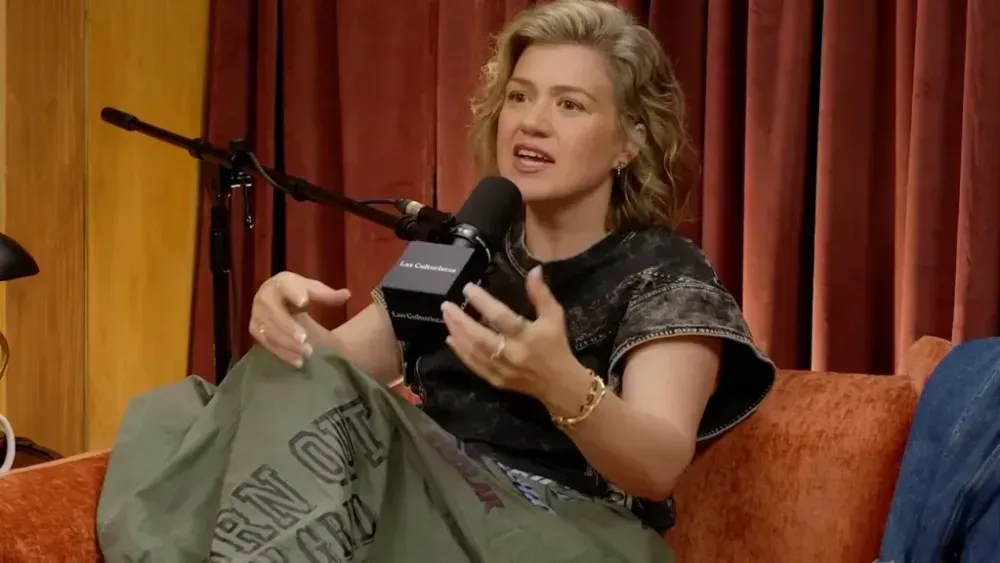
Photo Credit: Las Culturistas
by Chris Tremblay Oct 2
3 MIN READ
Kelly Clarkson said she “loves AI,” but believes AI-generated artists should not compete directly with human musicians on the same music charts. She made the remarks during an appearance on "Las Culturistas", the podcast hosted by Bowen Yang and Matt Rogers, in an episode released September 30.
Clarkson made her case during the show’s “I Don’t Think So, Honey” segment, where she offered a brief argument about AI. She said she was “very into it artistically” and enjoyed experimenting with it, but objected to AI artists “competing on a chart with humans.”
“I think there should be a separate chart,” Clarkson said. She described AI as “welcome to the table” and said it could enable people who “maybe can’t do certain things” to create music.
Her position, as reported from the podcast, was not a call to exclude AI from music altogether. Instead, she argued that human and AI-generated work should be distinguishable and that each could have an audience. “We can’t lose human,” she said, while adding that “there could be an appetite for both.”
Clarkson compared the prospect of AI artists competing against human performers to robots competing with people in the Olympics, asking rhetorically who would throw an object farther. The analogy framed her objection as one of categories and comparison, rather than a rejection of all AI-assisted creativity.
Clarkson’s comments arrive as the music business grapples with how to identify and account for songs made with AI. On August 25, "Billboard" said it was committed to greater transparency around AI use, including identifying songs using AI on its charts and in its editorial coverage.
That announcement described an identification and transparency approach; it did not announce that AI-generated music would be placed on separate charts. "The Hollywood Reporter" likewise reported that AI-generated music had not been banned from "Billboard" and noted the publication’s commitment to identifying songs that use AI.
The distinction matters: labeling a song’s use of AI can inform audiences and chart readers, while assigning AI-generated music to a separate chart would change how those songs are ranked against one another. Clarkson’s comments addressed the latter question, but her proposal does not itself establish a charting policy or indicate that "Billboard" will adopt one.
"Billboard" said that greater transparency from artists and creators, combined with reliable tools for identifying AI-generated music, would be important to its effort. It also pointed to the development of tools and initiatives, including Luminate’s announced AI-detection program.
The chart question therefore involves more than a proposed division between human and AI work. Identifying the presence of AI, deciding how much AI use merits a label, and determining which songs qualify for a given chart are related but separate issues; the sources reporting Clarkson’s remarks and "Billboard"’s policy announcement describe transparency commitments, not a settled universal standard.
Clarkson described AI’s potential in broad, positive terms, saying it could be “really cool and creative” and pointing to its possible use by people who may not be able to do certain things without such tools. She also said AI was not going away and praised its use in scientific work.
At the same time, she said she did not want AI artists competing with human performers on the same chart. Her proposed solution was a separate ranking, allowing listeners to engage with both forms of music without treating them as directly interchangeable in a single chart category.
The available reporting does not establish that Clarkson’s comments were a formal policy proposal to a chart company, nor does it report a response from "Billboard" to her specific suggestion. Her remarks were made in a podcast conversation, and the separate-chart idea should be understood as her stated view rather than an announced industry change.
For now, the contrast is between Clarkson’s preference for separate chart categories and "Billboard"’s stated commitment to disclose AI use in its charts and coverage. The conversation highlights an unresolved question for the music industry: how best to make AI’s role visible while ranking music made through different creative processes.
“I think there should be a separate chart,” Clarkson said. She described AI as “welcome to the table” and said it could enable people who “maybe can’t do certain things” to create music.
Her position, as reported from the podcast, was not a call to exclude AI from music altogether. Instead, she argued that human and AI-generated work should be distinguishable and that each could have an audience. “We can’t lose human,” she said, while adding that “there could be an appetite for both.”
Clarkson compared the prospect of AI artists competing against human performers to robots competing with people in the Olympics, asking rhetorically who would throw an object farther. The analogy framed her objection as one of categories and comparison, rather than a rejection of all AI-assisted creativity.
A debate over categories and disclosure
Clarkson’s comments arrive as the music business grapples with how to identify and account for songs made with AI. On August 25, "Billboard" said it was committed to greater transparency around AI use, including identifying songs using AI on its charts and in its editorial coverage.
That announcement described an identification and transparency approach; it did not announce that AI-generated music would be placed on separate charts. "The Hollywood Reporter" likewise reported that AI-generated music had not been banned from "Billboard" and noted the publication’s commitment to identifying songs that use AI.
The distinction matters: labeling a song’s use of AI can inform audiences and chart readers, while assigning AI-generated music to a separate chart would change how those songs are ranked against one another. Clarkson’s comments addressed the latter question, but her proposal does not itself establish a charting policy or indicate that "Billboard" will adopt one.
"Billboard" said that greater transparency from artists and creators, combined with reliable tools for identifying AI-generated music, would be important to its effort. It also pointed to the development of tools and initiatives, including Luminate’s announced AI-detection program.
The chart question therefore involves more than a proposed division between human and AI work. Identifying the presence of AI, deciding how much AI use merits a label, and determining which songs qualify for a given chart are related but separate issues; the sources reporting Clarkson’s remarks and "Billboard"’s policy announcement describe transparency commitments, not a settled universal standard.
What Clarkson said—and what she did not
Clarkson described AI’s potential in broad, positive terms, saying it could be “really cool and creative” and pointing to its possible use by people who may not be able to do certain things without such tools. She also said AI was not going away and praised its use in scientific work.
At the same time, she said she did not want AI artists competing with human performers on the same chart. Her proposed solution was a separate ranking, allowing listeners to engage with both forms of music without treating them as directly interchangeable in a single chart category.
The available reporting does not establish that Clarkson’s comments were a formal policy proposal to a chart company, nor does it report a response from "Billboard" to her specific suggestion. Her remarks were made in a podcast conversation, and the separate-chart idea should be understood as her stated view rather than an announced industry change.
For now, the contrast is between Clarkson’s preference for separate chart categories and "Billboard"’s stated commitment to disclose AI use in its charts and coverage. The conversation highlights an unresolved question for the music industry: how best to make AI’s role visible while ranking music made through different creative processes.
Copyright EDGE Media Network. All rights reserved. This material may not be published, broadcast, rewritten, or redistributed.