Eris Drew and Octo Octa Bring Queer Dance-Floor Partnership to the Studio as Alchemical Sisters

Photo Credit: Alchemical Sisters
by Chris Tremblay Oct 27
4 MIN READ
Eris Drew and Octo Octa have released "Alchemical Sisters", their first collaborative full-length under that name, bringing a long-running partnership between two prominent queer dance-music artists into a new format. The self-titled double album came out October 19 on Detroit-based label Interdimensional Transmissions; the label describes it as a project conceived by Maya Bouldry-Morrison, who performs as Octo Octa, and Drew, known for her DJ sets and solo productions.
The release puts a fresh spotlight on two artists whose work has traveled across club stages, records and community events. A recent Slate profile describes Drew and Octo Octa as established DJs who also run the T4T LUV NRG label and party series, an undertaking associated with supporting trans artists and creating spaces for trans communities. Mixmag’s profile reports that the pair have spent years touring and performing together, while pursuing their own production work.
The pair’s collaboration grew from shared musical interests and a relationship that began as friendship. In an interview with Mixmag, Bouldry-Morrison described their early connection as a “sisterhood” grounded in shared ideas and experiences as trans women; she said the “sonic sisterhood” remains part of their partnership.
Rather than simply presenting the record as an extension of their back-to-back DJ sets, the artists approached it as a band project. Drew told Mixmag that the album drew on influences including early hip-hop, breakbeat, warehouse rave music from the 1990s and the band Boy Harsher. The musicians’ approach combined live playing, electronic instruments and sampled material.
The album took shape over an extended period at the artists’ home in New Hampshire. Mixmag reports they moved equipment into a bedroom and worked there for about a year and a half, recording with instruments and hardware before taking the material to Detroit for mixing. The label also identifies New Hampshire as the recording location and Detroit as the site of the mixing sessions.
Bouldry-Morrison told Mixmag that the pair sought help with the mix rather than handling every part of the release themselves. They worked with Brendan M. Gillen, also known as BMG, at Interdimensional Transmissions’ Detroit studio. Their stated aim was a rougher, more textured sound than a polished club track; the resulting record draws on electronic dance music while including acoustic instruments such as dulcimer.
The album’s sound and structure are not described solely in terms of its use in clubs. Mixmag quoted Bouldry-Morrison as saying she wanted listeners to hear details in a listening-focused setting, while Drew distinguished between music built for a club and songs that can be played there. That distinction suggests the pair see the album as both connected to dance music and capable of being heard outside a dance floor.
Pitchfork’s review similarly characterizes the album as a sample-heavy tribute to older dance music, and notes that the artists turned a room in their New Hampshire home into a studio. The review and the artists’ interview offer different kinds of perspective: one is a critic’s assessment of the sound, while the other records the musicians’ accounts of their intentions and process.
One track, “Song For New Hampshire,” is described by Mixmag as a slower piece centered on Bouldry-Morrison’s mountain dulcimer playing and the pair’s voices. She told the publication that the song reflects the importance of home, nature and their local community, while also describing it as an idealized version of a place that can be difficult to live in. The account is the artist’s perspective, not a claim that the track represents all queer or trans experiences in rural areas.
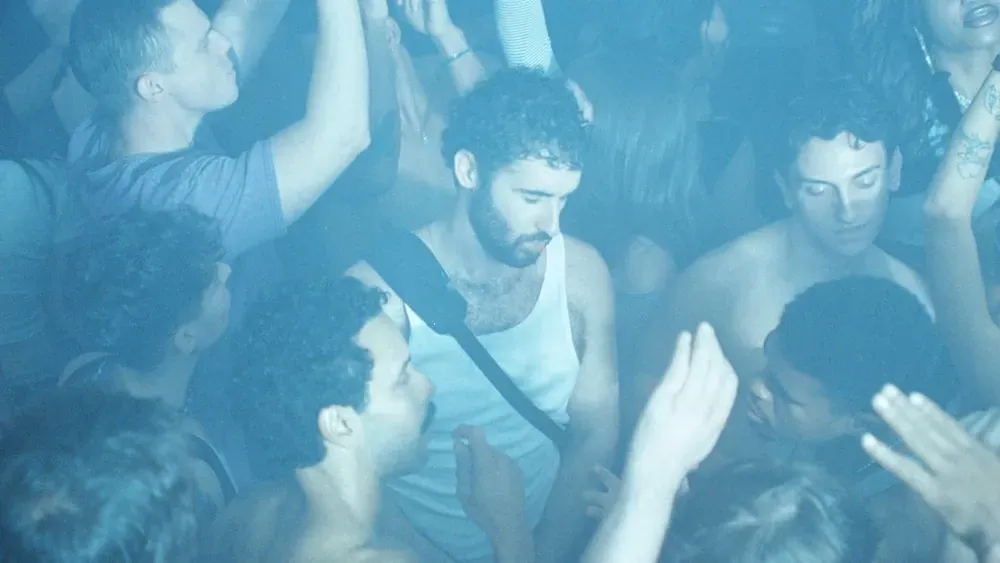
The project arrives alongside the pair’s work through T4T LUV NRG, which Mixmag identifies as both a record label and a traveling party series. The publication reports that the duo’s events have included lineups of trans and nonbinary artists, and that the organizers have tried ticketing practices intended to prioritize trans attendees. Those details place community-building alongside the music, while remaining specific to the pair’s own projects rather than standing in for every queer nightlife space.
Slate’s coverage of a separate Washington, D.C., party also situates Drew and Octo Octa within a broader landscape of queer and trans dance music. That article describes their role as DJs and label founders, and quotes Drew reflecting on how audiences may read a trans DJ’s presence onstage. The profile’s context is distinct from the album’s release, but together the reports illustrate how their public work spans performance, recorded music and dance-floor community.
The album’s launch is therefore both a new musical release and a new chapter in a collaboration that already has a life onstage. Mixmag reports that the duo planned to make their live debut as Alchemical Sisters at Interdimensional Transmissions’ Samhain XXVI event. That scheduled appearance gives the studio project a route back to performance, though the release itself is not evidence of how the event will be received.
With "Alchemical Sisters", Drew and Bouldry-Morrison have made a record that draws from their musical histories while presenting their shared work under a new name. Its release also offers a timely look at queer artists who move between DJ culture, production and community organizing—without reducing their music to identity alone.
From DJ partnership to band project
The pair’s collaboration grew from shared musical interests and a relationship that began as friendship. In an interview with Mixmag, Bouldry-Morrison described their early connection as a “sisterhood” grounded in shared ideas and experiences as trans women; she said the “sonic sisterhood” remains part of their partnership.
Rather than simply presenting the record as an extension of their back-to-back DJ sets, the artists approached it as a band project. Drew told Mixmag that the album drew on influences including early hip-hop, breakbeat, warehouse rave music from the 1990s and the band Boy Harsher. The musicians’ approach combined live playing, electronic instruments and sampled material.
The album took shape over an extended period at the artists’ home in New Hampshire. Mixmag reports they moved equipment into a bedroom and worked there for about a year and a half, recording with instruments and hardware before taking the material to Detroit for mixing. The label also identifies New Hampshire as the recording location and Detroit as the site of the mixing sessions.
Bouldry-Morrison told Mixmag that the pair sought help with the mix rather than handling every part of the release themselves. They worked with Brendan M. Gillen, also known as BMG, at Interdimensional Transmissions’ Detroit studio. Their stated aim was a rougher, more textured sound than a polished club track; the resulting record draws on electronic dance music while including acoustic instruments such as dulcimer.
A record with more than one setting
The album’s sound and structure are not described solely in terms of its use in clubs. Mixmag quoted Bouldry-Morrison as saying she wanted listeners to hear details in a listening-focused setting, while Drew distinguished between music built for a club and songs that can be played there. That distinction suggests the pair see the album as both connected to dance music and capable of being heard outside a dance floor.
Pitchfork’s review similarly characterizes the album as a sample-heavy tribute to older dance music, and notes that the artists turned a room in their New Hampshire home into a studio. The review and the artists’ interview offer different kinds of perspective: one is a critic’s assessment of the sound, while the other records the musicians’ accounts of their intentions and process.
One track, “Song For New Hampshire,” is described by Mixmag as a slower piece centered on Bouldry-Morrison’s mountain dulcimer playing and the pair’s voices. She told the publication that the song reflects the importance of home, nature and their local community, while also describing it as an idealized version of a place that can be difficult to live in. The account is the artist’s perspective, not a claim that the track represents all queer or trans experiences in rural areas.
Community as part of the work
The project arrives alongside the pair’s work through T4T LUV NRG, which Mixmag identifies as both a record label and a traveling party series. The publication reports that the duo’s events have included lineups of trans and nonbinary artists, and that the organizers have tried ticketing practices intended to prioritize trans attendees. Those details place community-building alongside the music, while remaining specific to the pair’s own projects rather than standing in for every queer nightlife space.
Slate’s coverage of a separate Washington, D.C., party also situates Drew and Octo Octa within a broader landscape of queer and trans dance music. That article describes their role as DJs and label founders, and quotes Drew reflecting on how audiences may read a trans DJ’s presence onstage. The profile’s context is distinct from the album’s release, but together the reports illustrate how their public work spans performance, recorded music and dance-floor community.
The album’s launch is therefore both a new musical release and a new chapter in a collaboration that already has a life onstage. Mixmag reports that the duo planned to make their live debut as Alchemical Sisters at Interdimensional Transmissions’ Samhain XXVI event. That scheduled appearance gives the studio project a route back to performance, though the release itself is not evidence of how the event will be received.
With "Alchemical Sisters", Drew and Bouldry-Morrison have made a record that draws from their musical histories while presenting their shared work under a new name. Its release also offers a timely look at queer artists who move between DJ culture, production and community organizing—without reducing their music to identity alone.
Copyright EDGE Media Network. All rights reserved. This material may not be published, broadcast, rewritten, or redistributed.