Mary J. Blige Says Infamous Burger King Ad “Crushed” Her
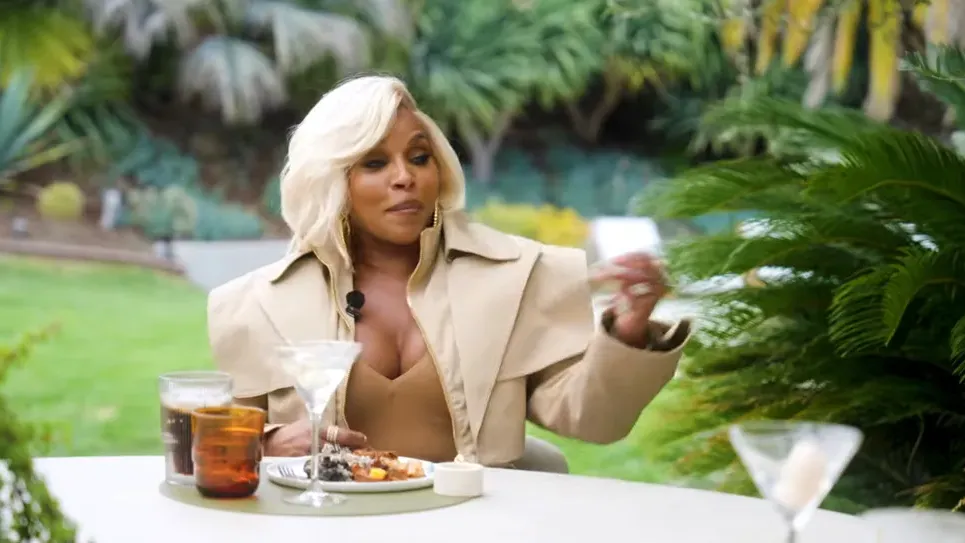
Photo Credit: Guest House Pod
by Chris Tremblay Apr 22
5 MIN READ
Mary J. Blige is once again confronting the legacy of a 2012 Burger King commercial that she says never reflected her artistic vision and left a lasting emotional and professional scar. In a recent appearance on Scott Evans’ podcast “Guest House,” the Grammy-winning singer described the experience as something that “crushed” her, even as the clip continues to circulate online as meme fodder more than a decade later.
In the original 2012 commercial, Blige appears in a Burger King restaurant, standing on a table and singing a playful riff about the chain’s crispy chicken snack wraps, listing ingredients like “crispy chicken, fresh lettuce, three cheeses, ranch dressing.” The spot was widely criticized at the time for leaning into harmful racial stereotypes tied to Black people and fried chicken, with online commenters and media voices calling the ad “tone-deaf” and questioning why an artist of Blige’s stature would participate in it.
Blige now stresses that the version of the ad viewers saw in 2012 was not what she agreed to film, and not the creative concept she thought she was endorsing. “I agreed to be part of a fun and creative campaign that was supposed to feature a dream sequence,” she explained on “Guest House,” adding that the clip that leaked and quickly went viral stripped away that context and left her looking like she was merely singing about fried chicken on a tabletop.
In the new interview, Blige says she felt set up by a combination of poor representation and mismanagement at the time, suggesting that the circumstances around the ad’s release were out of her control. EURweb reports that Blige has described her situation around that period as having “bad representation, bad management, bad everything,” which she believes contributed to how exposed she was when the backlash hit.
Blige also emphasized that anyone who has followed her career should have known the leaked spot did not match her standards, saying, “If you’re a Mary fan, you have to know I would never allow an unfinished spot like the one you saw go out.” Even as she acknowledged that fans and critics had valid concerns about the ad’s racial optics, she maintains that viewers were not seeing the project she agreed to and that the lack of context fueled the outrage.
The Burger King spot was part of a broader campaign built around stylized dream sequences, but an unfinished version leaked online in April 2012, quickly taking on a life of its own. Viewers saw Blige suddenly appear in a fast-food restaurant to sing modified lyrics about a chicken snack wrap, without any indication that the scene was meant to exist inside a more elaborate dream-like concept.
As clips and gifs spread across platforms, social media users accused the ad of playing into racist tropes about Black people and fried chicken, with some calling the commercial “buffoonery” and asking why Blige, widely regarded as a cultural icon, would be framed in that way. Commentators and everyday viewers alike questioned both the brand and Blige’s team, arguing that the imagery and lyrics trivialized her legacy and ignored the sensitivities around food-related stereotypes in portrayals of Black communities.
The backlash developed so rapidly that Burger King pulled the commercial within days, initially attributing the removal to music licensing issues. The company later acknowledged that the ad had been released before it received final approvals, and issued a public apology for the premature release and ensuing confusion.
Blige also apologized publicly at the time, including in an appearance on Angie Martinez’s radio show, saying she never intended to disrespect Black culture and reiterating that the version of the commercial that leaked was not the finished piece she had agreed to share with the world. Even after those apologies, however, the clip remained part of online conversation, resurfaceable at any moment in the era of viral memes and out-of-context content.
In her new “Guest House” remarks, Blige says the fallout from the commercial went beyond embarrassment and became a deeply personal wound. “Crushed” is the word she uses to describe how the episode made her feel, as she watched a project she did not authorize become a punchline and a case study in how quickly a brand misstep can spiral.
According to EURweb’s report on her recent comments, Blige has said the controversy harmed her brand at a critical moment in her career, strained personal relationships and even cost her friendships as people distanced themselves during the backlash. She has also spoken of feeling shaken and blindsided as she watched the clip spread online without the creative context she had been promised, framing the episode as a reminder of how vulnerable artists can be when corporate partners and representation fail them.
The incident still surfaces today in discussions about representation in advertising, especially where race and gender intersect with celebrity endorsements. Media outlets continue to cite the Burger King ad as an example of how quickly a single campaign can damage trust with audiences when it appears to lean on stereotypes or reduce a respected artist to a caricature, even unintentionally.
While many people initially reacted to the Burger King spot with anger or disbelief in 2012, some of the online commentary around the ad has softened over time, treating the clip as a catchy if awkward artifact of early-2010s pop culture. Recent discussions on platforms like Instagram and Facebook have included users joking that the “crispy chicken” jingle is “still a bop,” underscoring the gap between how some audiences remember the ad and how Blige herself continues to experience it.
A new wave of commentary followed Blige’s “Guest House” appearance, with radio hosts and podcast commentators revisiting the ad and noting that online reactions now often praise the commercial even though many of the same audiences once “dragged” her for it. That shift highlights how social media cultures can reframe past controversies as lighthearted content, even when the people at the center of those moments still feel hurt by them.
For many Black viewers and allies, however, the ad remains a reference point in broader conversations about how Black women in entertainment are depicted in marketing, and how quickly images tied to food, dance or humor can veer into stereotype when stripped of nuance and context. Those ongoing discussions often intersect with critiques of media portrayals of other marginalized communities, including LGBTQ+ people of color, who similarly push back against reductive, stereotype-driven branding.
Blige’s renewed comments arrive at a time when artists are increasingly vocal about consent, creative control and the ways their images are used in commercial campaigns. Her account underscores how a single mismanaged project can reverberate for years, particularly when it collides with sensitive histories of racial caricature in U.S. advertising.
For brands, the controversy is frequently cited as a cautionary example of what can happen when projects roll out before artists sign off on final cuts or when campaign concepts fail to anticipate how marginalized communities may perceive certain imagery. Advertising critics note that even well-intended attempts at humor or nostalgia can backfire if they appear to turn Black culture into a shorthand for selling products, rather than treating Black performers and audiences as full, multifaceted communities.
Blige’s reflections also speak to the emotional labor demanded of Black women in public life, who often navigate the dual burden of representing themselves and being viewed—fairly or not—as stand-ins for their communities. As she continues to share how the Burger King saga affected her sense of self and her relationships, the conversation around the ad has shifted from ridicule toward a more nuanced understanding of how celebrity, race and corporate power intersect in the age of viral media.
Blige: “That’s not what I signed up for”
Blige now stresses that the version of the ad viewers saw in 2012 was not what she agreed to film, and not the creative concept she thought she was endorsing. “I agreed to be part of a fun and creative campaign that was supposed to feature a dream sequence,” she explained on “Guest House,” adding that the clip that leaked and quickly went viral stripped away that context and left her looking like she was merely singing about fried chicken on a tabletop.
In the new interview, Blige says she felt set up by a combination of poor representation and mismanagement at the time, suggesting that the circumstances around the ad’s release were out of her control. EURweb reports that Blige has described her situation around that period as having “bad representation, bad management, bad everything,” which she believes contributed to how exposed she was when the backlash hit.
Blige also emphasized that anyone who has followed her career should have known the leaked spot did not match her standards, saying, “If you’re a Mary fan, you have to know I would never allow an unfinished spot like the one you saw go out.” Even as she acknowledged that fans and critics had valid concerns about the ad’s racial optics, she maintains that viewers were not seeing the project she agreed to and that the lack of context fueled the outrage.
How the ad went from campaign to crisis
The Burger King spot was part of a broader campaign built around stylized dream sequences, but an unfinished version leaked online in April 2012, quickly taking on a life of its own. Viewers saw Blige suddenly appear in a fast-food restaurant to sing modified lyrics about a chicken snack wrap, without any indication that the scene was meant to exist inside a more elaborate dream-like concept.
As clips and gifs spread across platforms, social media users accused the ad of playing into racist tropes about Black people and fried chicken, with some calling the commercial “buffoonery” and asking why Blige, widely regarded as a cultural icon, would be framed in that way. Commentators and everyday viewers alike questioned both the brand and Blige’s team, arguing that the imagery and lyrics trivialized her legacy and ignored the sensitivities around food-related stereotypes in portrayals of Black communities.
The backlash developed so rapidly that Burger King pulled the commercial within days, initially attributing the removal to music licensing issues. The company later acknowledged that the ad had been released before it received final approvals, and issued a public apology for the premature release and ensuing confusion.
Blige also apologized publicly at the time, including in an appearance on Angie Martinez’s radio show, saying she never intended to disrespect Black culture and reiterating that the version of the commercial that leaked was not the finished piece she had agreed to share with the world. Even after those apologies, however, the clip remained part of online conversation, resurfaceable at any moment in the era of viral memes and out-of-context content.
Emotional fallout and long-term damage
In her new “Guest House” remarks, Blige says the fallout from the commercial went beyond embarrassment and became a deeply personal wound. “Crushed” is the word she uses to describe how the episode made her feel, as she watched a project she did not authorize become a punchline and a case study in how quickly a brand misstep can spiral.
According to EURweb’s report on her recent comments, Blige has said the controversy harmed her brand at a critical moment in her career, strained personal relationships and even cost her friendships as people distanced themselves during the backlash. She has also spoken of feeling shaken and blindsided as she watched the clip spread online without the creative context she had been promised, framing the episode as a reminder of how vulnerable artists can be when corporate partners and representation fail them.
The incident still surfaces today in discussions about representation in advertising, especially where race and gender intersect with celebrity endorsements. Media outlets continue to cite the Burger King ad as an example of how quickly a single campaign can damage trust with audiences when it appears to lean on stereotypes or reduce a respected artist to a caricature, even unintentionally.
Social media’s shifting response
While many people initially reacted to the Burger King spot with anger or disbelief in 2012, some of the online commentary around the ad has softened over time, treating the clip as a catchy if awkward artifact of early-2010s pop culture. Recent discussions on platforms like Instagram and Facebook have included users joking that the “crispy chicken” jingle is “still a bop,” underscoring the gap between how some audiences remember the ad and how Blige herself continues to experience it.
A new wave of commentary followed Blige’s “Guest House” appearance, with radio hosts and podcast commentators revisiting the ad and noting that online reactions now often praise the commercial even though many of the same audiences once “dragged” her for it. That shift highlights how social media cultures can reframe past controversies as lighthearted content, even when the people at the center of those moments still feel hurt by them.
For many Black viewers and allies, however, the ad remains a reference point in broader conversations about how Black women in entertainment are depicted in marketing, and how quickly images tied to food, dance or humor can veer into stereotype when stripped of nuance and context. Those ongoing discussions often intersect with critiques of media portrayals of other marginalized communities, including LGBTQ+ people of color, who similarly push back against reductive, stereotype-driven branding.
Lessons on representation, consent and control
Blige’s renewed comments arrive at a time when artists are increasingly vocal about consent, creative control and the ways their images are used in commercial campaigns. Her account underscores how a single mismanaged project can reverberate for years, particularly when it collides with sensitive histories of racial caricature in U.S. advertising.
For brands, the controversy is frequently cited as a cautionary example of what can happen when projects roll out before artists sign off on final cuts or when campaign concepts fail to anticipate how marginalized communities may perceive certain imagery. Advertising critics note that even well-intended attempts at humor or nostalgia can backfire if they appear to turn Black culture into a shorthand for selling products, rather than treating Black performers and audiences as full, multifaceted communities.
Blige’s reflections also speak to the emotional labor demanded of Black women in public life, who often navigate the dual burden of representing themselves and being viewed—fairly or not—as stand-ins for their communities. As she continues to share how the Burger King saga affected her sense of self and her relationships, the conversation around the ad has shifted from ridicule toward a more nuanced understanding of how celebrity, race and corporate power intersect in the age of viral media.
Copyright EDGE Media Network. All rights reserved. This material may not be published, broadcast, rewritten, or redistributed.