Rami Malek Confronts Fear of Repeating Freddie Mercury in Ira Sachs’ Queer Cannes Drama ‘The Man I Love’
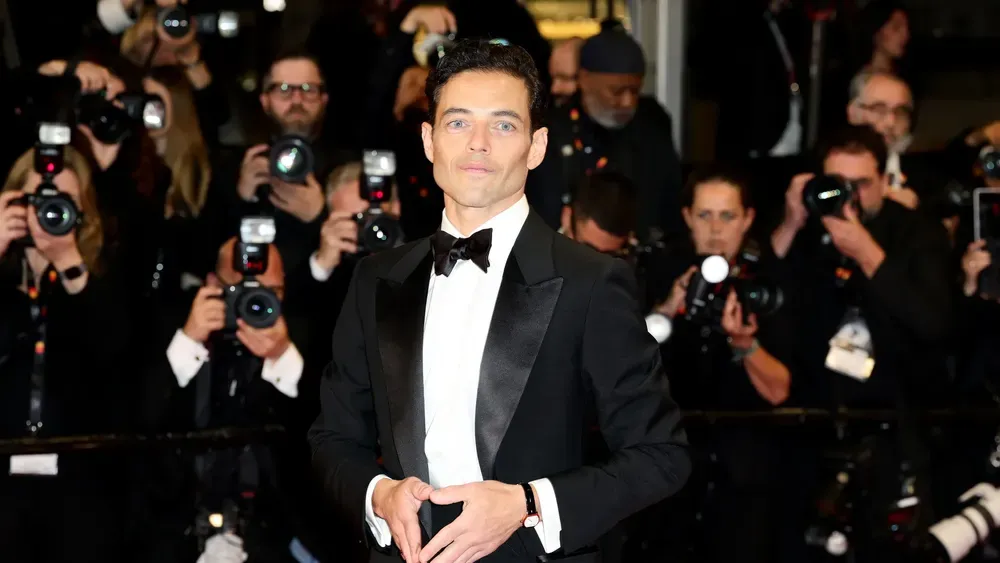
CANNES, FRANCE - MAY 20: Rami Malek attends the "The Man I Love" screening during the 79th annual Cannes Film Festival at Palais des Festivals on May 20, 2026 in Cannes, France.Photo Credit: Andreas Rentz
Rami Malek made his first appearance in the main competition at the Cannes Film Festival this week with ‘The Man I Love,’ a queer romance set amid the AIDS crisis in 1980s New York City, directed by independent filmmaker Ira Sachs. The film premiered in competition at Cannes on May 20, 2026, where it is vying both for the Palme d’Or and the LGBTQ‑focused Queer Palm, placing an explicitly queer, HIV‑focused narrative at the center of one of cinema’s most high‑profile stages.
Hesitation after Freddie Mercury
In recent interviews at Cannes, Malek acknowledged that he initially hesitated to accept the lead role in ‘The Man I Love’ because he worried audiences and the industry might see it as too close to his portrayal of Queen frontman Freddie Mercury, another charismatic performer whose story is shaped by AIDS. He said that when he first read the script, he asked himself whether the role might be “too similar,” signalling a fear of being typecast in musical or AIDS‑related projects after the global success of ‘Bohemian Rhapsody.’
Malek described resolving that hesitation by focusing on how different Sachs’ film felt in tone and perspective, ultimately deciding that ‘The Man I Love’ exists in “a different world” with a “different energy” from his Mercury performance. He framed his choice to take the role as “taking the plunge” despite the perceived risk, emphasizing that the film is less about death than about living fully under the shadow of illness.
The actor also spoke about how the experience of playing Mercury remains deeply embedded in him, saying the late singer “resides somewhere in my soul” and that he hopes Mercury will keep “advising” him throughout his life and work. In those remarks, Malek drew a thematic line between Mercury’s legacy and his new role, noting that both stories engage with queer identity and AIDS but are told in distinct cinematic registers.
Story of a queer performer living with AIDS
‘The Man I Love’ centers on Jimmy George, a gay New York performance artist in the 1980s who is living with AIDS and trying to keep creating while managing serious health complications. Malek’s character is introduced as an extravagant stage performer who has recently regained his spark after being hospitalized with AIDS‑related complications, embodying both vulnerability and flamboyant creative energy.
Within the film, Jimmy is cared for by his devoted partner, played by Tom Sturridge, while another man who moves into the same building quickly falls in love with him, creating a layered queer love triangle at a time of intense stigma and fear around HIV. The supporting cast includes Rebecca Hall and Ebon Moss‑Bachrach, with Malek describing the project as a small‑scale $5 million production that nonetheless gave him the chance to collaborate with artists he had long admired.
Sachs, who is openly gay, has a long history of telling intimate queer stories, and ‘The Man I Love’ marks his return to Cannes competition a few years after his film ‘Frankie.’ Festival materials describe the new film as exploring “the art of living life in the twilight of life,” emphasizing the dignity, creativity, and relationships of a gay man living with AIDS rather than focusing solely on tragedy.
Crafting a distinct performance and addressing fear
Discussing his preparation for Jimmy, Malek said it “took me a minute to realize it was more about life” than about death, describing the film as suffused with a “cacophony of sound and imagery and beauty” that fills the audience’s soul despite the looming threat of illness. He noted that embodying such a magnetic character brought out insecurities, explaining that Sachs told him he possessed a certain magnetism of his own, even if Malek himself was unsure he fully agreed.
Malek has described Sachs as “a library,” praising the director’s deep familiarity with the era and queer community he is depicting, and saying that the filmmaker’s confidence in him generated a performance that felt unique even before critics responded. Industry coverage has noted that Malek saw the project as a creative risk but was drawn to Sachs’ emotionally driven filmmaking and to the chance to explore queer love, art, and mortality through a more intimate lens than a studio biopic.
Reports from Cannes say the film has already attracted strong critical attention, with some outlets describing Jimmy as Malek’s most finely tailored role since Mercury and noting that the actor has sometimes struggled to find equally well‑suited parts in the years since ‘Mr. Robot.’ HOLR Magazine similarly characterized the movie as an emotional drama and highlighted Malek’s admission that he needed to work through his apprehension about repeating territory before committing fully to the part.
A queer love story on a global stage
‘The Man I Love’ is one of a relatively small number of American films in this year’s Cannes main competition, making its queer storyline about a gay artist living with AIDS especially visible on the international festival circuit. The film’s nomination for the Queer Palm underscores how central its depiction of queer relationships, desire, and chosen family is to its artistic identity.
By situating Jimmy’s story in the thick of the AIDS crisis, Sachs’ film revisits a period that continues to shape queer communities worldwide, foregrounding a gay artist’s creativity and relationships rather than reducing him to his diagnosis. The project arrives in a global context where stories of LGBTQ+ people living with HIV continue to challenge stigma and historic erasure, and its high‑profile Cannes berth signals ongoing interest in nuanced queer narratives anchored by major stars.
As sales for ‘The Man I Love’ move forward at the festival, industry coverage suggests that Malek’s performance and Sachs’ reputation in queer cinema could help the film secure international distribution, though specific deals have not yet been widely publicized. For Malek, who has spoken about moving toward directing while continuing to seek roles that challenge him, the film represents both a return to musically infused storytelling and an effort to carve out space for new, distinct portrayals of queer lives on screen.
Copyright EDGE Media Network. All rights reserved. This material may not be published, broadcast, rewritten, or redistributed.