Alec Baldwin Defends Lupita Nyong’o as “Most Beautiful Woman in the World” Amid ‘Odyssey’ Casting Backlash
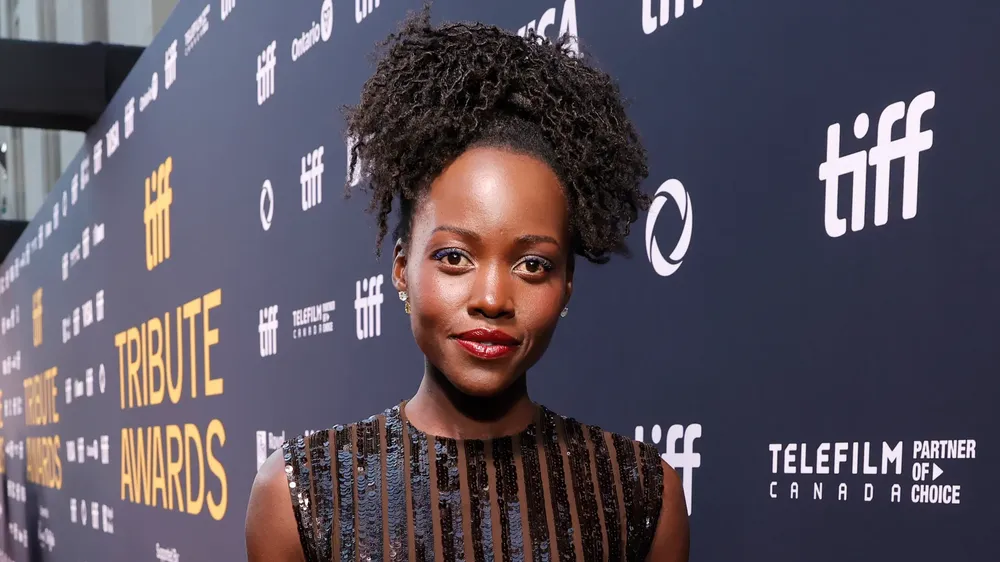
TORONTO, ONTARIO - SEPTEMBER 08: Lupita Nyong'o attends the TIFF Tribute Awards during the 2024 Toronto International Film Festival at Fairmont Royal York on September 08, 2024 in Toronto, Ontario. Photo Credit: Emma McIntyre
Alec Baldwin entered an escalating online dispute on 15 May by posting a photo of Lupita Nyong’o on Instagram and addressing Elon Musk directly over criticism of her casting in Christopher Nolan’s upcoming film "The Odyssey". In the caption, Baldwin wrote, “Dear Elon… but she IS the most beautiful woman in the world… Alec,” explicitly rebutting claims that Nyong’o should not play Helen of Troy, a character often described in Western tradition as “the most beautiful woman in the world.”
The Odyssey, Nolan, and Nyong’o’s Role
Christopher Nolan’s "The Odyssey" is one of the year’s most anticipated films, framed as a large‑scale adaptation of Homer’s epic poem and scheduled for theatrical release on 17 July. The casting of Lupita Nyong’o as Helen of Troy, along with a second role as Helen’s sister Clytemnestra, was confirmed publicly in a profile of Nolan published by "Time" magazine on 12 May.
Nyong’o, who won an Academy Award for "12 Years a Slave", has long been recognized for both her acting and her public advocacy on beauty standards and representation. She was also named People magazine’s “Most Beautiful Woman” in 2014, a detail some commentators have cited to underline Baldwin’s assertion that she can credibly embody a character famed for her beauty.
Although Nyong’o does not feature prominently in the film’s initial trailers, Nolan’s confirmation of her dual role has intensified both enthusiasm and criticism online. Outlets covering the backlash note that "The Odyssey" is already enmeshed in a broader “culture war” over casting choices, particularly given unconfirmed but widespread rumors about other roles being filled by actors from historically marginalized communities, including transgender people.
Musk, Walsh, and the “Most Beautiful Woman” Argument
The current dispute traces back to commentary from conservative podcaster Matt Walsh, who criticized Nyong’o’s casting on X, arguing that no one genuinely considers her “the most beautiful woman in the world” and framing the decision as driven by “woke” politics. Elon Musk endorsed Walsh’s comments by replying “True” and repeated his criticism in subsequent posts, accusing Nolan of sacrificing “integrity” in favor of awards‑season recognition through what he characterized as diversity‑driven casting.
Commentators aligned with Musk have argued that Homer’s descriptions of Helen of Troy emphasize fair skin and light hair, which they interpret as evidence the character should be portrayed by a white actor. Classical scholars and journalists covering the story point out that there is no historical evidence that Homer’s epic depicts real individuals, and that the text predates modern racial categories, complicating claims of “historical inaccuracy” tied to race.
Musk’s posts have been widely described as racially charged, with a number of outlets and social media users labeling the criticism of Nyong’o’s casting “tacky” or “racist,” language that reflects those commentators’ views rather than a legal determination. Coverage on political and culture‑focused platforms has framed Musk’s commentary as part of a broader pattern in which diverse casting choices become flashpoints for debate over race, gender, and representation in contemporary entertainment.
Celebrity Pushback and Representation Discourse
Baldwin is not the only public figure to respond to the backlash; earlier in the year, actor and host Whoopi Goldberg used a segment of "The View" to rebuke Musk’s comments and highlight Nyong’o’s widely acknowledged beauty. On air, Goldberg emphasized that Nyong’o is “considered one of the world’s most beautiful women” and suggested Musk “look in a mirror” if he had concerns about other people’s appearance, underscoring the view that such critiques often say more about the speaker than the subject.
Reporting across entertainment and culture outlets indicates that many social media users have welcomed Nyong’o’s casting, calling her “stunning” and expressing enthusiasm for seeing a Black woman embody a classical figure typically imagined as white. Commentators who focus on representation note that diverse casting in myth‑based stories can resonate with audiences from racial, ethnic, and LGBTQ+ communities who have historically been marginalized in mainstream depictions of ancient narratives, though specific survey data tying this film to LGBTQ+ viewers has not been published as of mid‑May.
Sites that track franchise and blockbuster casting controversies note that "The Odyssey" follows a string of high‑profile projects in which non‑traditional casting—whether of Black actors in European‑set stories, or of openly LGBTQ+ performers in roles not explicitly written as queer—has provoked intense online debate, sometimes well before audiences have seen the final work. Analysts suggest that these disputes often become proxies for broader disagreements over demographic change, cultural power, and the place of historically excluded communities in popular storytelling.
Industry Stakes Ahead of Release
For Nolan, "The Odyssey" arrives after the critical and commercial success of "Oppenheimer", raising expectations for another technically ambitious, thematically dense film that can perform globally. Trade and entertainment outlets report that the movie is positioned as a major summer tentpole, with a large budget and a star‑studded cast beyond Nyong’o, though full casting details have not yet been disclosed in official studio press materials.
Media coverage notes that controversies surrounding race and representation can affect pre‑release narratives but do not reliably predict box office performance, with previous films facing online backlash sometimes going on to perform strongly. Commentators also point out that the dispute is unfolding months before audiences will be able to evaluate Nyong’o’s performance, meaning the discussion is currently driven more by symbolism, aesthetics, and identity politics than by reactions to the completed film.
Within this context, Baldwin’s concise declaration that Nyong’o “IS the most beautiful woman in the world” functions both as a personal compliment and as a counter‑narrative to claims that beauty—and, by extension, certain archetypal roles—should be tied to whiteness. For many fans and observers, the exchange highlights how casting decisions in large‑scale adaptations can become flashpoints for discussions about race, power, and the visibility of Black and other marginalized performers in roles that carry deep cultural resonance.
Copyright EDGE Media Network. All rights reserved. This material may not be published, broadcast, rewritten, or redistributed.