Clay Aiken Reflects on Infamous 2006 Kelly Ripa Conflict as the “Most Catastrophic Week” of His Career
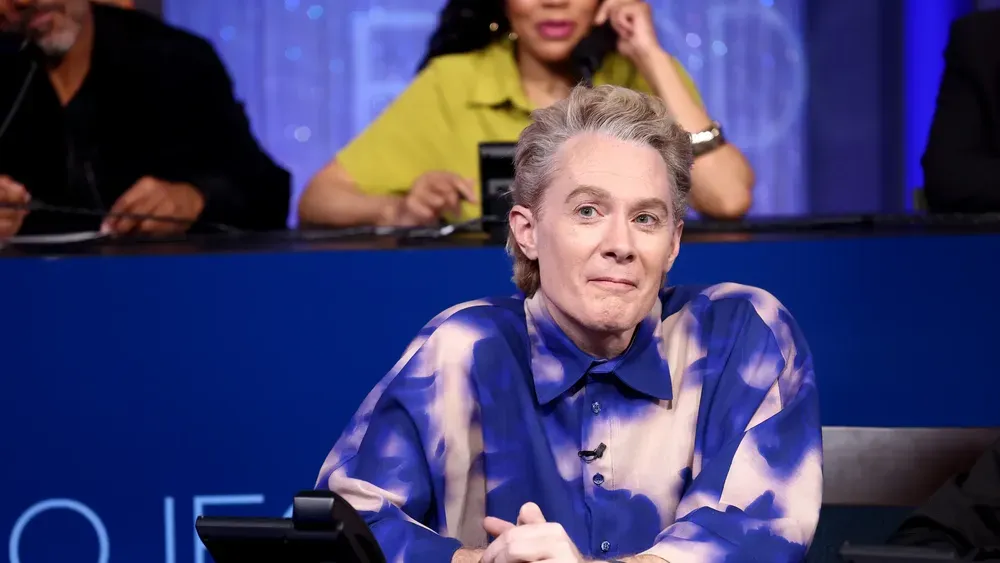
LOS ANGELES, CALIFORNIA - JUNE 27: Clay Aiken is seen onstage during Project Angel Food's Lead With Love 7 - A Fundraising Special On KTLA at KTLA 5 on June 27, 2026 in Los Angeles, California. Photo Credit: Tommaso Boddi
On June 24, 2026, former American Idol finalist and multi-platinum recording artist Clay Aiken revisited one of the most polarizing moments of his career during an appearance on the Hollywood Raw podcast . Speaking with hosts Dax Holt and Adam Glyn, Aiken reflected on the November 17, 2006, episode of Live with Regis and Kelly, during which he served as a guest co-host alongside Kelly Ripa . The incident occurred during an interview with the then-recent Dancing with the Stars champions, Emmitt Smith and Cheryl Burke . Aiken, attempting to interject a question while Ripa was speaking, playfully placed his hand over Ripa’s mouth to silence her .
The Following Week: From Discomfort to Disaster
The situation escalated significantly the following Monday when Regis Philbin returned to his hosting chair . Ripa used the platform to voice her continued frustration with Aiken’s behavior, describing it as "hostile" and "disrespectful" . She informed viewers that she did not appreciate being touched in such a manner during an interview and emphasized the importance of boundaries in professional settings . Aiken noted on Hollywood Raw that Ripa's influence at the time was immense, stating, "She had such a powerful voice back then," which helped fuel a week of relentless tabloid coverage .
Aiken characterized this period as the "most catastrophic week" of his life, noting that the media scrutiny became overwhelming . He explained that while the public might only remember a "silly" exchange, for him, the fallout resulted in lasting "scars" due to the intensity of the backlash . At the time, Aiken was one of the most recognizable faces in the United States, and the narrative that he was unprofessional or "hostile" threatened the carefully curated public image he had maintained since his 2003 appearance on American Idol .
The Rosie O’Donnell Intervention and the Question of Identity
The controversy took a more complex turn when Rosie O’Donnell weighed in during a segment of The View . O’Donnell accused Ripa of making a "homophobic" remark when she joked about not knowing where Aiken’s hand had been . O’Donnell argued that if a "straight man" or a "cute man" whose sexuality was not being questioned by the public had performed the same gesture, Ripa’s reaction would have been entirely different . Ripa eventually called into The View to defend herself, calling the homophobia accusation "outrageous" and maintaining that her concern was strictly related to hygiene and "germs" during cold and flu season .
For Aiken, O’Donnell’s defense was a double-edged sword . At the time of the incident in 2006, Aiken had not yet publicly come out as gay—a revelation he would not make until a People magazine cover story in 2008 . In his recent interview, Aiken reflected on how O’Donnell’s comments effectively outed him by proxy, creating an agonizing situation where his private life was being debated by national media figures while he remained in the closet . He previously shared in the book Ladies Who Punch that the day O'Donnell spoke out was "the worst day of my life" because it confirmed the public's suspicions before he was ready to share his truth .
Navigating Fame Through an LGBT+ Lens
Aiken’s retrospective offers a window into the unique difficulties faced by LGBTQ+ individuals in the mid-2000s . During the Hollywood Raw interview, Aiken touched on the "American Idol fame machine" and how the intense scrutiny of his personal life influenced his interactions . The era was defined by a tabloid culture that often targeted celebrities whose identities did not conform to heteronormative standards . Aiken noted that during the guest-hosting incident, he was hyper-aware of his public perception and felt that any misstep could be amplified into a referendum on his character .
Aiken’s experience highlights the "person-first" reality of public figures navigating their identity; he was a musician and aspiring host first, yet the media discourse frequently reduced him to his speculated sexuality . The controversy with Ripa became a focal point for a larger national conversation about respect, gender dynamics, and homophobia, often at the expense of Aiken's personal well-being . He ultimately chose to come out in 2008 to ensure his son would grow up with a father who was honest and open .
20 Years Later: Healing and Perspective
As of June 2026, the tension between the two stars appears to have largely dissipated, at least from one side of the aisle . A source close to Kelly Ripa informed Entertainment Weekly that the veteran talk show host has long since moved past the awkward exchange . The source remarked that because the incident occurred two decades ago, it is "quite silly for it to be a story now" .
Aiken, however, emphasized that the internal impact of such a "catastrophic week" does not simply vanish because time has passed . His decision to speak about it now serves as a reflection on how much the media landscape and the treatment of LGBTQ+ people have evolved since 2006 . Since the incident, Aiken has expanded his career into politics, running for Congress in North Carolina’s 2nd and 4th districts, and has become a prominent advocate for the LGBTQ+ community and person-first language in public policy .
Despite the "disastrous" nature of that particular week in 2006, Aiken maintains a sense of humor about his early career struggles while acknowledging the gravity of being a young, closeted man in the center of a national scandal . The 20-year retrospective serves as a reminder of the power of live television and the enduring nature of celebrity feuds in the digital age .
Copyright EDGE Media Network. All rights reserved. This material may not be published, broadcast, rewritten, or redistributed.