Rapper DDG Faces Backlash After Labeling Men Who Watch 'Love Island' Alone as ‘Gay’ and ‘Bisexual’
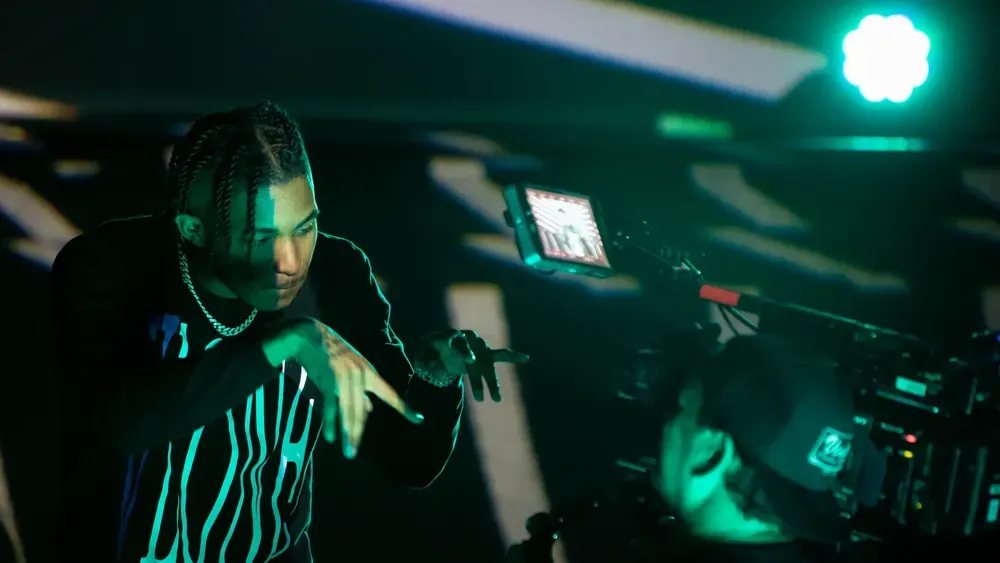
LOS ANGELES, CALIFORNIA - NOVEMBER 14: Musical artist DDG on set during filming of Sony collaboration campaign with DDG and Neen Williams at The Berrics on November 14, 2019 in Los Angeles, California. Photo Credit: Randy Shropshire
The intersection of reality television and traditional gender norms has once again become a focal point of digital discourse following comments made by rapper and streamer Darryl Dwayne Granberry Jr., known professionally as DDG . During a livestream held on July 6, 2026, the artist asserted that men who consume certain forms of entertainment without female companionship are inherently questioning their sexuality . His specific targeting of the popular reality series Love Island USA has ignited a conversation regarding toxic masculinity and the ongoing stigma surrounding men’s leisure activities .
The Comments in Context
The controversy began when DDG addressed his audience regarding his current viewing habits and the changes in his lifestyle following his highly publicized separation from actress Halle Bailey . DDG explained to viewers that he has intentionally avoided the current season of Love Island USA because he is not presently in a relationship . "I haven't watched Love Island," the rapper stated during the broadcast. "You know why? 'Cause I don't have anybody to watch it with" .
However, the musician’s explanation quickly shifted from personal preference to a broader generalization about male sexuality. DDG proceeded to claim that solo viewership of the show by men is a sign of being gay or bisexual . "I think it’s gay to watch Love Island by yourself," he remarked to his streaming audience . He further doubled down on these assertions, suggesting that any man watching the program alone might be bisexual .
To justify his stance, DDG characterized Love Island—a show where contestants live in a villa and attempt to find romantic partners through various challenges—as being akin to "soft p-o-r-n" . He argued that for a man to watch the contestants, who are primarily arranged in heterosexual pairings, engage in physical affection like kissing was "a little bisexual" if done without a woman present . These comments extended beyond television; the rapper also claimed that he would feel unable to visit a movie theater alone for fear of being perceived as bisexual by others .
Criticism and Social Media Reaction
The rapper’s statements were met with immediate pushback from LGBTQ+ advocates and social media users who pointed out the exclusionary nature of his rhetoric. Critics argued that labeling benign activities such as watching a television show or visiting a cinema as indicators of one’s sexual orientation reinforces harmful stereotypes and limits the emotional and social freedom of men . Many viewers noted that his comments reflect a rigid, "hyper-masculine" worldview that views men’s interests through a strictly performative lens, where every action must be validated by a female partner to avoid being labeled as "gay" .
Discussion on platforms like Reddit highlighted the irony of DDG’s stance, given his previous history of participating in content that centers on dating and romance . Furthermore, commentators argued that using "gay" and "bisexual" as descriptors for behaviors he finds undesirable is a form of casual homophobia that continues to marginalize gay men and bisexual people .
A History of Public Controversy
This is not the first time DDG’s public statements or creative choices have sparked significant controversy regarding his views on relationships and gender. The rapper has often been criticized for his "embarrassing antics" on social media, which many fans believe have targeted his ex-partner, Halle Bailey .
In May 2023, following the release of Bailey’s starring role in the live-action The Little Mermaid, DDG released a song titled "Famous" . The lyrics included derogatory references to dating a famous woman and appeared to express insecurity regarding Bailey’s professional obligations, specifically mentioning her "kissing dudes" on film sets . At the time, social media users slammed the track as a "nasty" response to his girlfriend's success .
Legal Battles and Allegations of Abuse
The relationship between DDG and Halle Bailey, which began in 2022 and produced a son named Halo in late 2023, officially ended in October 2024. The split was followed by a contentious legal battle in 2025. Bailey was initially granted a temporary restraining order against DDG in May 2025, after filing court documents alleging multiple instances of physical and verbal abuse. DDG responded by denying the claims and filing his own domestic violence restraining order request in June 2025, alleging emotional instability.
According to the initial legal filings, Bailey alleged that DDG had pulled her hair and slammed her face into a steering wheel. She also submitted photographic evidence of bruising. DDG initially responded to the allegations during a livestream, claiming the reports were "fake news".
However, the hostile legal battle did not result in permanent court mandates. In late October 2025, Halle Bailey and DDG agreed to dismiss their mutual restraining orders. The musicians opted to work cooperatively in good faith, settling on a joint custody and visitation schedule to co-parent Halo while agreeing to stop publicly disparaging each other online.
Continued Focus on Dating and Media Perception
Despite the serious nature of the 2025 legal proceedings, DDG has continued to center much of his public persona around his dating life and his opinions on romantic dynamics. He was briefly linked to India Love in late 2025, though the two reportedly separated by early 2026 . His career as a content creator has remained focused on livestreaming, where he often shares unfiltered opinions that frequently result in viral backlash .
The rapper’s recent comments about Love Island highlight a broader trend in his content where he equates "maleness" with a refusal to engage in "soft" or "feminine" activities unless they are facilitated by a romantic partner . This ideology, often categorized under the umbrella of toxic masculinity, suggests that men’s identities are fragile and subject to question if they do not adhere to specific performative standards .
Broader Cultural Implications
The backlash against DDG’s stream underscores a shifting cultural landscape where the use of LGBTQ+ identities as a pejorative or as a tool for gatekeeping masculinity is increasingly rejected . By labeling bisexual people and gay men through the lens of specific viewing habits, the rapper has inadvertently contributed to the very "drama" that Halle Bailey previously accused him of creating for the sake of his audience .
As reality shows like Love Island USA continue to draw massive audiences across all demographics, the debate over who "can" or "should" watch such programming reveals persistent anxieties regarding gender and sexuality in the digital age . For DDG, the comments represent another chapter in a career defined by controversy and a complex, often adversarial relationship with both his former partner and the public's expectations of modern masculinity .
Copyright EDGE Media Network. All rights reserved. This material may not be published, broadcast, rewritten, or redistributed.