
Madison Square Garden Surveillance Database Exposed: Leaked Records Reveal Systematic ‘LGBTQIA’ Categorization of Celebrities
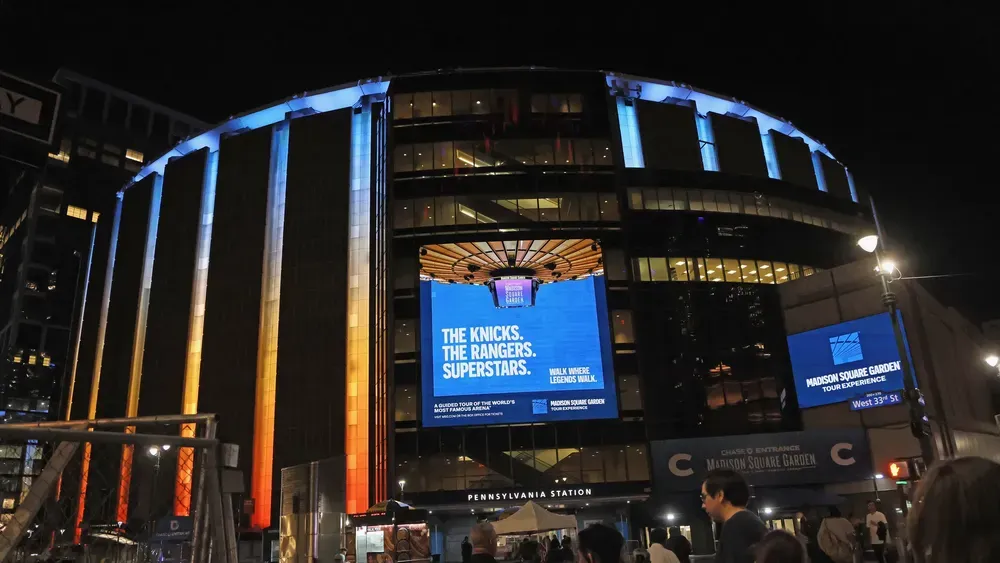
NEW YORK, NEW YORK - AUGUST 27: A general view of Madison Square Garden on August 27, 2024 in New York City. The weeks leading up to the Labor Day holiday weekend draw large crowds to the city.Photo Credit: Bruce Bennett
New details emerged on July 9, 2026, regarding the depth of surveillance and data collection at Madison Square Garden and its affiliated venues. A report published by Wired revealed that the company maintains a massive "talent" database containing 39,539 entries that track prominent figures, athletes, and their personal guests . Among the most controversial findings is the systematic categorization of individuals based on their race, gender identity, and sexual orientation .
This revelation follows a period of intense scrutiny for MSG owner James Dolan, who has faced mounting criticism for his use of facial recognition technology to bar perceived enemies from his venues, which include Radio City Music Hall and the Las Vegas Sphere . The talent database also reportedly assigned "risk" ratings to approximately 400 celebrities, though the majority of the nearly 40,000 names in the system did not carry such a score .
Data Breach and the ShinyHunters Leak
The internal documents were made public following a massive data breach in June 2026, orchestrated by the hacker group known as ShinyHunters . The group reportedly exfiltrated 45 gigabytes of data from MSG, comprising roughly 26 million customer records and internal files . 404 Media, which first analyzed the breach, noted that the data included biometric information, personal contact details, and dossiers on critics of the venue’s surveillance practices .
Among the files released were records concerning attendees at the high-profile wedding of Taylor Swift and Travis Kelce, which took place at Madison Square Garden . The database listed several wedding guests, including Ice Spice, Selena Gomez, Michael Strahan, and Mariska Hargitay, categorizing them as "low risk" . The inclusion of private event guests in a searchable security database has intensified the debate over the boundaries of corporate surveillance in public spaces.
The leaked data also uncovered a folder specifically labeled "Talent," which contained sensitive records on former New York Knicks players, coaches, and family members of MSG executives . The database entries date back to at least December 2020 and frequently mention "SM concerns," which investigators believe refers to Social Media monitoring .
Systematic Surveillance of Transgender Individuals
The July revelations about celebrity tagging build upon earlier reporting that MSG security targeted everyday patrons based on their gender identity. In April 2026, a whistleblower lawsuit and subsequent investigation detailed the case of "Nina Richards," a transgender woman and New York Knicks fan who was allegedly tracked by MSG security for two years .
According to former security staffers, Richards was monitored "second by second, minute by minute" during her visits to the Garden . Security logs reportedly tracked when she scanned her ticket, who she hugged, and even her movements in and out of the bathrooms . The report alleged that MSG's security chief, John Eversole, wanted Richards kept away from players solely because of her identity as a transgender woman .
MSG Entertainment has denied these specific allegations, calling the reporting "false, misleading, and unverified" while stating they are "actively evaluating" legal options against the publishers . However, the July 9 release of the leaked "LGBTQIA" tag list has provided fresh evidence of a broader pattern of identity-based tracking.
Backlash from Privacy Advocates and Civil Rights Groups
The discovery of the "LGBTQIA" list has drawn sharp condemnation from digital rights and privacy advocacy groups. Organizations like the Surveillance Technology Oversight Project and the Electronic Frontier Foundation have long warned about the dangers of MSG's biometric surveillance .
Albert Fox Cahn, the founder of STOP, was one of the individuals found to have a personal dossier in the leaked MSG files . The dossier on Cahn reportedly included his social media activity, follower counts, and personal background, part of a file titled "Fac Recognition Activ.docx" . Other activists targeted included Adam Schwartz of the EFF and Evan Greer of Fight for the Future .
"The revelation that MSG is specifically tagging people as 'LGBTQIA' is a terrifying expansion of their already invasive surveillance," said privacy advocates in recent statements following the leak . Critics argue that creating databases of marginalized identities poses a direct threat to the safety of transgender people and queer individuals, particularly in a political climate where LGBTQ+ rights are under active legislative challenge.
Legal Implications and Future Outlook
The fallout from the June breach and the July disclosures has led to immediate legal consequences for MSG. A federal class-action lawsuit was initiated shortly after the ShinyHunters data release, focusing on the alleged failure of the venue to protect customer data and the unethical collection of biometric and identity-based information .
Furthermore, lawmakers in New York have previously introduced legislation to curb the use of facial recognition technology in public accommodations, a move spurred by MSG’s practice of banning lawyers from firms involved in litigation against the company . The new evidence of an "LGBTQIA" list is expected to bolster calls for stricter regulation and more transparent oversight of how private entities collect and store data on the sexual orientation and gender identity of their patrons.
As of July 9, 2026, Madison Square Garden Entertainment has not provided a specific comment on the existence of the "LGBTQIA" tags within the talent database . The investigation remains ongoing as cybersecurity experts and civil rights lawyers continue to sift through the 45GB of leaked records.
Copyright EDGE Media Network. All rights reserved. This material may not be published, broadcast, rewritten, or redistributed.