From 'Naked Highway' to Netflix: How Wash Westmoreland’s Adult Film Roots Shaped the 'Heartstopper Forever' Finale
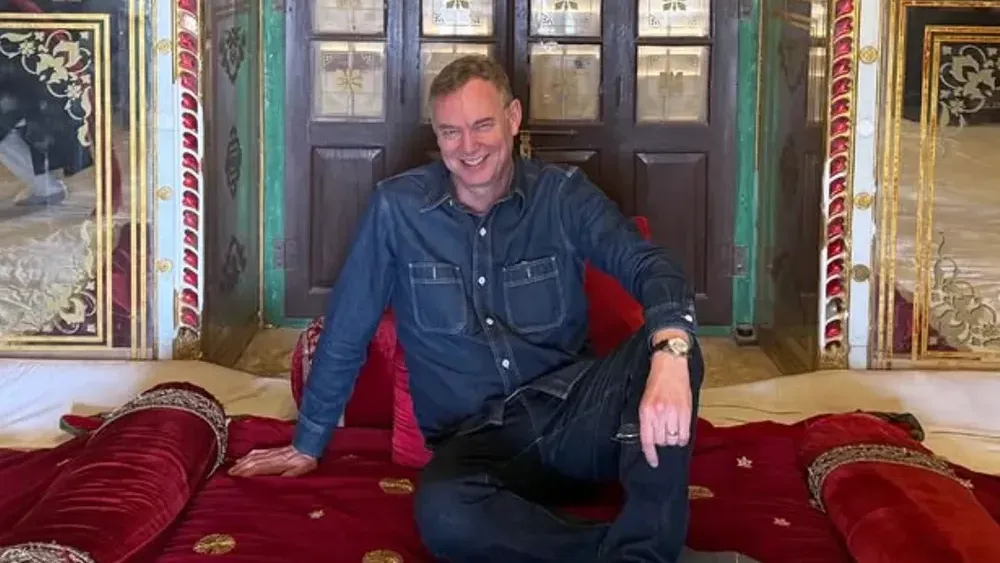
Photo Credit: Wash Westmoreland / Instagram
The countdown to the series finale of Netflix’s revolutionary queer coming-of-age drama has officially entered its final days. 'Heartstopper Forever', a feature-length film set to conclude the story of Nick Nelson and Charlie Spring, is scheduled for global release on July 17, 2026 . While the original series, adapted from Alice Oseman’s graphic novels , was celebrated for its "pastel-hued idealism" and gentle depiction of teenage love, the upcoming film promises a more mature exploration of queer adulthood . At the center of this shift is director Wash Westmoreland, a filmmaker whose professional trajectory began in the unapologetic and often "wild" world of independent gay adult cinema .
The Early Career of Wash West
Before achieving mainstream success with Academy Award-winning projects like Still Alice, Wash Westmoreland operated under the pseudonyms "Wash West" and "Bud Light" . In the late 1990s and early 2000s, Westmoreland was a prolific and critically acclaimed director in the gay adult industry, known for bringing a distinct cinematic sensibility to a genre often dismissed by the mainstream .
His 1997 film Naked Highway, produced for BIG Video, was lauded for its stylistic choices, including the use of alternating color and black-and-white sequences and a narrative structure influenced by Ridley Scott’s Thelma & Louise . The film was not merely a collection of explicit scenes but a road-trip narrative that earned Westmoreland an Adult Erotic Gay Video Award and an AVN Award in 1998 . Westmoreland’s work during this period was frequently recognized for its focus on intimacy and "touching," standing in contrast to the more mechanical productions of the era .
Other notable "wild" entries in his adult filmography include The Hole , a parody of the horror film The Ring, and The Devil is a Bottom, which won a GayVN Award for "Best Sex Comedy" . He also directed Seven Deadly Sins: Gluttony , a reimagining of Oscar Wilde’s The Picture of Dorian Gray within the adult industry . These projects demonstrated a penchant for subverting pop culture tropes and literary classics, a skill that would later translate to his work in traditional independent cinema.
The Transition to Mainstream Prestige
The bridge between Westmoreland’s adult film roots and his mainstream career was the 2001 independent film The Fluffer, which he co-directed with his late husband and professional partner, Richard Glatzer . The Fluffer served as a dramatic exploration of obsession and power dynamics within the gay porn industry, effectively utilizing Westmoreland’s first-hand experience to create a narrative that was both authentic and accessible to wider audiences .
Following the success of The Fluffer, Westmoreland transitioned into directing documentaries and feature films, including Gay Republicans and the Sundance Grand Jury Prize winner Quinceañera . His international breakthrough came with the 2014 film Still Alice, which earned Julianne Moore an Academy Award for Best Actress . Despite his ascension to Hollywood’s upper echelons, Westmoreland has remained committed to queer storytelling, directing projects such as Colette , starring Keira Knightley as the legendary bisexual French author .
A Mature Conclusion for 'Heartstopper Forever'
The appointment of Westmoreland to direct Heartstopper Forever signaled a shift in tone for the franchise as it moves into the territory of Volume 6 of the graphic novels and the Nick and Charlie novella . Recent interviews with lead actors Kit Connor and Joe Locke indicate that the film will not shy away from the sexual development of its protagonists, who are now aged 17 and 18 .
In a conversation published on July 10, 2026, Connor stated that showing the physical side of the characters' relationship was essential to the story's evolution, noting, "It would be weird not to show the sex" . The film reportedly includes an early sequence where the pair engages in sexual activity on a pier, alongside scenes depicting mutual masturbation . This "quite steamy" approach marks a departure from the series’ earlier seasons, which focused primarily on the emotional and social aspects of teenage queer identity .
Westmoreland’s background in adult cinema provides a unique lens for these scenes. His early work was characterized by a desire to depict gay desire with technical artistry and emotional honesty, rather than as something purely clinical or scandalous . In Heartstopper Forever, this translates into a "cinematic and emotional" finale that navigates the challenges of long-distance relationships as Nick departs for university .
Production Details and Cast Changes
The feature film, which was completed in July 2025, sees the return of most of the original ensemble cast, including William Gao , Yasmin Finney , and Tobie Donovan . Notably, Kit Connor and Joe Locke have taken on expanded roles as executive producers for the finale .
One significant change for the film is the recasting of Sarah Nelson, Nick’s mother. Due to a scheduling conflict, Olivia Colman was unable to return, and the role was filled by Anna Maxwell Martin . Additionally, legendary actor Derek Jacobi joins the cast as an older gay man who offers guidance to the young couple as they contemplate their future together .
Writer Alice Oseman, who penned the screenplay for the finale, confirmed that the movie would "slightly" deviate from the storyline presented in the sixth volume of her graphic novels, offering fans a unique "grand" cinematic conclusion . As the "warm bath of inclusivity" that defined the series comes to an end, Westmoreland’s direction ensures that the final chapter of Heartstopper remains both a celebration of queer joy and an honest portrayal of the transition into adulthood .
Copyright EDGE Media Network. All rights reserved. This material may not be published, broadcast, rewritten, or redistributed.