Frankie Grande Addresses 'Femmephobia' and the Misogynistic Roots of Hate Within the Gay Community
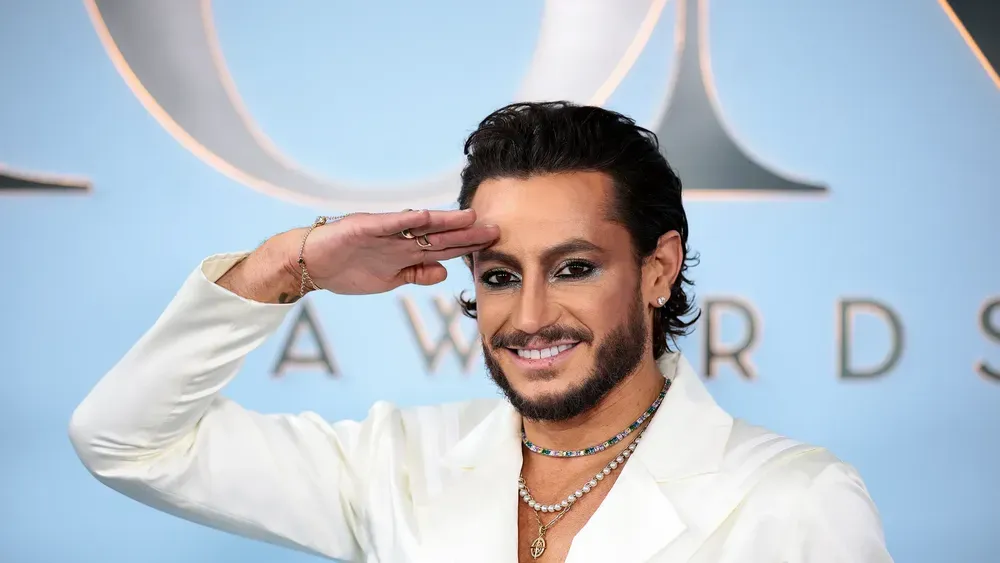
NEW YORK, NEW YORK - JUNE 07: Frankie Grande attends The 79th Annual Tony Awards at Radio City Music Hall on June 07, 2026 in New York City. Photo Credit: Dimitrios Kambouris
On July 17, 2026, Broadway star and social media personality Frankie Grande provided a candid look into the "femmephobia" he frequently encounters from within the gay community, specifically addressing the backlash he receives for embracing his femininity . Speaking from backstage at the St. James Theatre, where he is currently performing in the hit musical Titanique , Grande reflected on the evolution of his public persona and the realization that much of the hate directed toward him is rooted in a societal devaluation of feminine traits . Grande, 43, noted that while he initially struggled to understand why he was a lightning rod for criticism among his peers, writing his new memoir, Supergay!, allowed him to identify the phenomenon as a systemic issue rather than a personal failing .
The Roots of Internalized Femmephobia
Grande’s reflections come at a time when discussions surrounding "masc-for-masc" culture and the marginalization of effeminate men have intensified within queer spaces. The performer explained that his choice to present with glitter, makeup, and heels is often viewed as a defiance of both heterosexual and queer gender norms . "I am a victim of misogyny as a fem-presenting man, which is crazy to me," Grande stated, arguing that the hatred he faces is more aligned with the way women are treated in a patriarchal society than with traditional homophobia . He posited that because women are often "deemed lesser," men who adopt feminine characteristics are seen as choosing a "lower" status, triggering aggressive responses from those who equate masculinity with power .
This sentiment was echoed in earlier discussions where Grande highlighted the performative masculinity required in spaces like gyms. He observed how "very effeminate men" often feel the need to "butch it up" in locker rooms to find acceptance or sexual partners, a dynamic he described as "weird and interesting" . By reclaiming the term "power bottom" and leaning into a "sparkly" aesthetic, Grande aims to subvert the narrative that queer men must present as masculine to be respected .
A Memoir of Authenticity: "Supergay!"
The release of his memoir, Supergay!, on June 24, 2026, served as the primary catalyst for these revelations . The book details Grande’s journey from a "frat brother" persona to his current state as an unapologetically flamboyant artist . In the memoir, he describes his gender expression as "femboy," influenced by icons like Madonna, David Bowie, and George Michael . Grande shared that for much of his youth, he viewed his love for makeup and his effeminate nature as "flaws" because he lacked visible role models who shared those traits .
During an appearance on Obsessed: The Podcast on July 8, 2026, Grande explained that the subtitle of his book—"The good gay comes out on top even when he’s a bottom"—is a playful but firm nod to his mission of empowering those who feel marginalized by traditional hierarchies . He emphasized that being "super gay" is not a pejorative but a "superpower," particularly in a political climate where LGBTQ+ individuals are often scapegoated .
Resilience Through Sobriety and Family Support
A significant portion of Grande’s recent outreach focuses on his sobriety, which he credits as the foundation for his ability to handle public scrutiny. Now seven and a half years sober, Grande revealed that his sister, pop superstar Ariana Grande , played a pivotal role in his recovery after he "vanished into drugs" following his appearance on Big Brother in 2014 . At that time, the online hate he received—which included homophobic slurs and death threats—fueled his addiction .
In a 2025 conversation with his sister for Interview Magazine, he explained that he now views himself as a "shield" for others in the community . "I know that there needs to be a figure that people can aim their hatred at, and I'm at a place in my life where I can take it," he told her . This resilience has allowed him to lead with authenticity in a world that "loves to debate who gets to shine" .
Artistic Expression as Advocacy
Grande’s current role as Victor Garber in Titanique at the St. James Theatre serves as a physical manifestation of his "femboy" identity . The show, which has become a staple of queer Broadway, provides a platform where Grande can be "insanely femme" while remaining totally himself . His new music, including the tracks "Rhythm of Love" and "Boys," is described by the artist as being specifically "for the community," aimed at providing "homosexual mayhem" and queer joy .
Grande’s advocacy extends beyond his personal expression to broader issues of LGBTQ+ unity. He has frequently called for the community to stand together, particularly in support of transgender rights, noting that "unapologetically embracing my homosexuality is important" when others are scared to be themselves .
Despite the progress made in LGBTQ+ visibility, Grande acknowledges that the "current administration" and regional politics have made it unsafe for many to live authentically, which motivated him to write Supergay! for "the little queerdos" who need to see a "Glitter Jesus" represented in media . His message remains consistent: authenticity is not just a personal choice but a necessary act of defiance against both external and internal prejudices .
Copyright EDGE Media Network. All rights reserved. This material may not be published, broadcast, rewritten, or redistributed.