Megan Rapinoe Reveals AI Software Flagged Trans Allyship as Brand "Risk"
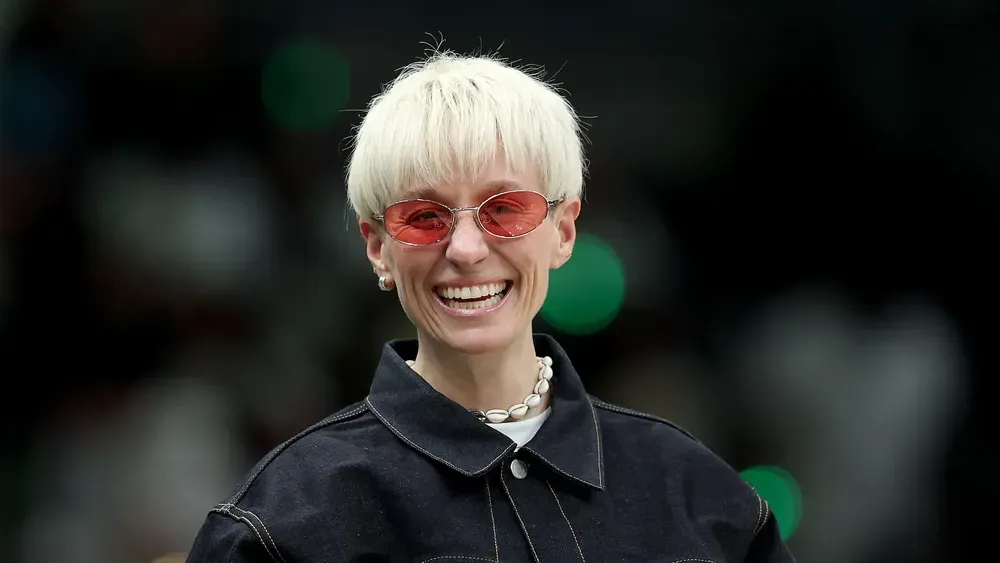
SEATTLE, WASHINGTON - SEPTEMBER 16: Megan Rapinoe reacts during the game between the Seattle Storm and the Las Vegas Aces at Climate Pledge Arena on September 16, 2025 in Seattle, Washington. Photo Credit: Steph Chambers
Two-time World Cup champion and Olympic gold medalist Megan Rapinoe revealed this week that her long-standing advocacy for the LGBTQ+ community resulted in the loss of a major commercial partnership . Writing in an op-ed published by Marie Claire on July 13, 2026, Rapinoe detailed an incident where she was allegedly removed from a World Cup advertisement after automated brand safety software flagged her public support for transgender rights as a potential liability .
The Legal Backdrop: SCOTUS Upholds Athlete Bans
The disclosure of the lost brand deal coincides with a period of intense legal and political scrutiny regarding transgender rights in the United States. On June 30, 2026, the U.S. Supreme Court issued a landmark 6-3 ruling in the cases of West Virginia v. B.P.J. and Little v. Hecox . The court’s decision upheld state laws in West Virginia and Idaho that prohibit transgender girls and women from participating in school sports teams that align with their gender identity .
The Supreme Court majority found that these state-level bans do not violate Title IX, the federal law protecting students from sex-based discrimination, nor the 14th Amendment’s Equal Protection Clause . While the ruling does not create a nationwide prohibition, it effectively greenlights the enforcement of such bans in the 27 states that have already passed similar restrictive legislation .
Rapinoe’s op-ed was written as a direct response to this judicial development, which she characterized as a "smoke screen" intended to distract the public from the real challenges facing women’s sports, such as unequal pay and lack of resources . She argued that the ruling targets a small, vulnerable group of transgender youth who simply wish to participate in sports with their peers .
Algorithmic Bias and Brand Safety
The specific mention of AI software flagging advocacy as a "risk" highlights a growing concern in the intersection of technology and civil rights. Brand safety tools are designed to scan vast amounts of data, including social media posts, news mentions, and public statements, to determine if an individual’s brand alignment could spark backlash from consumers or political entities . When these algorithms categorize social justice advocacy or allyship with marginalized groups as "controversial," it can create a chilling effect on public figures who might otherwise use their platforms for activism .
Critics of these automated systems argue that they often lack the nuance to distinguish between "scandalous" behavior and principled advocacy . In Rapinoe’s case, her support for transgender people—a stance she has maintained for years—was treated by the software as a quantifiable liability during a time of high political polarization . Rapinoe noted that brands are often quick to celebrate Pride Month or claim inclusive values, but the use of such software reveals a contradictory internal metric where allyship is viewed through the lens of potential financial loss .
Reactions to the Supreme Court Decision
The Supreme Court’s 6-3 decision has drawn sharp reactions from across the political and social spectrum. The Human Rights Campaign , the nation's largest LGBTQ+ advocacy group, called the ruling "deeply disappointing" and stated that it allows states to "leave transgender student athletes behind simply for who they are" . HRC President Kelley Robinson emphasized that the ruling does not necessitate a federal ban and urged inclusive states to remain a sanctuary for all athletes .
Conversely, proponents of the bans, including conservative lawmakers and some former athletes, hailed the decision as a victory for "fairness" in women’s sports . They argue that biological differences provide an unfair advantage to transgender women and girls, a claim that the Supreme Court majority seemingly validated by ruling that athletic eligibility can be based on biological sex .
Rapinoe has consistently challenged this narrative, arguing that the exclusion of transgender girls harms the spirit of sports and the dignity of all women . She has been joined in this stance by other prominent athletes, including Sue Bird , Billie Jean King , and Dawn Staley , all of whom have signed briefs or made public statements supporting transgender inclusion .
The Impact on Professional Athletes
The financial repercussions Rapinoe faced underscore the precarious position of professional athletes who choose to engage in social activism. For Rapinoe, the loss of a brand deal is not just a personal financial hit but a signal to other athletes that their values may be quantified and weaponized against them by the very brands that sponsor them .
Despite these setbacks, Rapinoe has signaled that she will not be silenced. In her op-ed, she urged for collective action, stating, "Standing up for our trans siblings and welcoming them on the field sends a powerful message to these politicians that we reject their hate and division" . She emphasized that the fight for transgender rights is inseparable from the fight for gender equality at large, noting that the same legislative forces seeking to ban transgender athletes are often those seeking to restrict reproductive rights and equal pay .
Corporate Accountability and the Future
As AI continues to play a central role in corporate decision-making, the call for transparency and ethical guidelines in talent vetting is intensifying. Advocates for LGBTQ+ inclusion are increasingly calling on brands to disclose the criteria used by their safety software and to ensure that support for human rights is not misclassified as a "risk" .
The current climate, fueled by the June 30 Supreme Court ruling, suggests that the tension between corporate interests and civil rights advocacy will continue to be a defining feature of the sports and marketing landscape. For Rapinoe, the path forward remains clear: continued visibility and unapologetic support for the transgender community, regardless of the algorithmic cost . "Every girl deserves to have that experience ," she wrote, "and no girl deserves to be discriminated against" .
The broader sports community now faces a pivotal moment. With the highest court in the land permitting the exclusion of transgender student-athletes, the responsibility for fostering inclusive environments may shift more heavily toward individual athletes, coaches, and professional organizations . Organizations like the Women’s Sports Foundation and the Women’s National Basketball Players Association have already reiterated their commitment to inclusion in the wake of the SCOTUS ruling .
As the 2026 sports season continues, the fallout from both the Supreme Court's decision and the increasing use of AI in talent management will likely remain at the forefront of the national conversation on equality and the role of athletes in society.
Copyright EDGE Media Network. All rights reserved. This material may not be published, broadcast, rewritten, or redistributed.