Sam Smith’s 'Hazel Eyes' Turns Queer Love Into This Month’s Pop Statement
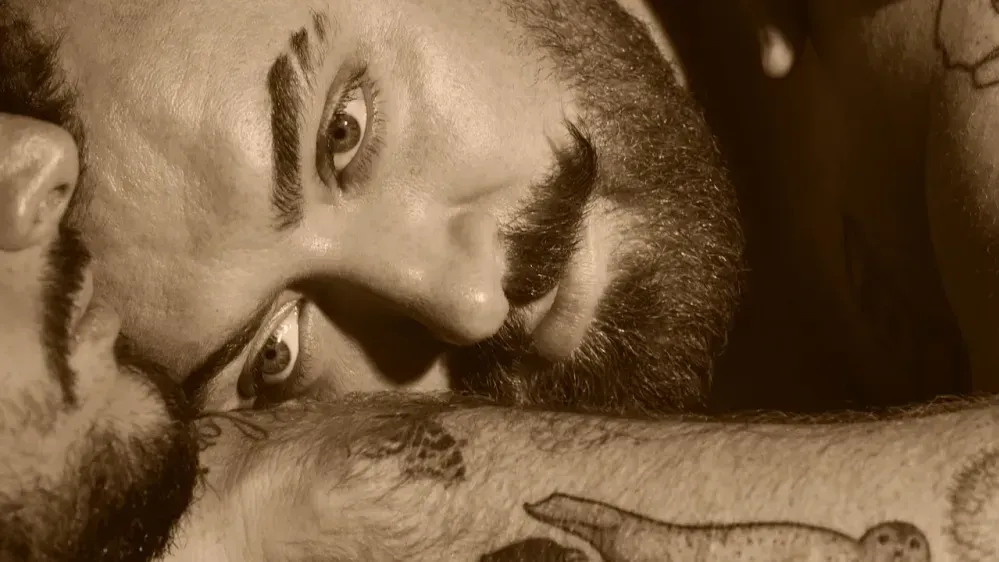
Photo Credit: Hazel Eyes / Sam Smith
by Chris Tremblay Aug 27
4 MIN READ
Sam Smith’s Hazel Eyes arrived worldwide on 2026-08-21, giving one of pop’s most visible nonbinary artists a new platform for exploring intimacy, partnership and queer self-expression. Released through Capitol Records UK and the Polydor Label Group, the 12-track album is Smith’s fifth studio album and follows 2023’s Gloria.
The release is the clearest recent event surrounding Smith, who has been making renewed noise this month through the album, interviews and continuing live performances. The project’s release date and title were announced before August, but its arrival on streaming services and in physical formats on 2026-08-21 places it within the requested three-week news window.
The album’s title refers to the eye color of Cowan, Smith’s fiancé. In an interview with The Guardian, Smith described the record as emerging from a period of greater health and happiness, while the publication reported that Smith moved from the United Kingdom to New York three years earlier to be with Cowan.
Smith’s lead single, “My Guy,” was released with the album campaign. Capitol Music UK announced the song alongside the album’s original announcement, identifying Hazel Eyes as Smith’s fifth album and confirming its 2026-08-21 release date.
Reviews published around release day characterized Hazel Eyes as a change in scale and mood from some of Smith’s more theatrical recent work. Variety described the album as “low-key but adventurous,” while Hot Press gave it an 8/10 rating and called Smith “in superb form.” These are critics’ assessments rather than objective measurements, but they indicate that the record has received substantial attention from music publications beyond LGBTQ+-focused media.
The album’s public framing is significant because it places queer love at the center of a mainstream pop release without presenting the relationship solely as a controversy, a coming-out narrative or a political argument. Smith’s relationship with Cowan is instead part of the album’s stated emotional premise. The Guardian reported that Smith connected the record to their relationship and that the album was released through Capitol on 2026-08-21.
Smith came out publicly as nonbinary in 2019 and uses they/them pronouns. In the August interview with The Guardian, Smith reflected on the loneliness they experienced as a young queer artist and discussed the hostility that followed their public identity. The newspaper also reported that Smith had come out as nonbinary in 2017, reflecting the sometimes-different dates used in public accounts of Smith’s coming-out history.
A separate Apple Music interview, reported by Star News Korea, quoted Smith as saying they had always been nonbinary but only later found the language to describe that identity. The account presents Smith’s gender identity as an ongoing process of recognition and articulation rather than a single event.
That distinction matters in coverage of LGBTQ+ artists. Nonbinary people may describe their identities and coming-out experiences in different ways over time, and Smith’s comments underscore that public terminology can follow personal understanding. Smith’s own stated pronouns and identity should therefore remain the basis for reporting, rather than assumptions based on appearance, partnership or performance.
Smith has also described the act of singing about queer love as meaningful in the current political and cultural climate. LGBTQ Nation reported that Smith called singing queer love songs “something radical” in an interview connected to the album and their engagement. The statement frames the album’s romantic subject matter as both personal and culturally visible, without requiring the songs to function as slogans.
Cowan’s involvement gives the album a direct connection to fashion as well as music. Smith and Cowan’s engagement was reported after Smith referred to Cowan as their fiancé in an interview with The New York Times, according to LGBTQ Nation and PinkNews. Those reports identify Cowan as a fashion designer and describe the album title as a reference to his eye color.
The pairing also illustrates how queer pop culture often moves across creative fields. Smith’s music, Cowan’s fashion work and the visual language surrounding Hazel Eyes intersect in a public narrative about partnership. The available reporting supports that connection, but does not establish that Cowan designed the album’s cover, costumes or broader visual campaign.
Hazel Eyes has also been connected to Smith’s continuing To Be Free live series. A report citing a 2026-08-21 Universal Music Canada announcement said that the album’s release coincided with a new leg involving dates in Mexico and the United Kingdom. Because the available report is secondary to the label announcement, the full schedule and all venue details should be checked against Smith’s official tour listings before publication.
The live context is important to queer audiences because Smith’s career has long connected recorded pop with performance, clothing and public conversations about gender. However, the sources reviewed for this article do not document a new ritual, club night, festival appearance or community-led event tied specifically to the Hazel Eyes release during August 2026.
For now, the most clearly documented development is the album itself: a major pop release by a nonbinary artist that makes romantic partnership its organizing subject. The record’s public reception, Smith’s interviews and its connection to fashion designer Christian Cowan place Hazel Eyes at the intersection of queer life through music, celebrity culture and fashion.
An album built around intimacy
The album’s title refers to the eye color of Cowan, Smith’s fiancé. In an interview with The Guardian, Smith described the record as emerging from a period of greater health and happiness, while the publication reported that Smith moved from the United Kingdom to New York three years earlier to be with Cowan.
Smith’s lead single, “My Guy,” was released with the album campaign. Capitol Music UK announced the song alongside the album’s original announcement, identifying Hazel Eyes as Smith’s fifth album and confirming its 2026-08-21 release date.
Reviews published around release day characterized Hazel Eyes as a change in scale and mood from some of Smith’s more theatrical recent work. Variety described the album as “low-key but adventurous,” while Hot Press gave it an 8/10 rating and called Smith “in superb form.” These are critics’ assessments rather than objective measurements, but they indicate that the record has received substantial attention from music publications beyond LGBTQ+-focused media.
The album’s public framing is significant because it places queer love at the center of a mainstream pop release without presenting the relationship solely as a controversy, a coming-out narrative or a political argument. Smith’s relationship with Cowan is instead part of the album’s stated emotional premise. The Guardian reported that Smith connected the record to their relationship and that the album was released through Capitol on 2026-08-21.
Smith’s account of queer visibility
Smith came out publicly as nonbinary in 2019 and uses they/them pronouns. In the August interview with The Guardian, Smith reflected on the loneliness they experienced as a young queer artist and discussed the hostility that followed their public identity. The newspaper also reported that Smith had come out as nonbinary in 2017, reflecting the sometimes-different dates used in public accounts of Smith’s coming-out history.
A separate Apple Music interview, reported by Star News Korea, quoted Smith as saying they had always been nonbinary but only later found the language to describe that identity. The account presents Smith’s gender identity as an ongoing process of recognition and articulation rather than a single event.
That distinction matters in coverage of LGBTQ+ artists. Nonbinary people may describe their identities and coming-out experiences in different ways over time, and Smith’s comments underscore that public terminology can follow personal understanding. Smith’s own stated pronouns and identity should therefore remain the basis for reporting, rather than assumptions based on appearance, partnership or performance.
Smith has also described the act of singing about queer love as meaningful in the current political and cultural climate. LGBTQ Nation reported that Smith called singing queer love songs “something radical” in an interview connected to the album and their engagement. The statement frames the album’s romantic subject matter as both personal and culturally visible, without requiring the songs to function as slogans.
Fashion, partnership and public culture
Cowan’s involvement gives the album a direct connection to fashion as well as music. Smith and Cowan’s engagement was reported after Smith referred to Cowan as their fiancé in an interview with The New York Times, according to LGBTQ Nation and PinkNews. Those reports identify Cowan as a fashion designer and describe the album title as a reference to his eye color.
The pairing also illustrates how queer pop culture often moves across creative fields. Smith’s music, Cowan’s fashion work and the visual language surrounding Hazel Eyes intersect in a public narrative about partnership. The available reporting supports that connection, but does not establish that Cowan designed the album’s cover, costumes or broader visual campaign.
A release extending beyond the record
Hazel Eyes has also been connected to Smith’s continuing To Be Free live series. A report citing a 2026-08-21 Universal Music Canada announcement said that the album’s release coincided with a new leg involving dates in Mexico and the United Kingdom. Because the available report is secondary to the label announcement, the full schedule and all venue details should be checked against Smith’s official tour listings before publication.
The live context is important to queer audiences because Smith’s career has long connected recorded pop with performance, clothing and public conversations about gender. However, the sources reviewed for this article do not document a new ritual, club night, festival appearance or community-led event tied specifically to the Hazel Eyes release during August 2026.
For now, the most clearly documented development is the album itself: a major pop release by a nonbinary artist that makes romantic partnership its organizing subject. The record’s public reception, Smith’s interviews and its connection to fashion designer Christian Cowan place Hazel Eyes at the intersection of queer life through music, celebrity culture and fashion.
Copyright EDGE Media Network. All rights reserved. This material may not be published, broadcast, rewritten, or redistributed.