Gillian Anderson Says She Identifies as Pansexual
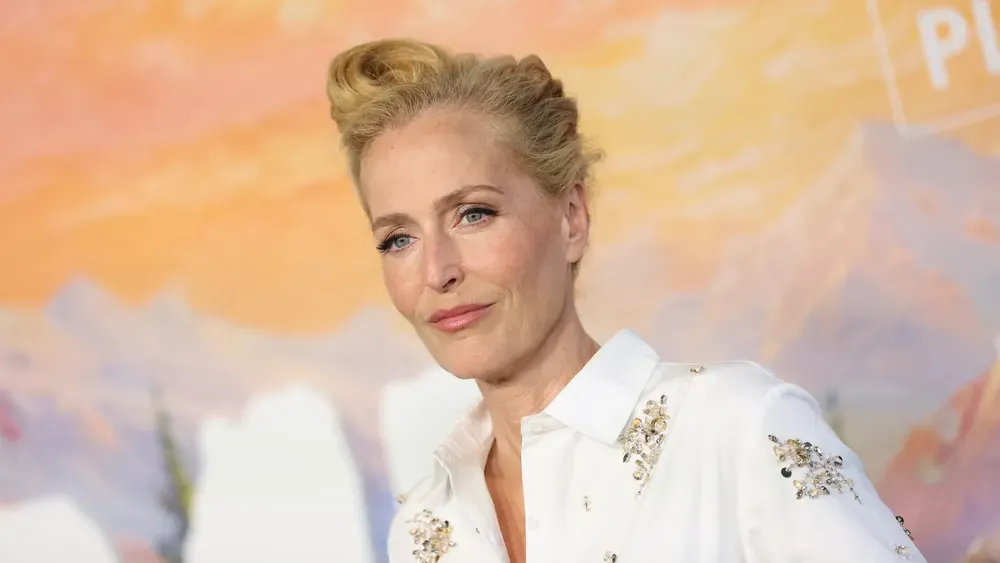
LOS ANGELES, CALIFORNIA - JULY 29: Gillian Anderson attends the premiere of "Teenage Sex And Death At Camp Miasma" at DGA Theater Complex on July 29, 2026 in Los Angeles, California. Photo Credit: Amy Sussman
by Chris Tremblay Sep 10
3 MIN READ
Gillian Anderson has said that she identifies as pansexual, publicly adopting a specific description for her sexuality after previously expressing uncertainty about which label best represented her experiences.
In an interview published by The Australian on September 10, Anderson described herself as “pan, as in pansexual, as in attracted to all genders.”
The statement represents a change in emphasis from Anderson’s earlier public comments, in which she discussed relationships with women but stopped short of choosing a definitive sexual-identity label.
Anderson is known internationally for playing FBI agent Dana Scully in The X-Files and for appearing in productions including The Crown and Sex Education.
GLAAD defines pansexual as an adjective describing the capacity to form physical, romantic or emotional attractions to people of any gender, regardless of gender identity.
The organization places pansexuality among identities commonly included under the broader bi+ umbrella, while recognizing that people may use “pansexual” and “bisexual” in different ways.
Anderson’s own wording—“attracted to all genders”—was reported as part of her explanation of why the term “pansexual” feels appropriate to her.
The term describes an individual’s potential pattern of attraction; it does not require a person to have had relationships with people of every gender.
Anderson’s latest comments follow a discussion that became more public after the release of her book Want: Sexual Fantasies by Anonymous, an edited collection concerning women’s anonymous sexual fantasies.
In a 2024 profile for The New Yorker, Anderson questioned whether “bisexual” or “pansexual” might describe her, while also expressing concern about overstating her experiences or claiming an identity that did not feel fully hers.
The New Yorker reported that Anderson’s reflections on sexuality developed while she was working on the book and considering the language available to describe her past relationships.
In a separate interview published in August 2026, Anderson discussed a relationship with an older girl during high school and said the relationship felt secretive because she and the girl believed they would not be accepted as a couple.
PinkNews reported that Anderson said she did not think of herself as LGBTQ+ at the time because she had also had relationships with boys.
That earlier account did not amount to a public declaration of a particular identity label, but it provided additional context for Anderson’s later comments about attraction and self-description.
Anderson’s remarks have been reported by LGBTQ+ publications including PinkNews, Them and Pride following publication of the Australian interview.
The coverage has focused on Anderson’s own words rather than treating her previous relationships as proof of an identity she had not chosen for herself.
That distinction is significant because sexual orientation is self-defined, and the existence of a relationship or sexual experience does not automatically determine the label a person uses.
Anderson’s comments also illustrate that people may arrive at an identity label after years of reflection rather than adopting one immediately.
The actor’s statement does not require a revision of her earlier descriptions of her relationships, because those accounts and her current self-identification address different aspects of her personal history.
For now, Anderson’s clearest public description is her own: she is “pan,” meaning pansexual, and attracted to all genders.
The statement represents a change in emphasis from Anderson’s earlier public comments, in which she discussed relationships with women but stopped short of choosing a definitive sexual-identity label.
Anderson is known internationally for playing FBI agent Dana Scully in The X-Files and for appearing in productions including The Crown and Sex Education.
What pansexual means
GLAAD defines pansexual as an adjective describing the capacity to form physical, romantic or emotional attractions to people of any gender, regardless of gender identity.
The organization places pansexuality among identities commonly included under the broader bi+ umbrella, while recognizing that people may use “pansexual” and “bisexual” in different ways.
Anderson’s own wording—“attracted to all genders”—was reported as part of her explanation of why the term “pansexual” feels appropriate to her.
The term describes an individual’s potential pattern of attraction; it does not require a person to have had relationships with people of every gender.
A label considered over time
Anderson’s latest comments follow a discussion that became more public after the release of her book Want: Sexual Fantasies by Anonymous, an edited collection concerning women’s anonymous sexual fantasies.
In a 2024 profile for The New Yorker, Anderson questioned whether “bisexual” or “pansexual” might describe her, while also expressing concern about overstating her experiences or claiming an identity that did not feel fully hers.
The New Yorker reported that Anderson’s reflections on sexuality developed while she was working on the book and considering the language available to describe her past relationships.
In a separate interview published in August 2026, Anderson discussed a relationship with an older girl during high school and said the relationship felt secretive because she and the girl believed they would not be accepted as a couple.
PinkNews reported that Anderson said she did not think of herself as LGBTQ+ at the time because she had also had relationships with boys.
That earlier account did not amount to a public declaration of a particular identity label, but it provided additional context for Anderson’s later comments about attraction and self-description.
Why the announcement matters
Anderson’s remarks have been reported by LGBTQ+ publications including PinkNews, Them and Pride following publication of the Australian interview.
The coverage has focused on Anderson’s own words rather than treating her previous relationships as proof of an identity she had not chosen for herself.
That distinction is significant because sexual orientation is self-defined, and the existence of a relationship or sexual experience does not automatically determine the label a person uses.
Anderson’s comments also illustrate that people may arrive at an identity label after years of reflection rather than adopting one immediately.
The actor’s statement does not require a revision of her earlier descriptions of her relationships, because those accounts and her current self-identification address different aspects of her personal history.
For now, Anderson’s clearest public description is her own: she is “pan,” meaning pansexual, and attracted to all genders.
Copyright EDGE Media Network. All rights reserved. This material may not be published, broadcast, rewritten, or redistributed.