InFrame

The Story Behind ‘La Bola Negra’: How Los Javis Completed Lorca’s Final Play
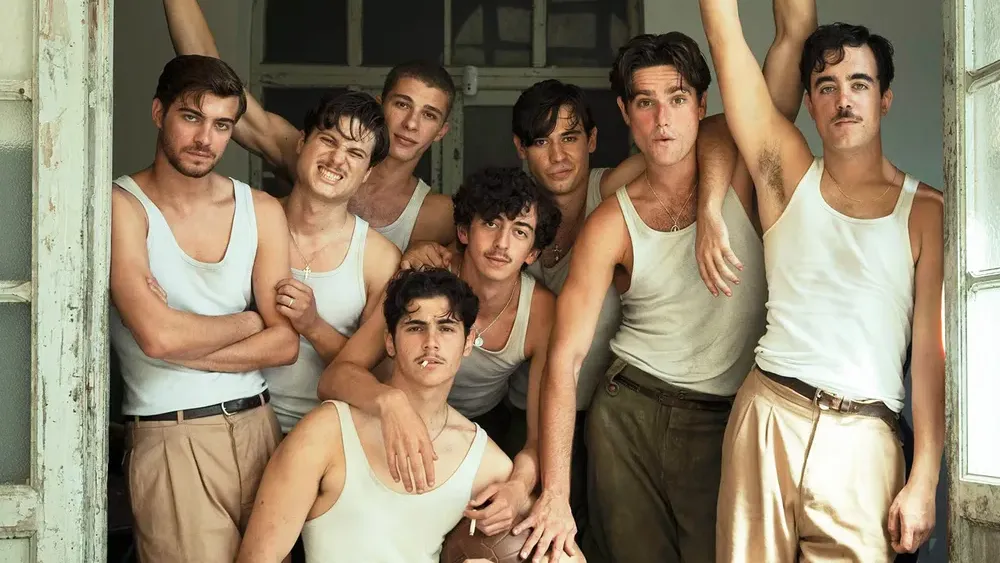
Photo Credit: Netflix

by Chris Tremblay  Oct 27

The story behind La Bola Negra begins not with a completed screenplay, but with a fragment: four pages of a play Federico García Lorca had begun writing about a young man excluded from a social club because he was gay. The Spanish poet and playwright was arrested and killed in 1936 before he could finish the work, according to NPR’s October 27 interview with the film’s directors. The play’s title, and the film’s, refers to a black-ball voting system that the directors say was used in private clubs in 1930s Spain: a white ball signified acceptance, while a black ball meant rejection.

Rather than present Lorca’s fragment as a completed historical account, directors Javier Calvo and Javier Ambrossi—known together as Los Javis—used it as the starting point for a feature-length work spanning nearly a century. In an interview with Agence France-Presse published October 24, Calvo said the filmmakers studied Lorca’s writing, poems and letters, and that he memorized some of them while trying to imagine how the unfinished play might have ended. Ambrossi told NPR they followed clues in Lorca’s letters and described their research as detective work.

The resulting film is not simply a reconstruction of Lorca’s surviving pages. It connects three fictional stories: a young man rejected by a club in 1932, a soldier and a wounded prisoner during the Spanish Civil War, and a contemporary writer whose inheritance links him to a family past he did not know. AFP identifies the first character as Carlos, the soldier as Sebastián, the prisoner as Rafael, and the modern-day historian as Alberto.

Three stories, three periods


The film opens in Granada in 1932, amid tensions that preceded the Spanish Civil War, according to AFP. Its first storyline, drawing most directly on Lorca’s fragment, follows Carlos after he is excluded from a social club through a vote involving black and white balls.

The second story moves into the war. Sebastián, a young trumpeter, is recruited by forces aligned with Francisco Franco and ordered to guard Rafael, a Republican prisoner who is wounded. The two men fall in love, NPR’s account of the film’s plot says. AFP reports that the character Rafael was inspired by Lorca’s real-life partner; the film’s story is otherwise a work of fiction built around the historical setting and the playwright’s unfinished work.

The final thread takes place in 2017, where Alberto, a young historian, uncovers a family secret. NPR describes him as a contemporary writer who inherits something from a grandfather he never knew, connecting his life to the earlier stories. Across the timelines, the film follows gay men whose experiences are separated by decades but linked by family history, desire and loss.

What the directors say the story carries forward


For the filmmakers, the black ball functions as more than a plot device: Calvo described it as a symbol passed between generations, associated with silence, pain and shame, as well as desire, love and joy. He said making the film made him feel proud of his community and of people who had fought before him. Ambrossi said the directors wanted to make the film large in scale because, in his view, there are not many films or books about the history connecting queer communities.

In AFP’s interview, Ambrossi characterized the film as a story about the danger of failing to communicate and said the issue extended beyond Spain. The directors’ account of the film’s meaning is distinct from the historical basis of its plot: Lorca’s fragment and the black-ball system provide its point of departure, while the three interlinked lives are the filmmakers’ expansion of that premise.

The film also includes a storyline about performers known as cupletistas, or cabaret singers, in early twentieth-century Madrid. In the NPR interview, Calvo said the film depicts a generation that expected to remain free, but whose lives were later affected by dictatorship and persecution; Penélope Cruz portrays one of the performers. These comments describe the directors’ interpretation of the film’s historical themes, rather than a claim that its characters represent every experience of queer people in Spain.

A current release and a historical source


The film’s recent release has brought the Lorca connection into current coverage. As of October 27, it was playing in select U.S. theaters, with Netflix streaming scheduled to begin December 2, according to NPR. AFP reported that the film had received the best-director honor at Cannes, shared by Calvo and Ambrossi, and audience prizes at the San Sebastián and Toronto film festivals.

The contemporary attention does not resolve the question that began the project: what Lorca’s play might have become had he lived to complete it. Calvo told AFP that he tried to imagine its ending through sustained study of the poet’s work, while Ambrossi said the filmmakers followed clues in Lorca’s letters and projects. The film’s “true story,” then, is not that its three protagonists are documented historical individuals; it is that its creators began with a real, unfinished Lorca text and used it to build a fictional account of queer lives across Spanish history.

Copyright EDGE Media Network. All rights reserved. This material may not be published, broadcast, rewritten, or redistributed.

Cheyenne Jackson Launches ‘One Job Away’ Campaign to Protect Actors’ Healthcare

Photo Credit: Cheyenne Jackson

by Chris Tremblay  Oct 27

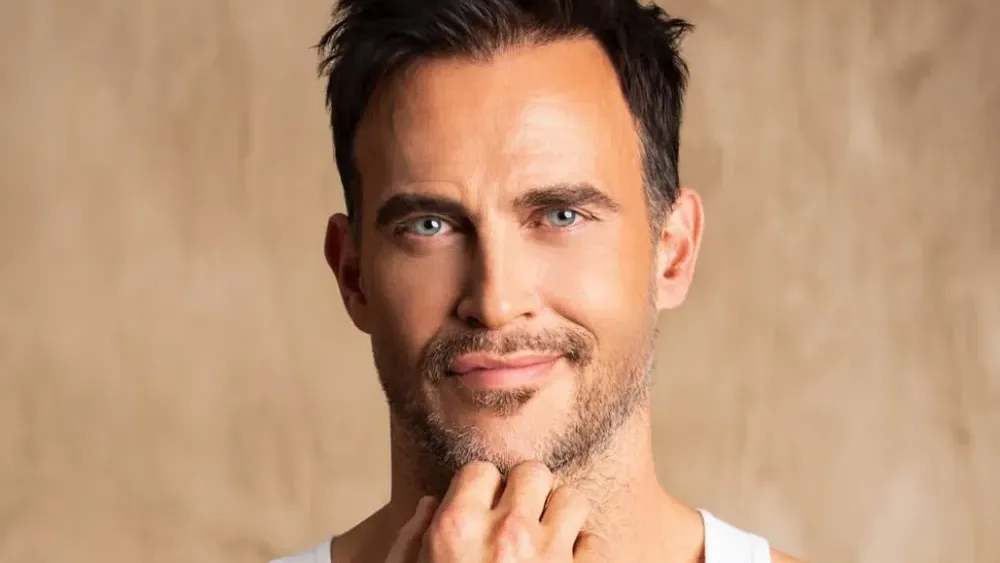
Cheyenne Jackson has launched “One Job Away,” an Instagram campaign highlighting performers who are close to qualifying for SAG-AFTRA health insurance and could benefit from another acting job. The campaign began this week, with Jackson posting actors’ headshots and biographies to draw attention to their work and connect them with possible opportunities.

Eris Drew and Octo Octa Bring Queer Dance-Floor Partnership to the Studio as Alchemical Sisters

Photo Credit: Alchemical Sisters

by Chris Tremblay  Oct 27

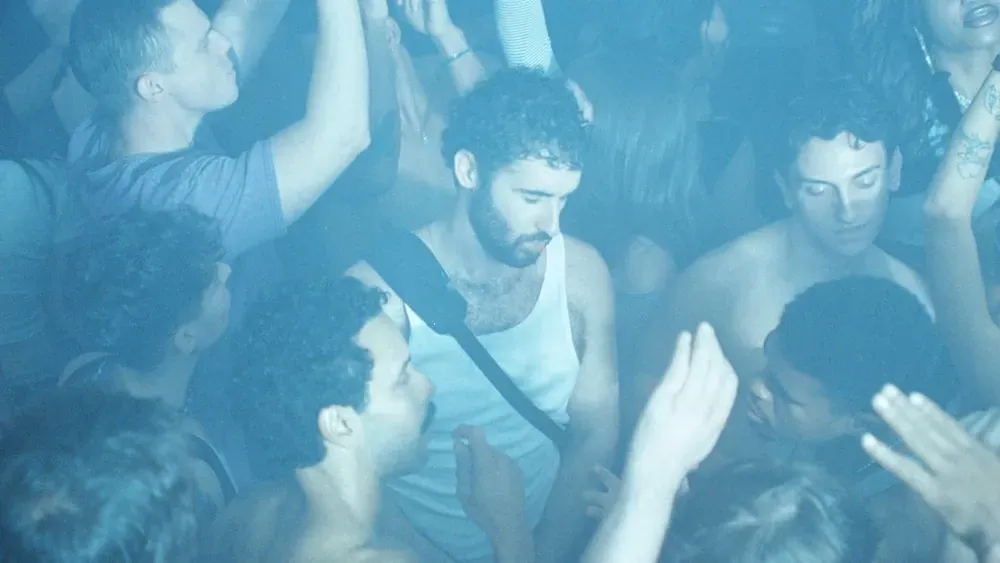
Eris Drew and Octo Octa have released "Alchemical Sisters", their first collaborative full-length under that name, bringing a long-running partnership between two prominent queer dance-music artists into a new format. The self-titled double album came out October 19 on Detroit-based label Interdimensional Transmissions; the label describes it as a project conceived by Maya Bouldry-Morrison, who performs as Octo Octa, and Drew, known for her DJ sets and solo productions.

Two November Films Put Queer Community and AIDS-Era History in Focus

Photo Credit: A24

by Chris Tremblay  Oct 27

As the U.S. theatrical calendar turns toward November, two films with clearly documented LGBTQ relevance are approaching release: Club Kid, Jordan Firstman’s comedy-drama about a gay club promoter and an unexpected turn toward parenthood, and Elsinore, Simon Stone’s drama about actor Ian Charleson’s final performance as Hamlet. Their subjects differ in tone and historical setting, but both place queer lives at the center of their stories.

Kevin Jonas Accidentally Flash His Entire Football Group Chat

Photo Credit: Kevin Jonas / Instagram

by Chris Tremblay  Oct 27

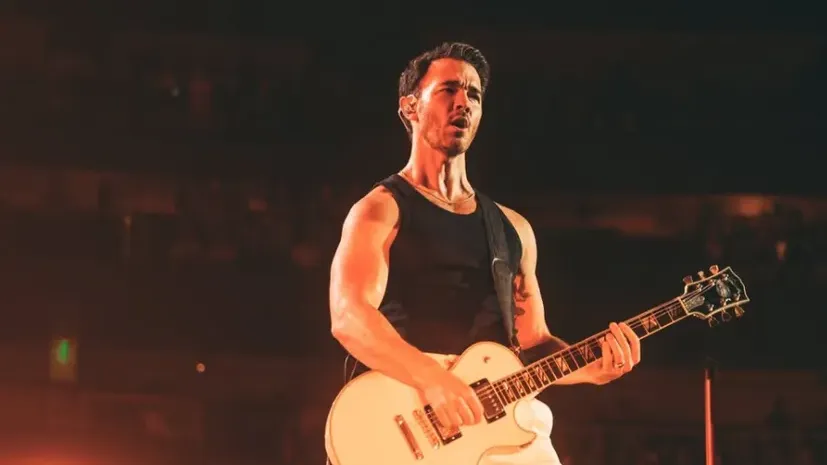
Kevin Jonas said he accidentally sent a photo showing his penis to a group text focused on the New York Giants, after taking a picture of a television in his bathroom.

Jack Antonoff Criticizes Ed Sheeran Over Macklemore’s Removal From Tour

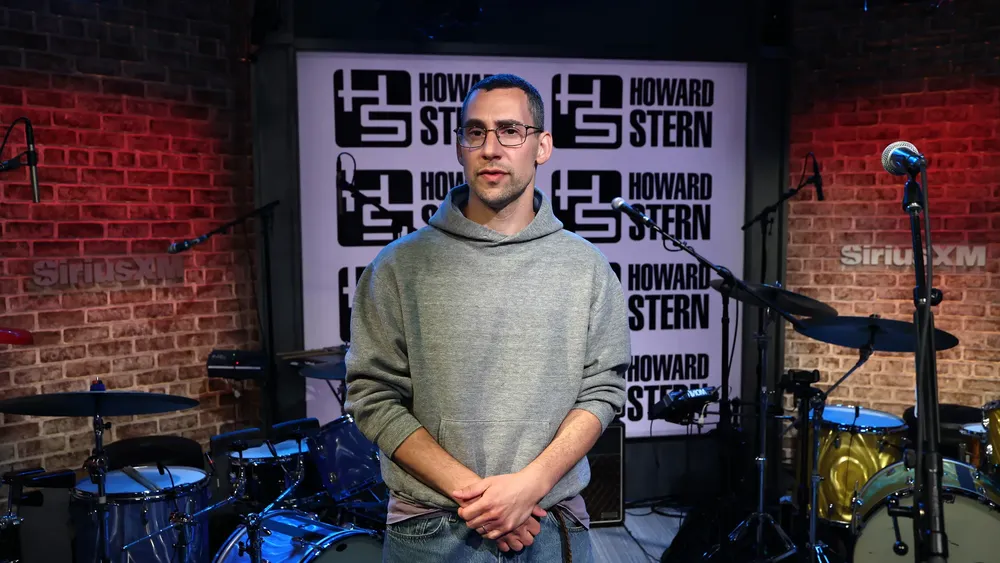
NEW YORK, NEW YORK - APRIL 28: Jack Antonoff appears on SiriusXM's 'The Howard Stern Show' at SiriusXM Studios on April 28, 2026 in New York City. Photo Credit: Cindy Ord

by Chris Tremblay  Oct 27

Jack Antonoff has criticized Ed Sheeran for continuing his U.S. tour after Macklemore was removed from its supporting lineup, saying Sheeran could instead have canceled the shows and performed outside the venues. Antonoff made the remarks in an interview with The Guardian published October 25, and they were reported by Billboard and The Hollywood Reporter the following day.

Jake Bain on Foster Parenting, Social Work, and Plans for Ferguson Pride

Photo Credit: Jake Bain Instagram

by Chris Tremblay  Oct 27

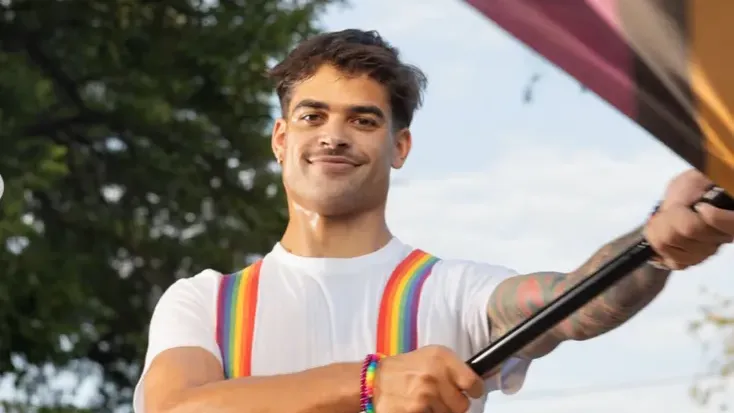
A Queerty feature published October 25, 2026, profiles Jake Bain, a former college football player who now works in social services and advocates for LGBTQ+ communities.

Chrishell Stause and G Flip Announce Separation After More Than Four Years Together

UNIVERSAL CITY, CALIFORNIA - JUNE 15: (L-R) Chrishell Stause and G Flip attend the Los Angeles premiere of Focus Features' "Girls Like Girls" at Universal Studios AMC at CityWalk Hollywood on June 15, 2026 in Universal City, California. Photo Credit: Amy Sussman

by Chris Tremblay  Oct 27

Chrishell Stause and G Flip have separated after more than four years together, the actor and Australian musician announced in separate social media statements on October 26.

Jonathan Lipnicki’s Family Saw His Full-Frontal Scene in ‘Primetime’ Without Warning

Photo Credit: BFA

by Chris Tremblay  Oct 25

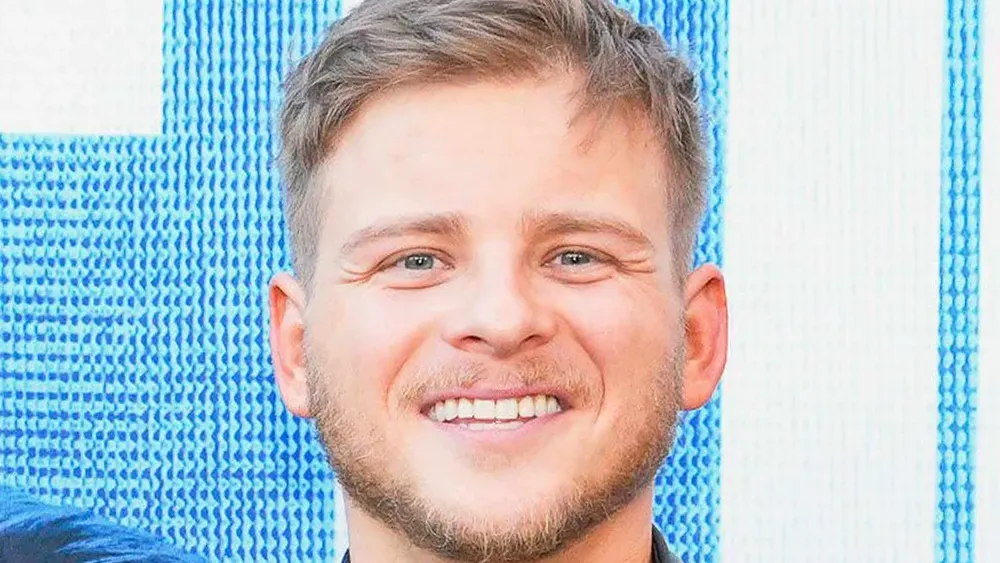
Jonathan Lipnicki says he did not tell his family in advance that his role in "Primetime" included full-frontal nudity. In an interview published October 24, he told "Entertainment Weekly" that his father, sister and brother-in-law did not know about the scene when they went to see the film.

Bethenny Frankel and Andy Cohen Trade Barbs After Bravo Fan Fest

NEW YORK, NEW YORK - JANUARY 23: Bethenny Frankel attends FX's "Feud: Capote VS. The Swans" New York Premiere at Museum of Modern Art on January 23, 2024 in New York City.Photo Credit: Dimitrios Kambouris

by Chris Tremblay  Oct 25

Bethenny Frankel criticized Andy Cohen after the Bravo host responded to a question about whether she might return to "The Real Housewives of New York City" with a remark about TikTok. The exchange took place during a panel at Bravo Fan Fest on Saturday, October 24, according to reporting published the following day.