Mariah Carey Brushes Off Rock Hall Snub, Keeps Her Focus on Christmas and Fandom
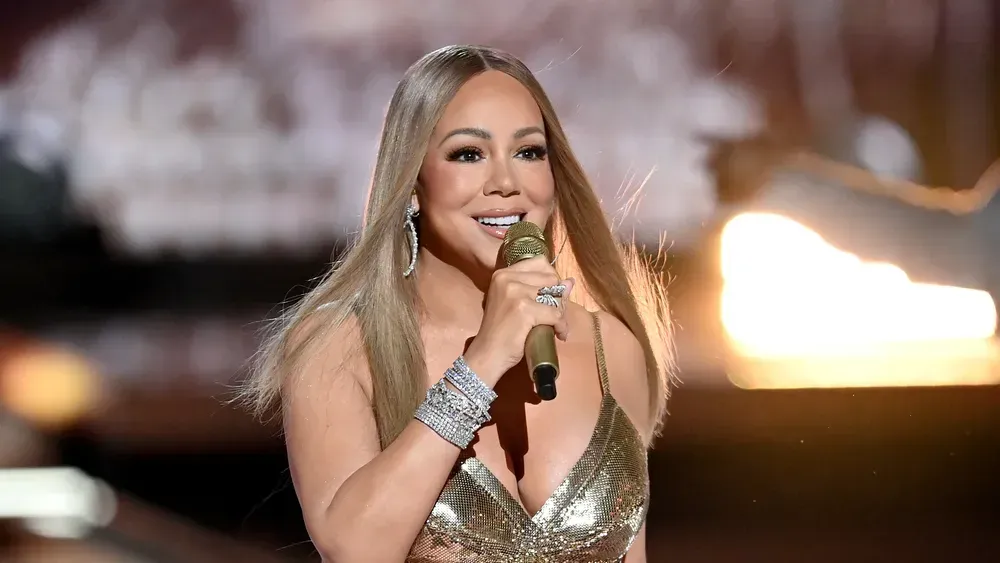
LOS ANGELES, CALIFORNIA - JUNE 09: Mariah Carey performs onstage during the 2025 BET Awards at Peacock Theater on June 09, 2025 in Los Angeles, California. Photo Credit: (Photo by Paras Griffin/Getty Images for BET)
For the third consecutive year, Mariah Carey has been passed over for induction into the Rock & Roll Hall of Fame, despite once again appearing on the official ballot. The five‑time Grammy winner, who has spent more than three decades shaping contemporary pop and R&B, remains on the outside of Cleveland’s most famous music institution even as peers and successors take their place inside.
A chairman “baffled” by the omission
Inside the Hall’s own leadership, the tone has been markedly different. Rock & Roll Hall of Fame chairman John Sykes has called Carey’s continued absence from the inductee list one of this year’s biggest surprises, describing himself as “baffled” by voters’ refusal to elevate her. In remarks reported through ABC‑syndicated music news, Sykes said he “really believed that Mariah Carey should have, would have been inducted this year,” emphasizing that he considers her “deserving.”
Sykes highlighted Carey’s songwriting and chart performance, pointing to her 18 No. 1 hits on the Billboard Hot 100 as evidence of a body of work that has “moved a generation of young people.” He described her as a “genius artist” and reiterated that, regardless of his personal view, the final decision rests with a broad voting body composed of music executives, writers, and artists. Framing the Hall as a “democratic system,” Sykes stressed that he does not act unilaterally and that committees of industry stakeholders determine who actually enters the institution each year.
“In the conversation” but not yet inside
The chairman also offered a broader explanation of how the Hall interacts with artists who remain outside its walls, a group that now very visibly includes Carey. Sykes said that once an artist lands on the ballot, Hall officials try to emphasize that they are “now in the running” and “in the conversation,” presenting nomination itself as a meaningful milestone.
In that framework, multiple failed ballots can be framed less as rejection and more as a prolonged consideration period, with Sykes noting that “many artists have taken years to get in.” Local radio coverage summarizing his comments echoed this theme, characterizing repeated ballot appearances as a “sign of recognition” rather than a dead end, even as fans question what further proof of influence an act like Carey must provide.
The 2026 class and what it signals
Carey’s exclusion comes in a year when the Hall is inducting a slate that spans rock, R&B, hip‑hop, and Britpop, underscoring its evolving but still contested definition of “rock and roll.” This year’s inductees reportedly include Phil Collins, Luther Vandross, Sade, Billy Idol, Wu‑Tang Clan, and Oasis, a list that blends classic rock staples with R&B vocalists and a pioneering hip‑hop collective.
The induction ceremony is scheduled for November 14 in Los Angeles and will be televised later in the year, airing on ABC and streaming on Disney+, continuing the Hall’s push to position its annual event as a high‑visibility entertainment spectacle. Against that backdrop, Carey’s absence is both more glaring and, judging from her response, less personally consequential than the headlines might suggest.
A record‑setting catalog that speaks for itself
Whatever the Hall’s voters decide, Carey’s statistical résumé remains one of the most formidable in pop history. Reporting on the Hall debate has cited her 18 No. 1 singles on the Billboard Hot 100, a tally that places her among the most successful singles artists of all time and speaks to the breadth of her impact across pop, R&B, and adult contemporary formats.
Other coverage has pointed to more than 200 million albums sold globally and a career total of 19 No. 1 singles, figures that, even allowing for slight variances in tallying, anchor her status as a generational chart force. These metrics sit alongside a legacy that includes pioneering vocal runs, whistle‑register flourishes, and a songwriting portfolio that has been especially resonant with women, LGBTQ+ listeners, and other communities who connect with Carey’s recurring themes of resilience and self‑definition.
Christmas as a core empire
In brushing off the Hall question, Carey also pointed toward the part of her career that may have the deepest ongoing cultural footprint: Christmas. The same coverage that relayed her offhand “Who cares?” noted that she quickly pivoted to discussing her holiday‑season work, signaling that she is already thinking ahead to her next festive chapter rather than dwelling on institutional validation.
Over the past decade, Carey has transformed the enduring success of “All I Want for Christmas Is You” into a multi‑platform seasonal brand, including tours, specials, merchandise, and recurring social‑media moments that have become touchstones for fans and meme culture alike. Her Christmas persona has evolved from a once‑a‑year radio staple into a full‑fledged pop‑culture ritual, with LGBTQ+ fans in particular frequently embracing her holiday performances and aesthetics as part of an inclusive, camp‑inflected celebration of chosen family and seasonal joy.
Fans speak out while Carey leans into gratitude
While Carey herself appears unbothered, fans have been vocal online about the Hall’s repeated failure to induct her. Social media reaction has included defenses of her legacy and questions about how the ballots are weighted, with supporters emphasizing her songwriting credits, chart records, and influence on later generations of vocalists, including queer and gender‑diverse artists who cite her as a formative inspiration.
Carey’s message to those fans has been simple and affectionate. In remarks carried in the same report, she offered them a “virtual hug,” saying, “I love my fans. Always!” reinforcing a longstanding public persona that centers gratitude toward the people who have sustained her career through multiple eras and personal reinventions.
A broader conversation about who belongs in the Hall
Carey’s case is also feeding into a broader debate about what the Rock & Roll Hall of Fame is meant to represent in 2026. Coverage of Sykes’s comments has noted that her repeated nominations and omissions have become part of a “wider conversation around who belongs in the Hall and how voters weigh pop, R&B, and crossover success.”
This debate intersects with longstanding critiques from artists, fans, and commentators who argue that the Hall has historically undervalued women, Black artists, and musicians whose primary genre lanes—such as pop, dance, or R&B—do not fit a narrow, guitar‑centric conception of rock. For LGBTQ+ audiences, many of whom have embraced Carey’s music across decades as an empowering soundtrack to their own lives, the Hall’s hesitation can feel out of step with the communities that have treated her catalog as canon for years.
Choosing joy over gatekeeping
In this context, Carey’s breezy dismissal of the Hall’s decision reads as an assertion of self‑definition: her worth, she signals, lies not in a plaque but in her body of work, her enduring fandom, and the seasonal rituals she has helped create. Her focus on Christmas and on staying connected to fans stands in contrast to the scrutiny placed on Hall voting, reminding observers that artists, especially those long embraced by women and LGBTQ+ people, often find their most meaningful validation outside institutional walls.
As November’s induction ceremony approaches without her name on the roster, Carey appears content to let others debate the merits of the Hall while she prepares, once again, to soundtrack the holidays. For an artist whose songs have long given listeners—especially marginalized communities—a sense of belonging and celebration, centering Christmas, connection, and joy may simply matter more than any museum’s vote.
Copyright EDGE Media Network. All rights reserved. This material may not be published, broadcast, rewritten, or redistributed.