Critics Say Antoine Fuqua’s 'Michael' Is Musically Thrilling — And Deeply Sanitized
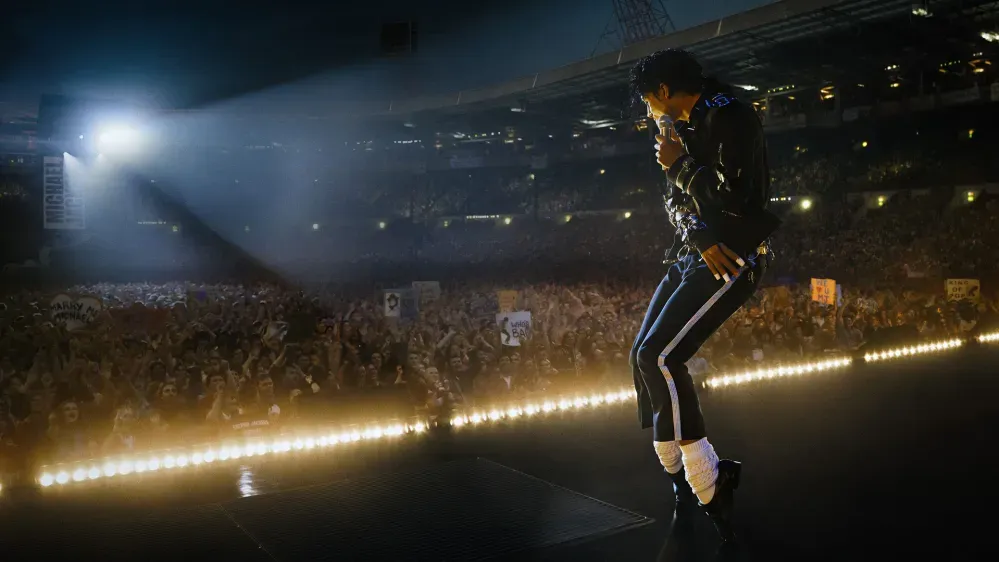
Photo Credit: Lionsgate
by Chris Tremblay Apr 23
5 MIN READ
Michael is a high‑profile biographical film about Michael Jackson directed by Antoine Fuqua, with the pop star portrayed by his nephew Jaafar Jackson and backed by Lionsgate and the Michael Jackson estate. The film focuses on Jackson’s life and career from his childhood with the Jackson 5 through the late 1980s, aligning its climax with the Bad tour era rather than the later scandals and legal battles that defined much of the public conversation about him.
The project reportedly carries a production budget in the mid‑nine‑figure range, with one commentator citing a cost around $155 million even before reshoots. It is being released into a marketplace where music biopics face increasing scrutiny over how honestly they depict both artists’ achievements and harms, a context that has shaped critical expectations for any new portrayal of Jackson’s life.
Even some of the harshest reviews acknowledge that Michael delivers big‑screen spectacle when it leans into Michael Jackson’s catalog and stagecraft. Pete Hammond of Deadline is cited as arguing that fans are likely to “eat up” the film’s feel‑good approach, highlighting how closely Jaafar Jackson channels his uncle’s physicality and performance style in elaborate musical numbers.
Hammond reportedly praises the choreography and staging, noting that the dance sequences reproduce many of Jackson’s iconic moves with such precision that it can be difficult to distinguish Jaafar from archival images of the singer on stage. He also lauds the concert scenes as technically polished and emotionally resonant, suggesting that the film functions effectively as a tribute to Jackson’s music for long‑time fans.
Another relatively positive assessment comes from David Rooney at The Hollywood Reporter, who is quoted describing the film as a sanitized, fan‑friendly and family‑sanctioned production that nonetheless manages to be intimate in moments. Rooney reportedly characterizes the portrayal as a portrait of a “damaged man” whose sharp professional instincts contrast with a gentle public demeanor, arguing that the movie occasionally offers a thoughtful glimpse into Jackson’s inner life even while soft‑pedaling controversy.
The most consistent criticism across early reviews and commentary is that Michael avoids the child sexual abuse allegations and other later‑life controversies, leaving the narrative feeling incomplete or misleading. William Bibbiani of The Wrap, as summarized in a CinemaBlend round‑up, argues that by omitting any reference to the allegations, the film “cannot be regarded as serious” and plays instead like an extended promotional piece aimed at affirming existing fans.
Bibbiani is quoted as saying the biopic “avoids difficult topics and retreats from confrontation almost every time,” criticizing its reluctance to grapple with Jackson’s fears, traumas and the impact of the accusations on those who came forward. He contends that this editorial choice produces a film that celebrates Jackson’s artistry while eliding systemic issues around power, fame and accountability that many survivors’ advocates and abuse‑prevention groups have wanted future portrayals to confront.
Robert Daniels of RogerEbert.com is reported to have given the film just one star out of four, saying Michael “isn’t a movie — it’s a playlist.” Daniels criticizes the script for rushing from one major event to the next without pausing to explore Jackson’s interiority, arguing that the movie “hesitates to explore the singer’s fears, traumas, and frustrations,” and instead condenses a widely known myth of success into what he calls a surprisingly brief runtime.
Siddhant Adlakha of IGN reportedly rated Michael a 3 out of 10, describing it as a “frictionless, flat, paper‑thin story” that somehow makes a singularly famous and controversial figure seem dull. Adlakha’s review, as quoted in the same round‑up, calls the film “devoid of vitality and empathy,” suggesting that this meticulously curated, estate‑approved version of Jackson inadvertently harms his legacy by rendering him unremarkable rather than honestly complex.
One of the most contentious production decisions now shaping critical reaction is the reported removal of sequences dealing directly with the 1993 child abuse allegations against Jackson. Entertainment reporting citing Variety states that the film’s original ending involved a depiction of investigators arriving at Neverland Ranch and explored the accusations brought by then‑13‑year‑old Jordan Chandler, but that this version became legally “unusable” because of a settlement clause barring dramatization of Chandler’s story.
According to those reports, attorneys for the Jackson estate — which is involved as a producer — identified language in the settlement that prevents any mention or depiction of Chandler in a movie, forcing filmmakers to devise a new ending that stops in the late 1980s instead. The same coverage suggests that this change triggered an intensive reshoot schedule lasting roughly three weeks and costing an estimated $10–15 million on top of an already large budget, as the production restructured the third act to remove explicit references to the allegations.
Commentators in the film‑criticism space argue that this legal constraint, combined with the Jackson estate’s financial stake in the film, has had a profound effect on its tone. One YouTube essayist notes that representatives of the estate and Jackson family members were closely involved in production decisions, contributing to what they describe as a “protected on every side” approach that steers away from depicting survivors’ perspectives, court proceedings, or Jackson’s later health struggles.
That same critic argues that by confining the story to the pre‑Bad period, Michael sidesteps not only the allegations and 2005 criminal trial but also Jackson’s increasingly fraught public image, his changing appearance, and the circumstances of his death, all of which are central to how global audiences understand his legacy today. The video suggests that producers are implicitly betting on a second film that would cover the Dangerous, HIStory and Invincible eras, raising questions about whether audiences — including abuse survivors and child‑protection advocates — will embrace a multi‑part narrative that delays any confrontation with the most painful aspects of the story.
Collectively, these responses paint a picture of a biopic that functions as an affectionate tribute for many long‑time fans but leaves a significant portion of critics and viewers unsatisfied with its reluctance to interrogate power and harm. The same YouTube commentary points out that some Jackson family members, including his daughter Paris Jackson, have publicly criticized aspects of the biopic, suggesting that debates about who gets to tell this story — and how — are active even within those closest to the late singer.
For queer and trans audiences, who have often engaged deeply with Jackson’s music and aesthetics, these choices intersect with broader questions about how pop‑culture biopics portray vulnerable people and address abuse, misogyny, racism and the treatment of children. Critics’ calls for a more nuanced and accountable depiction reflect a wider demand that major studios center the experiences of survivors and marginalized communities when revisiting contested cultural icons, rather than presenting only triumphant narratives of genius and spectacle.
As Michael heads toward its theatrical release, the divide between those drawn to its precise musical recreations and those frustrated by its omissions is likely to sharpen conversations about whose stories are centered in high‑profile biopics, and whose are left off screen. Whether future installments or companion projects will more fully engage with the allegations, the perspectives of people who reported harm, and the broader communities affected by Jackson’s cultural impact remains an open question.
What Critics Are Praising
Even some of the harshest reviews acknowledge that Michael delivers big‑screen spectacle when it leans into Michael Jackson’s catalog and stagecraft. Pete Hammond of Deadline is cited as arguing that fans are likely to “eat up” the film’s feel‑good approach, highlighting how closely Jaafar Jackson channels his uncle’s physicality and performance style in elaborate musical numbers.
Hammond reportedly praises the choreography and staging, noting that the dance sequences reproduce many of Jackson’s iconic moves with such precision that it can be difficult to distinguish Jaafar from archival images of the singer on stage. He also lauds the concert scenes as technically polished and emotionally resonant, suggesting that the film functions effectively as a tribute to Jackson’s music for long‑time fans.
Another relatively positive assessment comes from David Rooney at The Hollywood Reporter, who is quoted describing the film as a sanitized, fan‑friendly and family‑sanctioned production that nonetheless manages to be intimate in moments. Rooney reportedly characterizes the portrayal as a portrait of a “damaged man” whose sharp professional instincts contrast with a gentle public demeanor, arguing that the movie occasionally offers a thoughtful glimpse into Jackson’s inner life even while soft‑pedaling controversy.
The Central Complaint: Sanitizing a Troubled Legacy
The most consistent criticism across early reviews and commentary is that Michael avoids the child sexual abuse allegations and other later‑life controversies, leaving the narrative feeling incomplete or misleading. William Bibbiani of The Wrap, as summarized in a CinemaBlend round‑up, argues that by omitting any reference to the allegations, the film “cannot be regarded as serious” and plays instead like an extended promotional piece aimed at affirming existing fans.
Bibbiani is quoted as saying the biopic “avoids difficult topics and retreats from confrontation almost every time,” criticizing its reluctance to grapple with Jackson’s fears, traumas and the impact of the accusations on those who came forward. He contends that this editorial choice produces a film that celebrates Jackson’s artistry while eliding systemic issues around power, fame and accountability that many survivors’ advocates and abuse‑prevention groups have wanted future portrayals to confront.
Robert Daniels of RogerEbert.com is reported to have given the film just one star out of four, saying Michael “isn’t a movie — it’s a playlist.” Daniels criticizes the script for rushing from one major event to the next without pausing to explore Jackson’s interiority, arguing that the movie “hesitates to explore the singer’s fears, traumas, and frustrations,” and instead condenses a widely known myth of success into what he calls a surprisingly brief runtime.
Siddhant Adlakha of IGN reportedly rated Michael a 3 out of 10, describing it as a “frictionless, flat, paper‑thin story” that somehow makes a singularly famous and controversial figure seem dull. Adlakha’s review, as quoted in the same round‑up, calls the film “devoid of vitality and empathy,” suggesting that this meticulously curated, estate‑approved version of Jackson inadvertently harms his legacy by rendering him unremarkable rather than honestly complex.
Reshoots, Legal Limits, and a Truncated Timeline
One of the most contentious production decisions now shaping critical reaction is the reported removal of sequences dealing directly with the 1993 child abuse allegations against Jackson. Entertainment reporting citing Variety states that the film’s original ending involved a depiction of investigators arriving at Neverland Ranch and explored the accusations brought by then‑13‑year‑old Jordan Chandler, but that this version became legally “unusable” because of a settlement clause barring dramatization of Chandler’s story.
According to those reports, attorneys for the Jackson estate — which is involved as a producer — identified language in the settlement that prevents any mention or depiction of Chandler in a movie, forcing filmmakers to devise a new ending that stops in the late 1980s instead. The same coverage suggests that this change triggered an intensive reshoot schedule lasting roughly three weeks and costing an estimated $10–15 million on top of an already large budget, as the production restructured the third act to remove explicit references to the allegations.
Commentators in the film‑criticism space argue that this legal constraint, combined with the Jackson estate’s financial stake in the film, has had a profound effect on its tone. One YouTube essayist notes that representatives of the estate and Jackson family members were closely involved in production decisions, contributing to what they describe as a “protected on every side” approach that steers away from depicting survivors’ perspectives, court proceedings, or Jackson’s later health struggles.
That same critic argues that by confining the story to the pre‑Bad period, Michael sidesteps not only the allegations and 2005 criminal trial but also Jackson’s increasingly fraught public image, his changing appearance, and the circumstances of his death, all of which are central to how global audiences understand his legacy today. The video suggests that producers are implicitly betting on a second film that would cover the Dangerous, HIStory and Invincible eras, raising questions about whether audiences — including abuse survivors and child‑protection advocates — will embrace a multi‑part narrative that delays any confrontation with the most painful aspects of the story.
A Split Between Fans and Critics — And Ongoing Representation Questions
Collectively, these responses paint a picture of a biopic that functions as an affectionate tribute for many long‑time fans but leaves a significant portion of critics and viewers unsatisfied with its reluctance to interrogate power and harm. The same YouTube commentary points out that some Jackson family members, including his daughter Paris Jackson, have publicly criticized aspects of the biopic, suggesting that debates about who gets to tell this story — and how — are active even within those closest to the late singer.
For queer and trans audiences, who have often engaged deeply with Jackson’s music and aesthetics, these choices intersect with broader questions about how pop‑culture biopics portray vulnerable people and address abuse, misogyny, racism and the treatment of children. Critics’ calls for a more nuanced and accountable depiction reflect a wider demand that major studios center the experiences of survivors and marginalized communities when revisiting contested cultural icons, rather than presenting only triumphant narratives of genius and spectacle.
As Michael heads toward its theatrical release, the divide between those drawn to its precise musical recreations and those frustrated by its omissions is likely to sharpen conversations about whose stories are centered in high‑profile biopics, and whose are left off screen. Whether future installments or companion projects will more fully engage with the allegations, the perspectives of people who reported harm, and the broader communities affected by Jackson’s cultural impact remains an open question.
Copyright EDGE Media Network. All rights reserved. This material may not be published, broadcast, rewritten, or redistributed.