Billy Porter Says He Hasn’t Been Invited to Met Gala Since 2019: ‘I Don’t Go Places Where I’m Not Welcome’
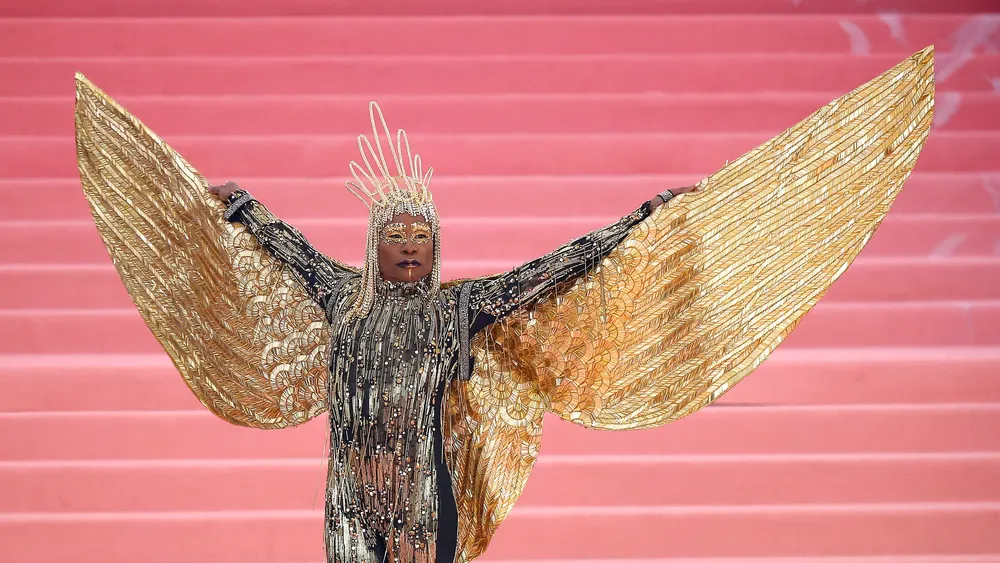
NEW YORK, NEW YORK - MAY 06: Billy Porter attends The 2019 Met Gala Celebrating Camp: Notes on Fashion at Metropolitan Museum of Art on May 06, 2019 in New York City. Photo Credit: John Lamparski
Actor and singer Billy Porter has said he has not been invited back to the Met Gala since his dramatic 2019 debut, adding that he refuses to “go to places where I’m not welcome.” The Emmy‑, Grammy‑ and Tony‑winning performer shared the experience during a 22 April appearance on SiriusXM’s Bevelations podcast with host Bevy Smith, where he discussed his relationship to the fashion world’s most high‑profile red carpet and why he will not attend this year’s gala.
In a video segment summarizing his remarks, Porter stated plainly, “I have not been invited. I haven’t been invited back since 2019,” in reference to the upcoming 2026 Met Gala, confirming that he will once again be absent from the event. He framed that absence not as a personal failure but as a boundary, adding, “I don’t go to places where I’m not welcome,” a line that has since headlined coverage of the interview.
Remembering a landmark 2019 entrance
Porter’s comments come seven years after his 2019 Met Gala look became one of the signature images of the event’s “Camp: Notes on Fashion” theme, generating wide conversation about queer representation and theatricality on the red carpet. That year, the Pose star arrived carried aloft on a litter by six shirtless attendants, dressed as an ancient Egyptian‑inspired sun god in a gold‑embellished ensemble by The Blonds, complete with a 24‑karat gold headpiece and giant wings.
Coverage at the time emphasized that Porter’s performance‑driven entrance pushed the gala’s red‑carpet theatrics to new levels, aligning with the camp theme while foregrounding a Black, queer, gender‑nonconforming aesthetic in a space often dominated by more traditional glamour. As Porter’s profile rose through Pose and subsequent projects, his Met Gala appearance became a reference point in discussions about how LGBTQ+ performers and especially Black queer and gender‑nonconforming people are reshaping fashion norms on major red carpets.
Despite that impact, Porter noted in his recent interview that the 2019 gala remains his only Met appearance, reinforcing his surprise that the partnership with the event did not continue. The AV Club described the disconnect as “shocking,” highlighting the apparent mismatch between Porter’s reputation as a boundary‑pushing fashion figure and the fact that he has “never been asked back.”
Tension over the 2024 ‘Black dandyism’ theme
In his Bevelations conversation, Porter pointed specifically to the 2024 Met Gala as an inflection point, saying the theme that year centered on Black dandyism and Black style while he remained off the guest list. He recalled, “Last year was Black dandyism and I was not invited, I’m just going to throw that out there,” linking his absence to the broader question of which Black artists and fashion‑forward Black queer people are elevated in such spaces.
Porter stressed that when fans or journalists ask if he is attending, he wants them to understand that the issue is not his willingness but the missing invitation, saying, “The reality is when people ask me, you need to know I was not invited.” He followed that statement with his now‑quoted line, “I don’t go to places where I’m not welcome,” characterizing his absence as a personal boundary rather than a public feud.
Commentary pieces have framed Porter’s remarks in the context of long‑running questions about how elite fashion institutions invite and platform Black and LGBTQ+ creatives, particularly when themes purport to celebrate Black aesthetics or queer sensibilities. However, Porter did not directly accuse organizers of bias during the interview, instead focusing on his own emotional and professional response to the absence of an invitation.
‘I’ve earned the invitation’ and moving beyond validation
Porter used the conversation to reflect more broadly on validation and self‑worth, explaining that he believes his career achievements mean he “earned the invitation” even if it has not arrived. The performer emphasized that his response is not rooted in bitterness but in a shift away from seeking approval from gatekeeping institutions, noting, “There’s a level that I’ve reached that doesn’t require validation from the outside.”
He added that embracing this mindset helps protect his mental health, saying, “I’m going to sit and live in that because it helps keep me sane too,” a remark that speaks to the emotional labor many LGBTQ+ artists describe when navigating exclusive cultural spaces. E! News summarized his comments as an indication that Porter is “moved past needing that kind of validation,” presenting his stance as one of self‑assurance rather than exclusion alone.
The AV Club similarly noted that Porter’s comments arrive at a moment when he has already secured a rare level of recognition across television, theatre and music, making his sense of having “earned” a place at the event rooted in a widely acknowledged body of work. At the same time, the outlet underscored how his absence from the Met Gala illustrates a broader pattern in which even highly celebrated queer and gender‑nonconforming Black performers may remain on the margins of some elite cultural stages.
Silence from organizers and the 2026 gala ahead
As of publication, reports on Porter’s remarks have not included any public response from Vogue editor‑in‑chief Anna Wintour or from the Metropolitan Museum of Art’s Costume Institute regarding his claims about not receiving invitations since 2019. Coverage has also not cited any official guest‑list explanation that references Porter specifically.
This year’s Met Gala is scheduled, as customary, for the first Monday in May, falling on 4 May 2026, with a theme centered on “Costume Art.” PinkNews reports that the 2026 event’s co‑chairs include Anna Wintour, Beyoncé, Nicole Kidman and Venus Williams, underscoring the gala’s continued status as a nexus of celebrity, fashion and philanthropy.
Porter’s statements introduce a layer of critique into the lead‑up to the 2026 gala, particularly regarding how institutions balance celebratory themes with actual guest inclusion of Black, queer and gender‑nonconforming creatives whose work has helped define contemporary fashion discourse. For LGBTQ+ communities and allies who saw his 2019 entrance as a landmark moment, his ongoing absence highlights an unresolved tension between symbolic representation on the red carpet and sustained, person‑centered inclusion behind the scenes.
Copyright EDGE Media Network. All rights reserved. This material may not be published, broadcast, rewritten, or redistributed.