Elizabeth Banks Recalls Being Told ‘You Can’t Direct Men’ As She Challenges Hollywood’s Sexist Assumptions
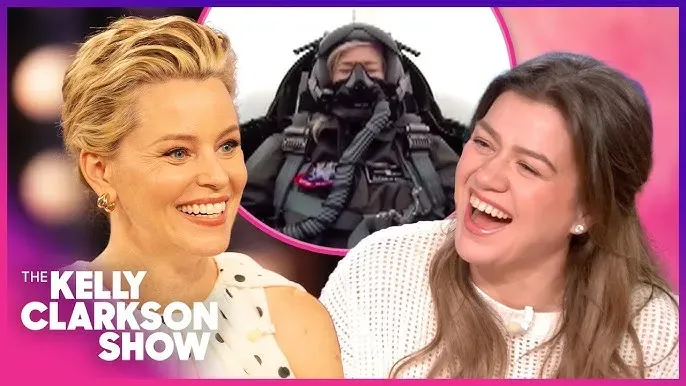
Photo Credit: Kelly Clarkson Show
by Chris Tremblay Apr 26
5 MIN READ
Elizabeth Banks has described a bluntly sexist remark she received earlier in her directing career, saying she was told that she could not direct male actors because they would not “follow” a woman filmmaker. Appearing on The Kelly Clarkson Show to promote her upcoming comedy series The Miniature Wife, Banks was asked to recall a moment when she had been made to feel “small” in Hollywood, and she immediately cited the comment about her supposed inability to direct men.
“I was literally told because I direct films that, ‘You can’t direct men. They won’t follow you,’” Banks said, recounting the statement as an example of industry bias directed at women in positions of creative authority. She framed the remark as part of a pattern of being diminished professionally, aligning it with the broader theme of The Miniature Wife, which uses a literal shrinking device in its storyline to explore what it feels like to be made small by a partner or by professional circumstances.
When host Kelly Clarkson asked whether the sexist warning had motivated her to prove it wrong, Banks responded succinctly, “Yeah, of course!”, indicating that the comment became fuel rather than a deterrent. She connected that determination to a career‑long effort to create stories where women characters have agency, even as she continues working in a system she described as offering a relatively “small club” of opportunities to women directors.
In the same conversation, Banks contrasted the slight she had received with her actual experience directing acclaimed actor Ray Liotta in the 2023 film Cocaine Bear. “And then I directed Ray Liotta, who played Henry Hill in Goodfellas, and I think I nailed it. Check. It’s all good,” she said, pointing to her work with a veteran male performer as evidence that male actors can and do work under women’s direction.
Liotta had a key role in Cocaine Bear, which was released in 2023 and went on to gross about $90 million worldwide, adding to Banks’ credentials as a director of commercially successful, male‑inclusive ensemble casts. That film followed earlier directing work on Pitch Perfect 2, which earned approximately $287 million globally, and the 2019 reboot of Charlie’s Angels, placing her among the relatively few women who have been hired to direct studio‑backed action and comedy projects centered on both women and men.
By highlighting Liotta’s iconic Goodfellas role while discussing her own leadership on set, Banks implicitly challenged the idea that only men can direct actors in “masculine” or crime‑adjacent material. Her comments add to ongoing public conversations about how assumptions regarding gender can limit who studios trust with particular genres, even when women filmmakers have demonstrated proven skill in those areas.
During the interview, Banks also revisited her experience with the 2019 film Charlie’s Angels, explaining that she was frustrated by media coverage that framed the movie as a kind of feminist manifesto rather than simply a large‑scale action film she loved making. “So much of the story that the media wanted to tell about Charlie’s Angels was that it was some feminist manifesto,” she recalled, saying that she approached the project out of affection for the franchise rather than to deliver an explicitly gendered declaration.
“I just loved the franchise,” Banks said, adding that “there was not this gendered agenda from me” and that the feminist framing was “laid on top of the work” by coverage that, in her view, pigeonholed both her and the potential audience for the film. She suggested that the narrative around Charlie’s Angels became an example of how women’s creative choices are sometimes read through a narrow lens of gender politics, whether or not that was the filmmaker’s starting point.
For women and LGBTQ+ filmmakers who want the freedom to work across genres, such framing can influence how their projects are marketed and received, even when they seek to reach wide audiences with stories that are not limited to a single identity‑based message. Banks’ remarks point to the tension between representation—where having women and queer‑affirming storytellers behind the camera matters—and the risk that their work is treated as niche or didactic, rather than as mainstream entertainment.
Beyond recounting the remark about not being able to direct men, Banks used her conversation with Clarkson to underline how limited the pool of women in directing roles remains. “Despite me knowing that I’m in a great club, it’s a really small club, and it needs more representation,” she said, emphasizing that there should be more storytellers from different perspectives and more audiences willing to support that range of work.
Banks described herself as “having a lot of fun making sure that women have a real sense of agency in whatever they’re doing, whatever stories I’m telling,” indicating that she intentionally crafts roles in which women characters drive the narrative. That focus on agency aligns with broader calls for intersectional representation in film and television, which advocate for stories where women, LGBTQ+ people, and other historically marginalized groups are portrayed as complex protagonists rather than as supporting figures.
Her comments arrive amid ongoing industry debates about equity in hiring and creative control, including conversations about how to open pathways for transgender and nonbinary filmmakers and performers who often face layered barriers in addition to sexism. By explicitly calling for “more storytellers from different perspectives,” Banks situated her own experience within a wider push to diversify who gets to tell stories on‑screen and behind the camera.
The interview took place as Banks promoted The Miniature Wife, an upcoming Peacock series in which she stars opposite Matthew Macfadyen as a writer whose scientist husband literally shrinks her to about six inches tall. The show uses that fantastical premise as an absurdist lens to examine power imbalances in intimate relationships and the broader feeling of being diminished by a partner or by professional hierarchies.
“It’s a very funny show, but what I really was drawn to was, we get to sort of talk about a big feeling, which is feeling diminished by a partner,” Banks said, adding that many people can relate to being made to feel small in either their professional or romantic lives. She noted that the series allows her and the creative team to explore those themes in a way that is both comic and pointed, connecting the show’s core metaphor to her own stories of being underestimated, including the claim that men would not follow her direction on a film set.
For audiences attuned to gender and power dynamics, The Miniature Wife presents another opportunity to see these issues taken up through genre storytelling, with Banks emphasizing humor without losing sight of the structural inequalities being critiqued. In the context of her recent remarks, the series can also be read as extending a conversation about how people of all genders, including women and LGBTQ+ communities, navigate industries and relationships where they are sometimes told explicitly or implicitly that leadership roles are not meant for them.
When host Kelly Clarkson asked whether the sexist warning had motivated her to prove it wrong, Banks responded succinctly, “Yeah, of course!”, indicating that the comment became fuel rather than a deterrent. She connected that determination to a career‑long effort to create stories where women characters have agency, even as she continues working in a system she described as offering a relatively “small club” of opportunities to women directors.
Proving the stereotype wrong on set
In the same conversation, Banks contrasted the slight she had received with her actual experience directing acclaimed actor Ray Liotta in the 2023 film Cocaine Bear. “And then I directed Ray Liotta, who played Henry Hill in Goodfellas, and I think I nailed it. Check. It’s all good,” she said, pointing to her work with a veteran male performer as evidence that male actors can and do work under women’s direction.
Liotta had a key role in Cocaine Bear, which was released in 2023 and went on to gross about $90 million worldwide, adding to Banks’ credentials as a director of commercially successful, male‑inclusive ensemble casts. That film followed earlier directing work on Pitch Perfect 2, which earned approximately $287 million globally, and the 2019 reboot of Charlie’s Angels, placing her among the relatively few women who have been hired to direct studio‑backed action and comedy projects centered on both women and men.
By highlighting Liotta’s iconic Goodfellas role while discussing her own leadership on set, Banks implicitly challenged the idea that only men can direct actors in “masculine” or crime‑adjacent material. Her comments add to ongoing public conversations about how assumptions regarding gender can limit who studios trust with particular genres, even when women filmmakers have demonstrated proven skill in those areas.
Frustration over the ‘Charlie’s Angels’ narrative
During the interview, Banks also revisited her experience with the 2019 film Charlie’s Angels, explaining that she was frustrated by media coverage that framed the movie as a kind of feminist manifesto rather than simply a large‑scale action film she loved making. “So much of the story that the media wanted to tell about Charlie’s Angels was that it was some feminist manifesto,” she recalled, saying that she approached the project out of affection for the franchise rather than to deliver an explicitly gendered declaration.
“I just loved the franchise,” Banks said, adding that “there was not this gendered agenda from me” and that the feminist framing was “laid on top of the work” by coverage that, in her view, pigeonholed both her and the potential audience for the film. She suggested that the narrative around Charlie’s Angels became an example of how women’s creative choices are sometimes read through a narrow lens of gender politics, whether or not that was the filmmaker’s starting point.
For women and LGBTQ+ filmmakers who want the freedom to work across genres, such framing can influence how their projects are marketed and received, even when they seek to reach wide audiences with stories that are not limited to a single identity‑based message. Banks’ remarks point to the tension between representation—where having women and queer‑affirming storytellers behind the camera matters—and the risk that their work is treated as niche or didactic, rather than as mainstream entertainment.
Calling for broader representation in storytelling
Beyond recounting the remark about not being able to direct men, Banks used her conversation with Clarkson to underline how limited the pool of women in directing roles remains. “Despite me knowing that I’m in a great club, it’s a really small club, and it needs more representation,” she said, emphasizing that there should be more storytellers from different perspectives and more audiences willing to support that range of work.
Banks described herself as “having a lot of fun making sure that women have a real sense of agency in whatever they’re doing, whatever stories I’m telling,” indicating that she intentionally crafts roles in which women characters drive the narrative. That focus on agency aligns with broader calls for intersectional representation in film and television, which advocate for stories where women, LGBTQ+ people, and other historically marginalized groups are portrayed as complex protagonists rather than as supporting figures.
Her comments arrive amid ongoing industry debates about equity in hiring and creative control, including conversations about how to open pathways for transgender and nonbinary filmmakers and performers who often face layered barriers in addition to sexism. By explicitly calling for “more storytellers from different perspectives,” Banks situated her own experience within a wider push to diversify who gets to tell stories on‑screen and behind the camera.
‘The Miniature Wife’ and the metaphor of feeling small
The interview took place as Banks promoted The Miniature Wife, an upcoming Peacock series in which she stars opposite Matthew Macfadyen as a writer whose scientist husband literally shrinks her to about six inches tall. The show uses that fantastical premise as an absurdist lens to examine power imbalances in intimate relationships and the broader feeling of being diminished by a partner or by professional hierarchies.
“It’s a very funny show, but what I really was drawn to was, we get to sort of talk about a big feeling, which is feeling diminished by a partner,” Banks said, adding that many people can relate to being made to feel small in either their professional or romantic lives. She noted that the series allows her and the creative team to explore those themes in a way that is both comic and pointed, connecting the show’s core metaphor to her own stories of being underestimated, including the claim that men would not follow her direction on a film set.
For audiences attuned to gender and power dynamics, The Miniature Wife presents another opportunity to see these issues taken up through genre storytelling, with Banks emphasizing humor without losing sight of the structural inequalities being critiqued. In the context of her recent remarks, the series can also be read as extending a conversation about how people of all genders, including women and LGBTQ+ communities, navigate industries and relationships where they are sometimes told explicitly or implicitly that leadership roles are not meant for them.
Copyright EDGE Media Network. All rights reserved. This material may not be published, broadcast, rewritten, or redistributed.