“Love on the Spectrum” Favorites Pari Kim and Tina Zhu Xi Caruso Confirm Amicable Split After One Year
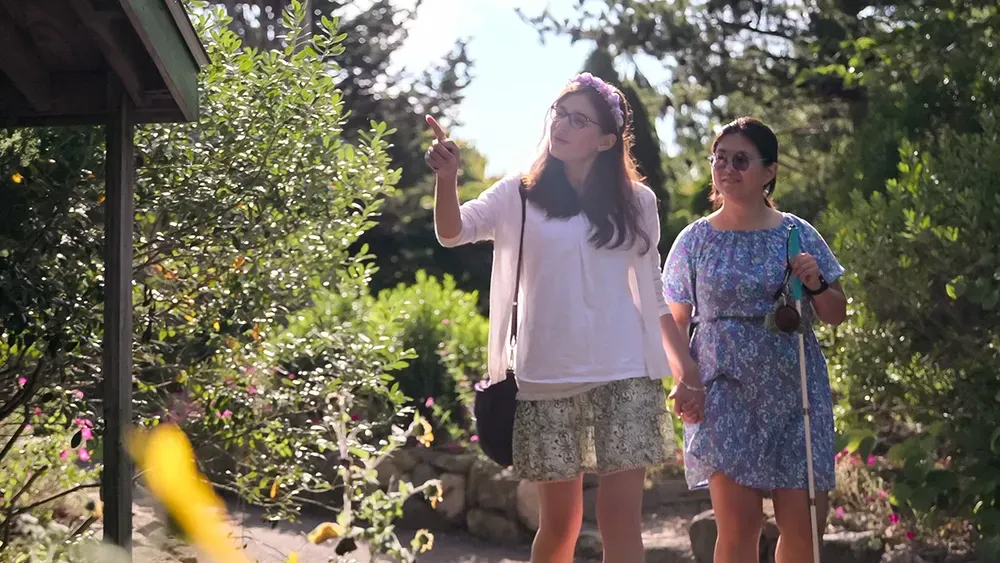
Photo Credit: Netflix
by Chris Tremblay Apr 27
5 MIN READ
“Love on the Spectrum” cast members Pari Kim and Tina Zhu Xi Caruso have publicly announced that they have ended their romantic relationship, sharing the news in late April 2026 through Instagram posts to their followers. Kim first addressed the breakup on her Instagram Story, stating that she and Caruso are “no longer together” while stressing that they remain friends and expressing hopes for Caruso’s “bright, T‑riffic future.”
In a follow‑up Instagram post, Kim used a train metaphor, describing the pair as “two trains on different tracks” and asking fans and media to respond with kindness and compassion as they process the news. PinkNews also quoted Kim as saying that the two are “two different railroads on two separate lines” who will “always support each other when times call for it and cheer each other on from afar,” reinforcing the message that their breakup does not end their mutual support.
Caruso confirmed the separation on her own Instagram feed, posting a photo of the pair dressed as “Wicked” characters Glinda and Elphaba and referring to the breakup as “mutual.” She wrote that “Pari and I have split up” and clarified that they are “just friends now,” while expressing optimism about continuing to advocate side‑by‑side on shared causes.
In her post, Caruso described herself as “the Elphaba” in their Glinda‑and‑Elphaba dynamic, saying she “can’t wait to show the world” how she advocates, and added that she hopes the two can still advocate together as friends “for things we believe in like public transportation and disability advocacy.” Both reality stars framed their breakup as a transition rather than an end, with Caruso underscoring that their shared commitment to disability and transit advocacy remains important to them even outside a romantic partnership.
Kim appeared on the third season of “Love on the Spectrum U.S.,” which aired in 2025 on Netflix and followed autistic adults navigating dating and relationships. The series, adapted from the Australian original that ran from 2019 to 2021, focuses on autistic people’s experiences of intimacy, communication, and romance in a documentary‑style reality format.
According to PinkNews reporting, Kim went on the show hoping to meet someone who shared her enthusiasm for local train networks, a passion that later became a recurring theme in her public persona and social media presence. She and Caruso connected during the third season and, as depicted on the series, appeared to bond quickly over their interests and values, forming a relationship that continued off camera.
PinkNews reports that the couple remained together for roughly a year after their first on‑screen date, reflecting one of the longer‑term relationships to emerge from the U.S. iteration of the series. During that period, Kim and Caruso represented LGBTQ+ people on the show, adding queer visibility to a format that centers autistic lives and relationships.
The pair also appeared in a cameo during the show’s fourth season at the engagement party of fellow cast members Madison Marilla and Tyler White, where they were portrayed as still happily together at the time of filming. Their presence across seasons reinforced continuity for viewers and highlighted that autistic and queer relationships, like all relationships, can evolve over time in ways that are sometimes visible and sometimes private.
Kim’s posts about the breakup placed strong emphasis on kindness, with one message quoted by TMZ in which she urged people to “lead with kindness and compassion” regarding media coverage and public commentary. She described herself as having “spoken my truth,” suggesting that sharing the news directly with fans was important to her sense of agency and authenticity.
In responses highlighted by PinkNews, Kim reiterated in Instagram comments that she and Caruso are “still friends” and that both want to have “T‑riffic lives,” continuing to weave her train‑themed wordplay into messages about emotional resilience and mutual support. Caruso, in turn, used her own post to stress shared advocacy goals, underscoring that while their romantic relationship has ended, their public roles as autistic self‑advocates and LGBTQ+ representation on screen are ongoing.
“Love on the Spectrum” began as an Australian series in 2019, originally produced for ABC Australia, before its format was adapted for a U.S. edition on Netflix that centers autistic adults in North America. The Australian version ran through 2021, and the American version has since reached at least four seasons, with the fourth season described by PinkNews as having “recently returned” to Netflix.
The show has been noted for its focus on autistic people’s lived experiences, including communication preferences, sensory needs, and the challenges and joys of dating, while also facing ongoing discussion about how reality TV formats portray disabled and neurodivergent communities. Within that landscape, Kim and Caruso’s relationship stood out as one of the show’s queer pairings, adding representation for LGBTQ+ autistic people who may see aspects of their own identities reflected on screen.
TMZ notes that Kim and Caruso’s breakup follows another separation among prominent “Love on the Spectrum” cast members, Abbey Romeo and David Isaacman, whose split after nearly five years of dating was reported just weeks earlier. PinkNews similarly reports that Romeo, a main cast member across the first three seasons of the U.S. series, recently ended her long‑term relationship with Isaacman, who also appeared on the show.
These successive breakups among recognizable cast members have drawn renewed attention to the realities that relationships, including those highlighted in reality series about love and disability, may change after filming concludes. Coverage from both outlets has focused on the person‑first perspectives of the cast, emphasizing their own words and framing rather than external speculation about the reasons behind the splits.
By highlighting public transportation and disability advocacy in their breakup statements, Kim and Caruso explicitly linked their personal news to their broader social commitments. Caruso’s reflection that they are like Glinda and Elphaba “in the way we advocate for what we believe in” signals her intention to keep leveraging her platform for issues she cares about, whether or not she and Kim are a couple.
Kim’s description of their lives as “two different railroads on two separate lines” while still cheering each other on underscores a model of breakup communication that foregrounds mutual respect and ongoing solidarity. Together, their statements contribute to a public narrative in which autistic and LGBTQ+ people navigate relationship transitions with transparency and care, pushing back against stereotypes that deny neurodivergent and queer communities complex emotional lives and agency.
“Love on the Spectrum U.S.” remains available to stream on Netflix, with the fourth season — featuring Kim and Caruso’s engagement‑party cameo — currently part of the platform’s reality lineup. Neither Kim nor Caruso has publicly announced detailed future projects or new relationships in connection with their breakup posts as of late April 2026.
For now, their messages indicate a focus on their individual paths, continued activism around disability and transportation, and a friendship they both say will continue beyond their time as a couple. As fans revisit their journey on the show, Kim and Caruso’s public handling of their breakup adds another chapter to the broader story of how autistic and LGBTQ+ people use media platforms to shape narratives about love, change, and community on their own terms.
Tina’s emphasis on a mutual decision
Caruso confirmed the separation on her own Instagram feed, posting a photo of the pair dressed as “Wicked” characters Glinda and Elphaba and referring to the breakup as “mutual.” She wrote that “Pari and I have split up” and clarified that they are “just friends now,” while expressing optimism about continuing to advocate side‑by‑side on shared causes.
In her post, Caruso described herself as “the Elphaba” in their Glinda‑and‑Elphaba dynamic, saying she “can’t wait to show the world” how she advocates, and added that she hopes the two can still advocate together as friends “for things we believe in like public transportation and disability advocacy.” Both reality stars framed their breakup as a transition rather than an end, with Caruso underscoring that their shared commitment to disability and transit advocacy remains important to them even outside a romantic partnership.
Background: a relationship that began on screen
Kim appeared on the third season of “Love on the Spectrum U.S.,” which aired in 2025 on Netflix and followed autistic adults navigating dating and relationships. The series, adapted from the Australian original that ran from 2019 to 2021, focuses on autistic people’s experiences of intimacy, communication, and romance in a documentary‑style reality format.
According to PinkNews reporting, Kim went on the show hoping to meet someone who shared her enthusiasm for local train networks, a passion that later became a recurring theme in her public persona and social media presence. She and Caruso connected during the third season and, as depicted on the series, appeared to bond quickly over their interests and values, forming a relationship that continued off camera.
A year together and continued representation
PinkNews reports that the couple remained together for roughly a year after their first on‑screen date, reflecting one of the longer‑term relationships to emerge from the U.S. iteration of the series. During that period, Kim and Caruso represented LGBTQ+ people on the show, adding queer visibility to a format that centers autistic lives and relationships.
The pair also appeared in a cameo during the show’s fourth season at the engagement party of fellow cast members Madison Marilla and Tyler White, where they were portrayed as still happily together at the time of filming. Their presence across seasons reinforced continuity for viewers and highlighted that autistic and queer relationships, like all relationships, can evolve over time in ways that are sometimes visible and sometimes private.
Social media reactions and personal framing
Kim’s posts about the breakup placed strong emphasis on kindness, with one message quoted by TMZ in which she urged people to “lead with kindness and compassion” regarding media coverage and public commentary. She described herself as having “spoken my truth,” suggesting that sharing the news directly with fans was important to her sense of agency and authenticity.
In responses highlighted by PinkNews, Kim reiterated in Instagram comments that she and Caruso are “still friends” and that both want to have “T‑riffic lives,” continuing to weave her train‑themed wordplay into messages about emotional resilience and mutual support. Caruso, in turn, used her own post to stress shared advocacy goals, underscoring that while their romantic relationship has ended, their public roles as autistic self‑advocates and LGBTQ+ representation on screen are ongoing.
The wider “Love on the Spectrum” context
“Love on the Spectrum” began as an Australian series in 2019, originally produced for ABC Australia, before its format was adapted for a U.S. edition on Netflix that centers autistic adults in North America. The Australian version ran through 2021, and the American version has since reached at least four seasons, with the fourth season described by PinkNews as having “recently returned” to Netflix.
The show has been noted for its focus on autistic people’s lived experiences, including communication preferences, sensory needs, and the challenges and joys of dating, while also facing ongoing discussion about how reality TV formats portray disabled and neurodivergent communities. Within that landscape, Kim and Caruso’s relationship stood out as one of the show’s queer pairings, adding representation for LGBTQ+ autistic people who may see aspects of their own identities reflected on screen.
Other recent cast breakups
TMZ notes that Kim and Caruso’s breakup follows another separation among prominent “Love on the Spectrum” cast members, Abbey Romeo and David Isaacman, whose split after nearly five years of dating was reported just weeks earlier. PinkNews similarly reports that Romeo, a main cast member across the first three seasons of the U.S. series, recently ended her long‑term relationship with Isaacman, who also appeared on the show.
These successive breakups among recognizable cast members have drawn renewed attention to the realities that relationships, including those highlighted in reality series about love and disability, may change after filming concludes. Coverage from both outlets has focused on the person‑first perspectives of the cast, emphasizing their own words and framing rather than external speculation about the reasons behind the splits.
Ongoing advocacy and visibility
By highlighting public transportation and disability advocacy in their breakup statements, Kim and Caruso explicitly linked their personal news to their broader social commitments. Caruso’s reflection that they are like Glinda and Elphaba “in the way we advocate for what we believe in” signals her intention to keep leveraging her platform for issues she cares about, whether or not she and Kim are a couple.
Kim’s description of their lives as “two different railroads on two separate lines” while still cheering each other on underscores a model of breakup communication that foregrounds mutual respect and ongoing solidarity. Together, their statements contribute to a public narrative in which autistic and LGBTQ+ people navigate relationship transitions with transparency and care, pushing back against stereotypes that deny neurodivergent and queer communities complex emotional lives and agency.
What’s next for the series and the stars
“Love on the Spectrum U.S.” remains available to stream on Netflix, with the fourth season — featuring Kim and Caruso’s engagement‑party cameo — currently part of the platform’s reality lineup. Neither Kim nor Caruso has publicly announced detailed future projects or new relationships in connection with their breakup posts as of late April 2026.
For now, their messages indicate a focus on their individual paths, continued activism around disability and transportation, and a friendship they both say will continue beyond their time as a couple. As fans revisit their journey on the show, Kim and Caruso’s public handling of their breakup adds another chapter to the broader story of how autistic and LGBTQ+ people use media platforms to shape narratives about love, change, and community on their own terms.
Copyright EDGE Media Network. All rights reserved. This material may not be published, broadcast, rewritten, or redistributed.