Euphoria Creator Sam Levinson Defends Sydney Sweeney’s “Racy” Season 3 Arc Amid Intensifying Backlash
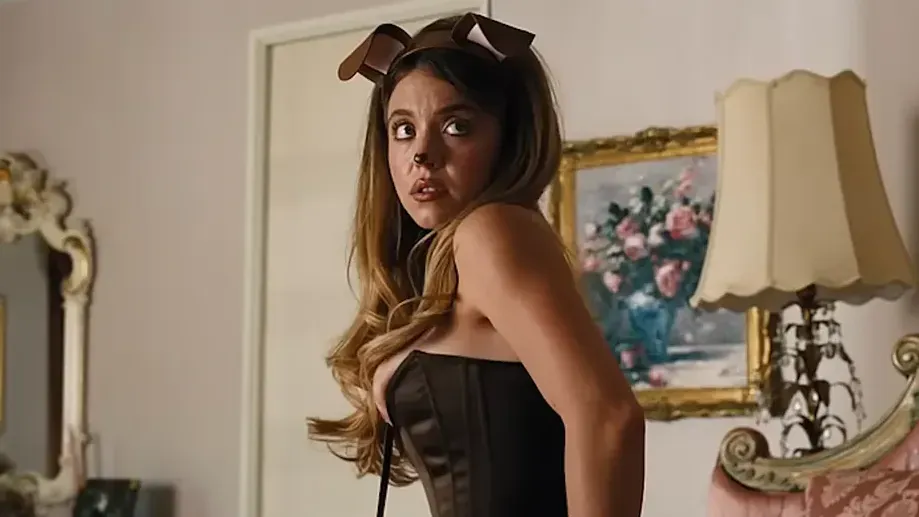
Photo Credit: HBO
by Chris Tremblay May 6
7 MIN READ
Euphoria creator Sam Levinson has stepped into the public conversation around Sydney Sweeney’s controversial season three storyline, praising the actor’s craft and pushing back indirectly against claims that the show is humiliating or exploiting her. Speaking at The Hollywood Reporter’s Directors in Focus event, Levinson said Sweeney “becomes brilliant” when he “push it a little bit,” characterizing her performance as both emotionally honest and sharply funny amid the show’s heightened tone.
Levinson described Sweeney as able to “anchor the scene with this kind of madness and chaos going on around her,” emphasizing her ability to ground Euphoria’s most outlandish set pieces. In a separate interview, he called Cassie “a very cunning, interesting, ambitious character” and said Sweeney is “a joy to work with” who “can literally do anything,” adding that he sometimes encourages her to “just go off” and make a take “nutty” to unlock new facets of the character.
In Euphoria’s third season, set five years after high school, Sweeney’s character Cassie Howard is portrayed planning a lavish wedding to Nate Jacobs while struggling with money, ultimately turning toward online adult content to fund her increasingly extravagant fantasies. Viewers have watched her pursue OnlyFans-style work, posing in fetishized costumes and sexualized scenarios that the show presents through a mix of dark comedy and discomfort.
Among the most discussed scenes are sequences in which Cassie appears in revealing outfits dressed either as a dog or as an “adult baby” while filming provocative content, imagery that collides with a cutesy visual language and underscores the power imbalance inherent in her pursuit of online fame. Rolling Stone’s detailed overview of season three notes that Cassie “shines as a bridezilla whose wedding-day dreams are dashed in splattered blood and tears” and highlights a sequence pairing her social-media-ready erotic performance with the 1953 novelty song “ That Doggie in the Window?,” which Levinson says opened the door to exploring the dynamic between Cassie and Nate “lyrically.”
The new season, which premiered in April after a long hiatus, sparked immediate backlash from part of the audience, with social media users describing Sweeney’s arc as a “humiliation ritual” and accusing Euphoria of degrading her character for shock value. Posts shared by Fox News Digital show fans on X claiming Cassie’s role has been “reduced to basically HUMILIATING HER,” expressing disbelief at the dog and adult baby scenes and arguing that Sweeney will not receive awards recognition for what they view as demeaning material.
In another article, Fox News reports that some viewers have gone as far as calling for HBO to cancel the show altogether, labeling the first two episodes of the season “disturbing” and describing the sexualized imagery as “fetish slop.” The same coverage notes that critics of the show’s direction have accused Levinson of sexualizing young women characters, even as the series tracks the cast into adulthood and presents Cassie’s choices in the context of economic pressure and social-media performance culture.
Alongside the criticism, there has been vocal pushback from fans who stress that Euphoria has always been a boundary-pushing series and argue that Sweeney is a trained adult performer actively choosing challenging material. Readers quoted by Fox News responded to claims of “humiliation” with comments like “girl, it’s called acting” and pointed out that if Sweeney were uncomfortable, she would not have agreed to continue with the storyline, highlighting her agency as an established star with a wide range of roles beyond Euphoria.
Opinion writers and pop culture commentators have also argued that some of the outrage misdirects attention away from more substantive critiques of the show’s treatment of sex work, consent, and misogyny. A Screen Rant analysis contends that detractors are angry “for the wrong reasons,” suggesting that focusing solely on Sweeney’s nudity or costumes risks ignoring broader structural questions about how Euphoria frames online adult work and the exploitation of women within digital economies.
Levinson has positioned season three as a more linear, darkly comic exploration of “choices and consequences,” set against a backdrop that expands Euphoria beyond high school into the harsher realities of adult life, addiction, crime, and survival at the U.S.–Mexico border. He told Rolling Stone that he began this season by wanting to explore fentanyl—describing it as a leading cause of death for people under 45 in the United States—and structured the story around how the drug enters the country and shapes his characters’ trajectories, while also interweaving more self-contained arcs for supporting figures like Jules and Lexi.
Within that larger framework, Levinson presents Cassie as a figure whose pursuit of online attention, romantic validation and financial security leads her into increasingly extreme and self-sabotaging situations, a characterization he calls “hysterical” and rooted in her insatiable search for “more.” He describes season three as more dialogue-driven and less “frenetic and speedy” than earlier installments, arguing that this shift allows more space for humor to “poke its way through” in storylines like Cassie’s bridezilla arc, even as the show remains steeped in violence, substance use and grief.
At the Directors in Focus event, Levinson singled out a key Cassie scene that had to be changed on the day of shooting, praising Sweeney’s ability to adapt to last-minute rewrites and still deliver a layered performance under intense production pressure. He framed her willingness to recalibrate on set as evidence of her range and resilience, underscoring that she can reach levels that are “very honest emotionally, but also deeply funny” even when the staging and tone shift abruptly.
In a longer profile, Levinson reiterated that Sweeney is someone who can “literally do anything,” noting that when he encourages her to improvise or make a performance “nutty,” a completely different version of Cassie emerges that still feels rooted in the character’s psychology. By stressing her creative input and treating her as a collaborator rather than a passive subject, his comments implicitly respond to online narratives that frame Sweeney as being acted upon instead of as an active participant in shaping Cassie’s story.
While Sweeney has not issued an extensive public statement specifically about the season three backlash in recent weeks, she has previously spoken about the industry’s gendered double standards around nudity and explicit content. In a 2022 interview with Cosmopolitan, cited in recent coverage, she said that she does not think as many people took her seriously in Euphoria because she “took shirt off” and called this a “double standard,” expressing hope that she could help change attitudes toward women who do intimate scenes on screen.
Those earlier remarks have resurfaced in the current debate, with some observers suggesting that the criticism of Cassie’s storyline risks echoing the same double standards Sweeney identified, by focusing on the amount of skin shown rather than on narrative questions of consent, power and character development. At the same time, advocates for more ethical portrayals of sex work and fetish communities argue that discomfort with the storyline can coexist with respect for Sweeney’s agency, emphasizing that fictional depictions can still reinforce harmful stereotypes or contribute to broader stigma.
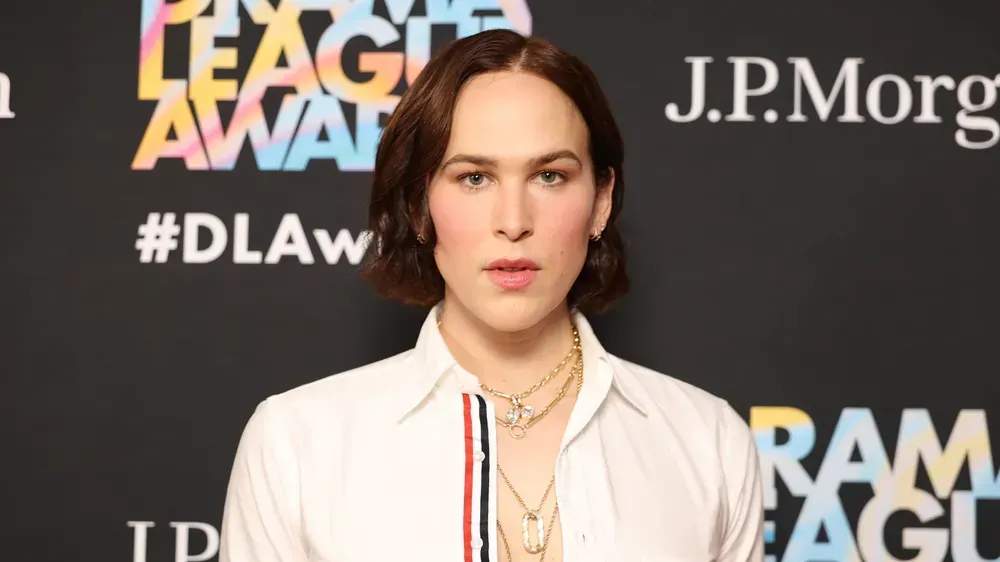
Season three continues Euphoria’s focus on a diverse ensemble of young adults navigating queerness, gender identity, trauma and survival, including the ongoing story of Jules, a transgender woman portrayed by Hunter Schafer, whose artistic career and relationship dynamics remain integral to the series. Rolling Stone notes that Jules is now a working artist with a sugar daddy and remains “a scene-stealer,” with her “sparkling aura” taking over every frame she appears in as she moves through Los Angeles’ art and nightlife worlds.
The show’s third season leans more heavily into Hollywood settings, including scenes at the Peninsula Beverly Hills and a West Hollywood apartment complex that Levinson describes as “quintessential,” embedding Cassie’s and Jules’ stories in a landscape that has long been associated with LGBTQ+ culture and entertainment industry hierarchies. For many queer and transgender viewers, debates about Euphoria’s sexual content are intertwined with questions of who gets to be sexual on screen, who is punished for it, and how trauma and intimacy are framed when LGBTQ+ characters share the spotlight with straight counterparts like Cassie and Nate.
A significant part of Levinson’s creative defense rests on tone, especially his use of music to heighten the absurdity and discomfort of Cassie’s storyline. He explained that pairing Cassie’s attempts at virality with “ That Doggie in the Window?” was meant to open up a “rich and fun” way of exploring the relationship between Nate and Cassie, implicitly likening Cassie’s self-objectification to the marketplace logic of both the song and online content economies.
Levinson has also shifted Euphoria’s soundscape away from the needle-drop-heavy approach of the first two seasons, bringing in composer Hans Zimmer to provide a more sweeping, Western-inflected score that he believes better suits the older, more world-weary versions of the characters. In his view, this change underscores the show’s evolution from a high school melodrama into something closer to an adult morality play, a context in which he argues that Cassie’s storyline is meant to be read as both satirical and tragic rather than as pure titillation.
As new episodes roll out, the clash between those who see Cassie’s season three arc as a pointed critique of misogyny and commodified sexuality and those who view it as gratuitous exploitation shows no signs of abating. Levinson’s recent comments, which foreground Sweeney’s talent and professionalism and insist on the intentional, comedic dimension of her storyline, represent his clearest public attempt yet to reframe the conversation around authorial intent, collaboration and performance rather than shock value alone.
For Sweeney, whose wider body of work ranges from prestige drama to romantic comedy, the backlash underscores the persistent scrutiny attached to women who take on sexually explicit roles, even as she and her collaborators describe such choices as deliberate, artistically motivated and central to the narrative. Whether Levinson’s defense will soften criticism of Euphoria’s handling of gender, sexuality and power—or instead further galvanize those calling for different creative leadership—remains an open question as the season continues to unfold.
Cassie’s OnlyFans storyline
In Euphoria’s third season, set five years after high school, Sweeney’s character Cassie Howard is portrayed planning a lavish wedding to Nate Jacobs while struggling with money, ultimately turning toward online adult content to fund her increasingly extravagant fantasies. Viewers have watched her pursue OnlyFans-style work, posing in fetishized costumes and sexualized scenarios that the show presents through a mix of dark comedy and discomfort.
Among the most discussed scenes are sequences in which Cassie appears in revealing outfits dressed either as a dog or as an “adult baby” while filming provocative content, imagery that collides with a cutesy visual language and underscores the power imbalance inherent in her pursuit of online fame. Rolling Stone’s detailed overview of season three notes that Cassie “shines as a bridezilla whose wedding-day dreams are dashed in splattered blood and tears” and highlights a sequence pairing her social-media-ready erotic performance with the 1953 novelty song “ That Doggie in the Window?,” which Levinson says opened the door to exploring the dynamic between Cassie and Nate “lyrically.”
Online criticism and “humiliation ritual” claims
The new season, which premiered in April after a long hiatus, sparked immediate backlash from part of the audience, with social media users describing Sweeney’s arc as a “humiliation ritual” and accusing Euphoria of degrading her character for shock value. Posts shared by Fox News Digital show fans on X claiming Cassie’s role has been “reduced to basically HUMILIATING HER,” expressing disbelief at the dog and adult baby scenes and arguing that Sweeney will not receive awards recognition for what they view as demeaning material.
In another article, Fox News reports that some viewers have gone as far as calling for HBO to cancel the show altogether, labeling the first two episodes of the season “disturbing” and describing the sexualized imagery as “fetish slop.” The same coverage notes that critics of the show’s direction have accused Levinson of sexualizing young women characters, even as the series tracks the cast into adulthood and presents Cassie’s choices in the context of economic pressure and social-media performance culture.
Fans and commentators push back on the backlash
Alongside the criticism, there has been vocal pushback from fans who stress that Euphoria has always been a boundary-pushing series and argue that Sweeney is a trained adult performer actively choosing challenging material. Readers quoted by Fox News responded to claims of “humiliation” with comments like “girl, it’s called acting” and pointed out that if Sweeney were uncomfortable, she would not have agreed to continue with the storyline, highlighting her agency as an established star with a wide range of roles beyond Euphoria.
Opinion writers and pop culture commentators have also argued that some of the outrage misdirects attention away from more substantive critiques of the show’s treatment of sex work, consent, and misogyny. A Screen Rant analysis contends that detractors are angry “for the wrong reasons,” suggesting that focusing solely on Sweeney’s nudity or costumes risks ignoring broader structural questions about how Euphoria frames online adult work and the exploitation of women within digital economies.
Levinson’s broader creative defense
Levinson has positioned season three as a more linear, darkly comic exploration of “choices and consequences,” set against a backdrop that expands Euphoria beyond high school into the harsher realities of adult life, addiction, crime, and survival at the U.S.–Mexico border. He told Rolling Stone that he began this season by wanting to explore fentanyl—describing it as a leading cause of death for people under 45 in the United States—and structured the story around how the drug enters the country and shapes his characters’ trajectories, while also interweaving more self-contained arcs for supporting figures like Jules and Lexi.
Within that larger framework, Levinson presents Cassie as a figure whose pursuit of online attention, romantic validation and financial security leads her into increasingly extreme and self-sabotaging situations, a characterization he calls “hysterical” and rooted in her insatiable search for “more.” He describes season three as more dialogue-driven and less “frenetic and speedy” than earlier installments, arguing that this shift allows more space for humor to “poke its way through” in storylines like Cassie’s bridezilla arc, even as the show remains steeped in violence, substance use and grief.
Praise for Sweeney’s professionalism
At the Directors in Focus event, Levinson singled out a key Cassie scene that had to be changed on the day of shooting, praising Sweeney’s ability to adapt to last-minute rewrites and still deliver a layered performance under intense production pressure. He framed her willingness to recalibrate on set as evidence of her range and resilience, underscoring that she can reach levels that are “very honest emotionally, but also deeply funny” even when the staging and tone shift abruptly.
In a longer profile, Levinson reiterated that Sweeney is someone who can “literally do anything,” noting that when he encourages her to improvise or make a performance “nutty,” a completely different version of Cassie emerges that still feels rooted in the character’s psychology. By stressing her creative input and treating her as a collaborator rather than a passive subject, his comments implicitly respond to online narratives that frame Sweeney as being acted upon instead of as an active participant in shaping Cassie’s story.
Sweeney’s past comments on double standards
While Sweeney has not issued an extensive public statement specifically about the season three backlash in recent weeks, she has previously spoken about the industry’s gendered double standards around nudity and explicit content. In a 2022 interview with Cosmopolitan, cited in recent coverage, she said that she does not think as many people took her seriously in Euphoria because she “took shirt off” and called this a “double standard,” expressing hope that she could help change attitudes toward women who do intimate scenes on screen.
Those earlier remarks have resurfaced in the current debate, with some observers suggesting that the criticism of Cassie’s storyline risks echoing the same double standards Sweeney identified, by focusing on the amount of skin shown rather than on narrative questions of consent, power and character development. At the same time, advocates for more ethical portrayals of sex work and fetish communities argue that discomfort with the storyline can coexist with respect for Sweeney’s agency, emphasizing that fictional depictions can still reinforce harmful stereotypes or contribute to broader stigma.
Wider context: an ensemble show with queer and trans characters
Season three continues Euphoria’s focus on a diverse ensemble of young adults navigating queerness, gender identity, trauma and survival, including the ongoing story of Jules, a transgender woman portrayed by Hunter Schafer, whose artistic career and relationship dynamics remain integral to the series. Rolling Stone notes that Jules is now a working artist with a sugar daddy and remains “a scene-stealer,” with her “sparkling aura” taking over every frame she appears in as she moves through Los Angeles’ art and nightlife worlds.
The show’s third season leans more heavily into Hollywood settings, including scenes at the Peninsula Beverly Hills and a West Hollywood apartment complex that Levinson describes as “quintessential,” embedding Cassie’s and Jules’ stories in a landscape that has long been associated with LGBTQ+ culture and entertainment industry hierarchies. For many queer and transgender viewers, debates about Euphoria’s sexual content are intertwined with questions of who gets to be sexual on screen, who is punished for it, and how trauma and intimacy are framed when LGBTQ+ characters share the spotlight with straight counterparts like Cassie and Nate.
Music, tone and the question of intent
A significant part of Levinson’s creative defense rests on tone, especially his use of music to heighten the absurdity and discomfort of Cassie’s storyline. He explained that pairing Cassie’s attempts at virality with “ That Doggie in the Window?” was meant to open up a “rich and fun” way of exploring the relationship between Nate and Cassie, implicitly likening Cassie’s self-objectification to the marketplace logic of both the song and online content economies.
Levinson has also shifted Euphoria’s soundscape away from the needle-drop-heavy approach of the first two seasons, bringing in composer Hans Zimmer to provide a more sweeping, Western-inflected score that he believes better suits the older, more world-weary versions of the characters. In his view, this change underscores the show’s evolution from a high school melodrama into something closer to an adult morality play, a context in which he argues that Cassie’s storyline is meant to be read as both satirical and tragic rather than as pure titillation.
A debate unlikely to end soon
As new episodes roll out, the clash between those who see Cassie’s season three arc as a pointed critique of misogyny and commodified sexuality and those who view it as gratuitous exploitation shows no signs of abating. Levinson’s recent comments, which foreground Sweeney’s talent and professionalism and insist on the intentional, comedic dimension of her storyline, represent his clearest public attempt yet to reframe the conversation around authorial intent, collaboration and performance rather than shock value alone.
For Sweeney, whose wider body of work ranges from prestige drama to romantic comedy, the backlash underscores the persistent scrutiny attached to women who take on sexually explicit roles, even as she and her collaborators describe such choices as deliberate, artistically motivated and central to the narrative. Whether Levinson’s defense will soften criticism of Euphoria’s handling of gender, sexuality and power—or instead further galvanize those calling for different creative leadership—remains an open question as the season continues to unfold.
Copyright EDGE Media Network. All rights reserved. This material may not be published, broadcast, rewritten, or redistributed.