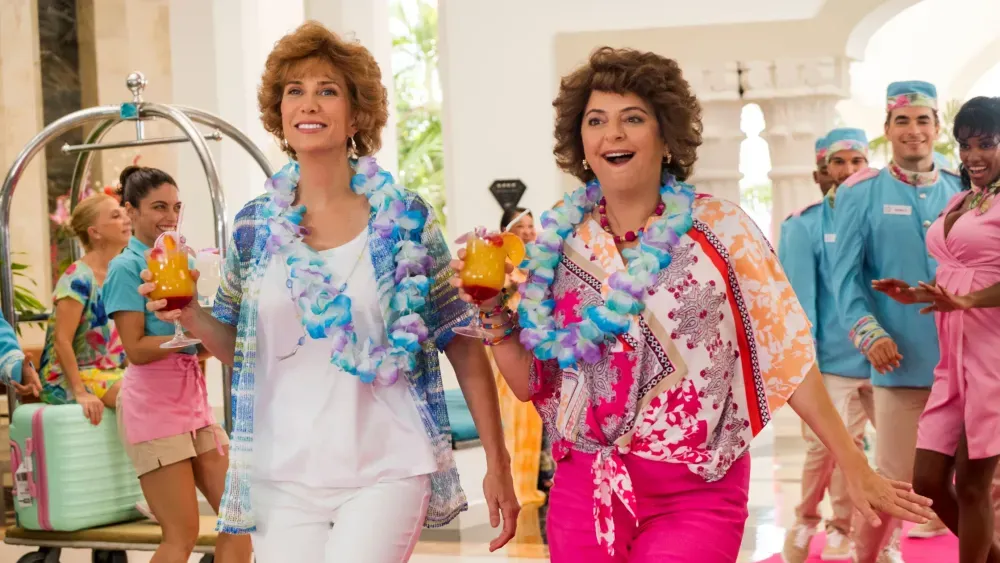
Taylor Swift’s Lawyers Call Las Vegas Performer’s ‘Showgirl’ Trademark Lawsuit a “Publicity Stunt” and “Absurd”
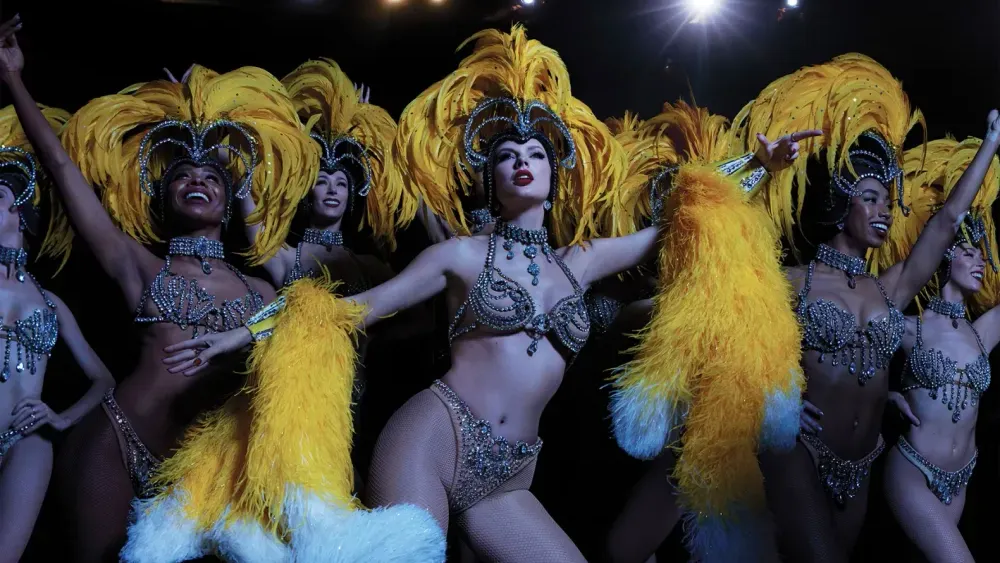
Photo Credit: TAS Management
Las Vegas-based performer and writer Maren Flagg, who uses the stage name Maren Wade, filed a federal lawsuit in late March in the U.S. District Court for the Central District of California, accusing Taylor Swift and multiple affiliated companies of trademark infringement and related claims. The complaint alleges that Swift’s use of “The Life of a Showgirl” for an album and merchandise unlawfully encroaches on Flagg’s registered “Confessions of a Showgirl” mark, which Flagg has developed over more than a decade across live shows, writing, and digital media.
According to the filing, the U.S. Patent and Trademark Office registered “Confessions of a Showgirl” in 2015 under Flagg’s legal name, recognizing it as her mark for entertainment-related services. The lawsuit further alleges that in November 2025 the Trademark Office refused an attempt by Swift’s team to register “The Life of a Showgirl,” finding a likelihood of confusion with Flagg’s existing registration.
Wade’s claims of brand harm
Flagg’s complaint argues that Swift’s rollout of “The Life of a Showgirl,” including album promotion and related merchandise, has overwhelmed search results and marketplace recognition that previously pointed to her own work. In the suit, she contends that Swift’s “overwhelming commercial presence” makes it more difficult for audiences to identify her as the source of “Confessions of a Showgirl,” creating potential confusion and diluting the distinctiveness of her brand.
In a motion for a preliminary injunction, Flagg urges the court to block Swift from using “The Life of a Showgirl” on merchandise and in connection with concerts while litigation is pending, arguing that ongoing use risks erasing the brand she has spent 12 years building. Her legal team asserts that the two titles “share the same structure, the same dominant phrase, and the same overall commercial impression,” and that they operate in overlapping entertainment markets aimed at similar consumers.
The lawsuit emphasizes that “Confessions of a Showgirl” is the only trademark under which Flagg has built her professional identity, in contrast to what it describes as an extensive portfolio of more than 170 active or pending trademarks managed for Swift across different phrases and designations. Flagg’s attorneys argue that continued use of “The Life of a Showgirl” threatens the “entirety” of her brand because her mark is not one among many; it is positioned as the foundation of her creative livelihood.
In public comments, Flagg’s counsel Jaymie Parkkinen has said that Flagg “spent more than a decade building ‘Confessions of a Showgirl,’” stressing that she registered and cultivated the mark and that the Trademark Office’s refusal of Swift’s application underscores the need to protect independent creators’ rights. The suit clarifies that Flagg is not challenging Swift’s music itself, but rather the use of “The Life of a Showgirl” as a commercial source identifier on goods and promotional materials.
Swift’s attorneys call claims ‘absurd’
In a brief filed on Wednesday and reviewed by outlets including Variety, Swift’s attorneys sharply reject Flagg’s allegations, stating that the motion for an injunction “should never have been filed” and characterizing the case as “Ms. Flagg’s latest attempt to use Taylor Swift’s name and intellectual property to prop up her brand.” The filing asserts that Flagg improperly lumps together her cabaret show and Swift’s musical album as generic “entertainment services,” a comparison the brief calls “absurd.”
Swift’s legal team argues there is little realistic chance that consumers would confuse a global stadium tour and major-label album with Flagg’s smaller-scale cabaret performances, which they describe as taking place in venues such as 55+ communities, RV and golf resorts, and 90-seat cabaret-style locations. The brief notes that Flagg’s website lists no upcoming performances, suggesting a substantial disparity in market presence between the parties.
The filing also questions why Flagg is seeking immediate injunctive relief more than eight months after Swift announced “The Life of a Showgirl,” pointing to that gap as undermining claims of irreparable harm. According to Swift’s lawyers, Flagg spent several of those months “centering her brand” around Swift’s album name, artwork, and music in her own social media promotion rather than distancing herself from the allegedly infringing phrase.
The brief, filed by attorneys Max N. Wellman, J. Douglas Baldridge, and Katherine Wright Morrone on behalf of Swift and co-defendants TAS Rights Management, UMG Recordings, and Bravado International Group Merchandising, also highlights other entertainment works with similar titles—such as “Confessions of a Goddess,” “Confessions of a Vegas Showgirl,” “Portrait of a Showgirl,” and “The Last Showgirl”—that have coexisted with Flagg’s mark without legal disputes. Swift’s attorneys present those examples as evidence that Flagg has tolerated comparable uses in the marketplace and that her claimed monopoly over “showgirl” phrasing is overstated.
Counter-accusations over social media use
Beyond disputing the likelihood of confusion, Swift’s legal team goes on offense by accusing Flagg of her own alleged infringements related to Swift’s intellectual property. The brief claims that in the months after Swift announced “The Life of a Showgirl,” Flagg “flooded” her branded Instagram and TikTok accounts with more than 40 posts aligning her cabaret brand with Swift’s album title, artwork, music, and lyrics, including the use of Swift’s tracks without permission.
One cited example describes a post that purportedly used a version of Swift’s album-cover logo, audio from the title track, and hashtags such as #thelifeofashowgirl, #swifties, #ts12, and #taylornation while discussing what was framed as an official album release event. Swift’s attorneys argue that these posts were commercial promotions for Flagg’s own brand and thus constitute “clear infringement” of Swift’s copyrighted and trademarked material under federal law, rather than fan activity.
The filing states that TAS Rights Management intends to pursue “appropriate remedies” for Flagg’s alleged unauthorized use of Swift’s art and music in these promotions, signaling a potential counterclaim or separate enforcement action. That posture underscores how a case that began as a lawsuit by a smaller entertainer against a global star is increasingly framed by Swift’s camp as an instance of unauthorized co-branding rather than alleged exploitation by a major artist.
Flagg’s complaint, however, maintains that her use of hashtags and commentary around Swift’s album occurred in the context of defending her brand and participating in public discourse about the showgirl narrative, while still respecting Swift’s creative expression. In statements quoted by the Los Angeles Times, her side emphasizes that the case is “not about the music” but about the use of a confusingly similar designation as a trademark on merchandise and in commerce.
First Amendment arguments and what comes next
Swift’s attorneys ground part of their response in First Amendment doctrine, citing the influential Rogers v. Grimaldi test governing titles of expressive works and the case Lost Int’l, LLC v. Germanotta, involving a dispute over Lady Gaga’s “Mayhem” branding. Under that framework, they argue, an expressive work’s title generally does not infringe a trademark unless the title lacks “artistic relevance” to the underlying work or explicitly misleads consumers about source or content, thresholds they say Flagg cannot meet regarding “The Life of a Showgirl.”
The brief contends that album and song titles are central forms of expressive speech, and that audiences are “less likely” to assume that the use of a similar phrase in a creative title signals endorsement or affiliation by another mark holder. Swift’s team insists that even if Flagg holds rights to “Confessions of a Showgirl” for certain goods and services, those rights do not automatically extend to controlling the naming of a separate expressive work like Swift’s album.
For her part, Flagg is supported by intellectual property attorneys who say the case raises important questions about how far large entertainment brands can encroach on existing marks when they deploy new titles as multi-platform commercial identifiers. Patent attorney JD Harriman told the Los Angeles Times that the Trademark Office’s refusal of Swift’s application for “The Life of a Showgirl” underscores the tension between protecting expressive works and enforcing trademark rules in merchandising and brand extensions.
No trial date has yet been set, and the court still must rule on Flagg’s request for a preliminary injunction seeking to pause Swift’s use of “The Life of a Showgirl” in commerce while the case proceeds. Until then, the dispute will likely continue to draw attention not only from Swift’s extensive fan community but also from independent performers, including LGBTQ+ artists and showgirls, who are watching closely to see how courts balance the rights of individual creators and powerful entertainment brands in the era of cross-platform music merchandising.
Copyright EDGE Media Network. All rights reserved. This material may not be published, broadcast, rewritten, or redistributed.