Cate Blanchett Says Hollywood ‘Killed’ #MeToo Quickly, Rekindling Debate at Cannes 2026
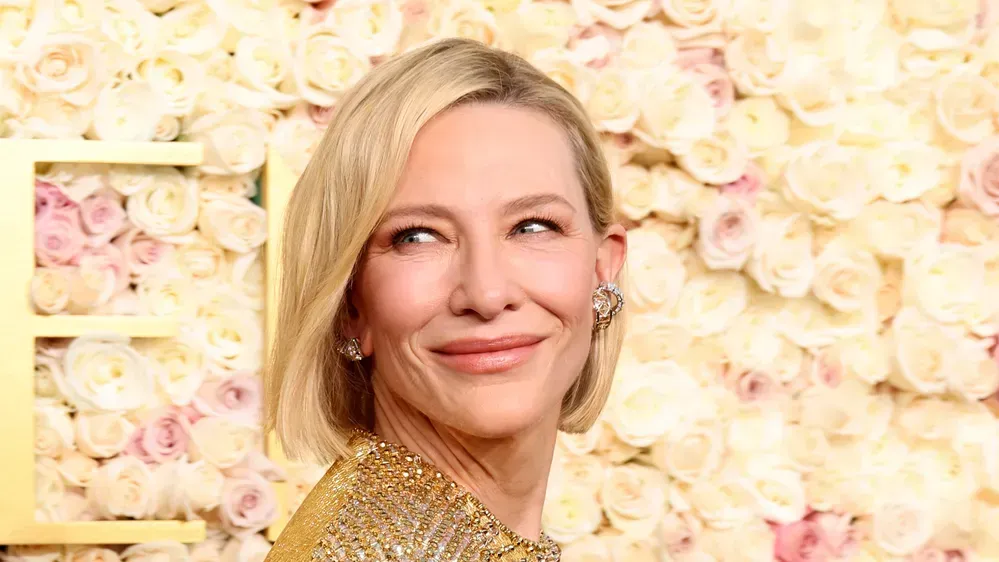
Cate Blanchett attends the 82nd Annual Golden Globe Awards at The Beverly Hilton on January 05, 2025 in Beverly Hills, California. Photo Credit: Amy Sussman/Getty Images
At a staged conversation during the 79th Cannes Film Festival, two‑time Oscar winner Cate Blanchett said the #MeToo movement in Hollywood “got killed very quickly,” warning that the initial wave of disclosures has not translated into sustained structural change. Sitting down with moderator Didier Allouch, Blanchett reflected on the industry’s response since the movement’s 2017 surge, suggesting that conversations about abuse and accountability have been curtailed rather than deepened.
‘Why does that get shut down?’
Describing the trajectory of #MeToo, Blanchett told the Cannes audience, “It got killed very quickly, which I think is interesting,” emphasizing that the movement exposed patterns of abuse across multiple sectors, not just within entertainment. She argued that #MeToo revealed “a systemic layer of abuse” across industries and warned that if institutions shut down dialogue, “you can’t solve the problem” or “move on.”
Blanchett contrasted the relative safety of high‑profile figures speaking out with the risks faced by what she described as the “average woman on the street” using the #MeToo hashtag to share experiences. “There are a lot of people with platforms who are able to speak up with relative safety and say this has happened to me, and the so‑called average woman on the street, person on the street, is saying MeToo — why does that get shut down?” she asked.
Her framing echoed previous interviews, including a 2025 conversation cited by Fox News in which she said #MeToo “hasn’t taken root” and expressed distress at efforts to “dismantle and discredit” people whose stories were only beginning to surface. In both instances, Blanchett emphasized that surfacing individual accounts of harm is only a first step toward addressing longstanding cultures of impunity in workplaces.
Persistent gender imbalance on film sets
Beyond the fate of #MeToo, Blanchett used the Cannes platform to describe the continuing gender imbalance she encounters in production environments, offering a concrete daily “headcount” as an example. She said that when she arrives on set, “There’s 10 women and there’s 75 men every morning,” a ratio she characterized as both monotonous and stifling for creative work.
While stating “I love men,” Blanchett said that overwhelmingly male crews tend to generate the same kinds of jokes and social dynamics, and that walking into such a homogeneous workplace “just gets boring for everybody.” She linked that homogeneity to the quality of the work produced, arguing that limited perspectives behind the camera can narrow the kinds of stories that reach audiences, including those involving women, LGBTQ+ people, and other underrepresented communities.
In remarks reported by Variety and others, Blanchett suggested that homogeneous crews can have “an effect on the work,” underscoring a broader industry debate about who has access to decision‑making roles and how that shapes representation on screen. Her comments did not single out specific productions or individuals but described a pattern she says she still observes “every day,” years after studios pledged to improve equity following #MeToo’s rise.
From 2018 red‑carpet protest to 2026 reckoning
Blanchett’s Cannes intervention builds on her visible role in earlier festival protests, including the 2018 demonstration in which she joined 81 women on the steps of the Palais des Festivals to call attention to gender inequality in cinema. At that time, she read a statement highlighting that women are not a minority in the world even if the industry often treats them as such, standing alongside filmmakers such as Ava DuVernay and the late Agnès Varda.
Coverage from Variety notes that the 2018 protest emerged amid criticism that Cannes organizers had not done enough to acknowledge #MeToo and Time’s Up, two movements that had amplified stories of harassment faced by actors, crew members, and other workers across the global film ecosystem. By returning to the festival stage in 2026 to argue that #MeToo was “killed very quickly,” Blanchett suggested that, in her view, the energy of that earlier moment has not yet translated into lasting protections for survivors or meaningful redistribution of power.
Although Blanchett did not explicitly center LGBTQ+ workers in her remarks, advocates have long noted that queer and transgender people in entertainment can experience intersecting vulnerabilities around harassment, job security, and representation. Her emphasis on “systemic” abuse and on listening to people without large platforms aligns with broader industry campaigns that call for inclusive reporting mechanisms and stronger protections for all workers, including those whose identities place them at additional risk of retaliation.
Reactions and renewed debate over #MeToo’s future
International coverage of Blanchett’s comments has focused on her choice of language — particularly the phrase “got killed very quickly” — and on the tension between highly publicized misconduct cases and slower‑moving institutional reforms. Outlets including NDTV, Hindustan Times, and Moneycontrol highlighted her remarks as a reminder that, despite increased awareness, many film sets still show a stark numerical imbalance between male and non‑male workers.
Fox News and other outlets also connected her 2026 comments to prior statements in which she said people had spoken about #MeToo “as if it’s well and truly over,” a framing she rejected by arguing the movement had “never taken root” to the extent many believed. Commentaries have pointed out that her perspective reflects one high‑profile actor’s assessment; nonetheless, the specific figures she cited and the international amplification of her remarks have rekindled questions about whether policies introduced post‑2017 are adequately enforced or equitably accessible to all workers.
While Blanchett did not outline a specific policy agenda at Cannes, she reiterated a core idea: that naming abuse and acknowledging uneven power are prerequisites for any meaningful solution. “If you don’t identify a problem, you can’t solve the problem,” she said, arguing that shutting conversations down makes it impossible to “move on.” For many observers, her intervention underscored how survivors — including women, LGBTQ+ people, and others whose identities intersect with multiple forms of marginalization — continue to navigate an environment where speaking out can carry professional and personal risks.
Copyright EDGE Media Network. All rights reserved. This material may not be published, broadcast, rewritten, or redistributed.