‘The Devil Wears Prada 2’ Faces Boycott Over Asian Assistant Character Accused of Racist Stereotyping

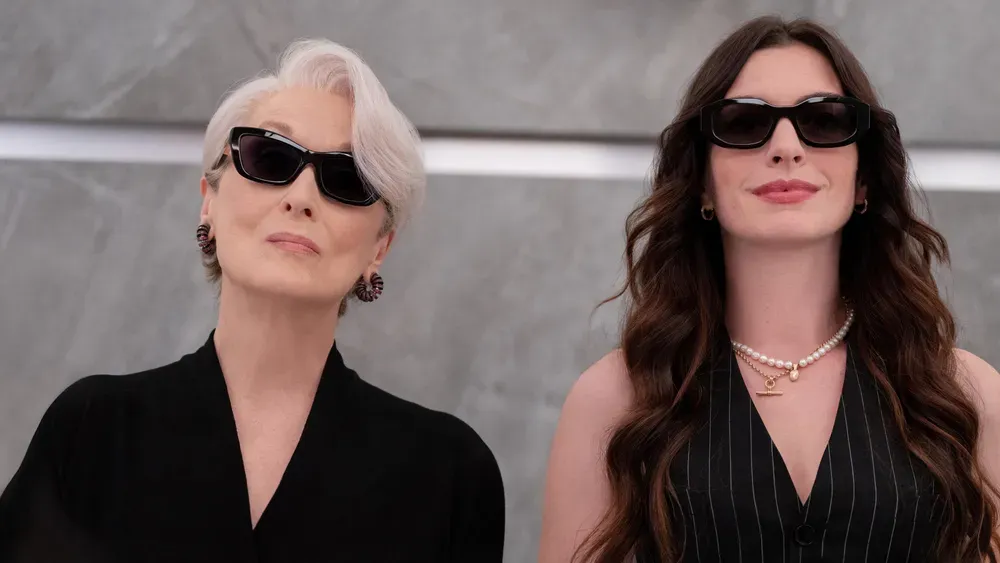
Photo Credit: Fox/Disney
A newly released promotional clip for The Devil Wears Prada 2 has triggered a wave of criticism in China, Japan, South Korea, and other parts of East Asia, where online commentators accuse the film of perpetuating racist stereotypes of Asian women. The clip, posted by 20th Century Studios on its official YouTube and social media accounts on April 16, features a new Asian assistant character whose styling, dialogue, and name have become the focus of intense scrutiny and calls for a boycott under hashtags such as #BoycottTheDevilWearsPrada2.
Who is the new character?
At the center of the controversy is a young assistant to Andy Sachs, played by Chinese American actor Helen J Shen in her feature‑film debut. One major report identifies the character as Qin Zhou, described as a Chinese assistant working with Hathaway’s character in the film’s fashion‑media setting. Another widely circulated article referencing the same clip uses the transliteration “Jin Chao” and notes that the character is described as a Yale University graduate and fashion assistant who interacts briefly with Sachs in the teaser.
In the clip, the assistant appears in a buttoned‑up striped shirt, checked skirt, and glasses, with hair clips accenting an overall conservative, school‑inspired look. She quickly recites her Yale education and a 3.86 grade point average, foregrounding her academic credentials in a way that many viewers say feels like a shorthand for the “overachieving Asian nerd” trope within a fashion‑industry story world dominated by style and confidence.
Name and ‘Ching Chong’ slur concerns
Much of the anger has centered on the character’s name, which some Chinese and Japanese social media users say sounds uncomfortably close to “Ching Chong,” a historically racist slur targeting Chinese and broader East Asian communities. Hong Kong outlet Oriental Daily News, cited by South Korea’s The Korea Herald, described the phrase as “a symbolic racist slur historically used in the West to ridicule Chinese immigrant workers in the 19th century,” adding that it evokes “contempt and discomfort” around Chinese accents.
One Reddit user quoted in coverage of the backlash said the name resembled “Zhen Chou,” a phrase that can be translated as “really ugly,” arguing that such a resemblance felt insulting in the context of a high‑profile Hollywood release slated for a major Asian theatrical rollout. A separate X user, quoted by The Star , asked why the character’s name sounded like “Jen Chow,” claiming it “sounds exactly like ‘Ching Chong’” and calling the choice “real suspicious” in a post amplifying the hashtag #BoycottTheDevilWearsPrada2.
Stereotypes about Asian women and workers
Critics have argued that the character’s demeanor and visual styling, combined with her academic boasting, echo long‑standing tropes about Asian women as awkward, bookish, and socially uncomfortable, even when they are highly qualified professionals. One widely shared X post described the character as “an awkward Asian woman who’s a bespectacled, communication‑impaired type who, upon first meeting, immediately starts bragging about her Yale degree and GPA,” calling the clip “stereotype‑riddled discrimination.”
Another user, quoted in both Western and Asian media, said the assistant was depicted with “child‑like dress, glasses, overqualified, Ivy League credentials and at top of her game yet obsequious and insecure of her competency,” adding that “these are not Asian American stereotypes, they’re white women’s fantasies.” A separate X comment called the presentation “lazy stereotypes,” asking, “It’s 2026 and THIS is your Asian rep?” and questioning whether the name, styling, and overall character design reflected an outdated view of Asian professionals in Western media.
The backlash has also highlighted perceived contradictions between the film’s marketing strategy and the on‑screen depiction of this Asian character. In one example, commentators pointed out that the movie’s Asia‑focused promotional campaign includes a Vogue Korea video pairing South Korean K‑pop star Jang Won Young of Ive with Streep and Hathaway, presenting a glamorous, high‑fashion image, while the assistant character in the trailer appears understated and self‑deprecating.
Boycott calls trend across East Asia
Following the clip’s release, boycott calls have trended on social media platforms in China, Japan, and South Korea, with users sharing the hashtag #BoycottTheDevilWearsPrada2 alongside translated critiques of the character’s name and styling. One Japanese X user, quoted in multiple outlets, summarized the sentiment by writing that “even if they graduated from a prestigious school, they’re uncool hits us with the most blatant racial stereotype racism in 2026 and it gives me chills,” accusing the film of using the scene because it was considered “funny.”
The promotional clip has reportedly been viewed tens of millions of times, with one article citing a figure of 26 million views on X alone as of late April, amplifying the debate well beyond English‑language film fandom. Some users from South Korea have been quoted saying that “all the East Asians are pissed off,” and accusing certain Western commenters of dismissing concerns as “overly sensitive snowflakes,” a dynamic that critics say underscores ongoing gaps in how race‑based harms are understood across regions.
Media outlets including The Telegraph and other international publications have summarized the controversy as a dispute over an “Asian caricature,” noting that the backlash could affect the film’s performance in key Asian markets where box‑office revenues are increasingly important for Hollywood franchises. The Telegraph’s reporting stresses that the character is seen by critics as a “caricature” rather than a fully rounded person, a framing that dovetails with broader concerns about token representation in Western media.
Industry pushback and counter‑arguments
Not all responses have aligned with the boycott calls; some industry figures and commentators have rejected the idea that the character is purely a racist trope, instead arguing that the scene is more about generational quirks and contemporary fashion. Filmmaker Joseph Kahn, who is not involved with The Devil Wears Prada 2, argued on X that the assistant’s outfit is “actually very couture in a film about fashion” and claimed that the character reads more as a caricature of Gen Z neurodivergence rather than a racial stereotype.
Kahn also suggested that differences in body shape between Shen and Hathaway partly reflect the star’s reported desire for “diversity of sizes” on screen, arguing that this could be interpreted as either a genuine inclusion effort or a way for the lead actor to remain “the skinniest and tallest onscreen,” a comment that has itself invited debate over body image and representation in Hollywood. He further contended that “nerds don’t exist in Gen Z because they’re all awkward freaks and all dress like Nintendo cartoons,” a remark that some readers have interpreted as dismissive of both fans’ concerns and the specificity of anti‑Asian tropes.
As of late April, 20th Century Studios has not issued a formal public statement addressing the allegations of racism or the character’s naming, despite requests for comment from outlets such as The Independent and reports of mounting backlash in major Asian markets. Coverage indicates that neither the main cast nor the studio has directly engaged with the #BoycottTheDevilWearsPrada2 campaign on social media so far, leaving the controversy to play out largely among viewers, activists, and commentators.
Release strategy and Asian markets
The Devil Wears Prada 2 is scheduled for a global rollout that places Asia at the forefront of its premiere strategy, underscoring the economic stakes of the current backlash. The film is slated to have its global premiere in South Korea on April 29 before opening in China on May 1, with a wider international theatrical release also set for May 1.
According to figures reported by Seoul Economic Daily and cited by The Independent, advance bookings in South Korea had already reached at least 44,933 tickets with a 15.5 percent reservation rate as of late April, signaling strong initial interest despite the emerging controversy. The Star notes that promotional stops by Meryl Streep and Anne Hathaway in Shanghai on April 10 and Seoul on April 8 drew significant attention, suggesting that the film’s team has invested heavily in building goodwill and visibility in the region.
However, the juxtaposition of high‑profile promotional events and the backlash over a key Asian character’s portrayal has led some commentators to question whether Hollywood studios are aligning their on‑screen narratives with the diverse audiences they seek to court. For many Asian viewers and Asian diaspora communities, including queer and trans people who already face layered marginalization, criticism of the character is being framed as part of a broader call to move beyond token roles toward nuanced, person‑first depictions of Asian professionals, creatives, and assistants in global franchises.
As The Devil Wears Prada 2 approaches release, the debate over its Asian assistant character has become a flashpoint in ongoing conversations about race, gender, and power in entertainment, raising questions about who gets to define “humor,” “fashion,” and “relatability” in stories consumed by global audiences. Whether the studio ultimately revises its marketing, addresses the concerns directly, or leaves the existing portrayal unchanged may influence how Asian viewers—and other marginalized communities—see themselves reflected in one of the year’s most anticipated sequels.
Copyright EDGE Media Network. All rights reserved. This material may not be published, broadcast, rewritten, or redistributed.