Jeanne Friot’s ‘Hysteria’ Reclaims Queer Liberation on the Paris Fashion Week Runway
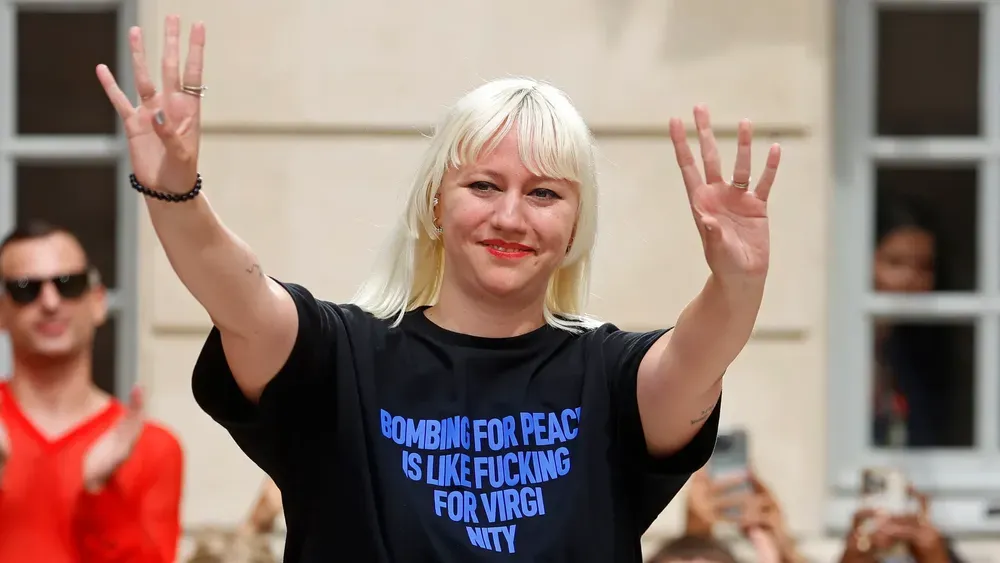
PARIS, FRANCE - JUNE 25: French designer Jeanne Friot walks the runway at the end of the Jeanne Friot - Menswear Spring/Summer 2026 presentation as part of Paris Fashion Week on June 25, 2025 in Paris, France.Photo Credit: Thierry Chesnot
As Paris faced one of its hottest June days in decades, the atmosphere inside the Palais de Tokyo remained electric for the unveiling of Jeanne Friot’s Spring/Summer 2027 collection. On June 24, 2026, the French designer presented “Hysteria,” her ninth collection and her second official appearance on the Paris Fashion Week Men’s calendar. The show was not merely a display of garments but a meticulously choreographed narrative of liberation, tracing a journey from social confinement to total emancipation.
Aesthetic Rebellion and Gender-Neutral Design
The "Hysteria" collection was structured into two distinct chromatic chapters: a clinical, pure white that transitioned into a dense, rebellious black. Across the collection's 19 distinct silhouettes, Friot utilized her signature hardware, including metal buckles, straps, and intricate fastening systems, which served as both aesthetic focal points and symbols of the constraints being shed. The garments included structured corsets, asymmetrical dresses, and tailored ensembles that disregarded the traditional gender binary, a core tenet of the Jeanne Friot brand since its inception.
In a notable footwear collaboration, Friot partnered with the label BOTH to introduce minimalist, boxing-inspired shoes that complemented the collection's focus on sustainable innovation. The house also showcased its own belted-heel shoes, further emphasizing the recurring motif of "belted armor" that has become a staple of Friot's visual language. The final looks of the show featured darker, more textured elements, including a short dress covered in scales or feathers and models wearing white contact lenses, signifying a completed transformation and the birth of a new, liberated identity.
The Designer’s Journey to Global Recognition
Jeanne Friot’s ascent within the fashion industry has been marked by a steadfast commitment to her queer and activist identity. While her brand was founded in 2020, she gained significant mainstream attention on July 26, 2024, when she designed the silver horsewoman costume for the opening ceremony of the Paris Olympic Games. Despite this high-profile exposure, Friot has maintained her status as an independent, under-the-radar designer by prioritizing community engagement and political messaging over purely commercial interests.
In January 2026, she made her debut on the official Paris Fashion Week calendar with a performance-based show titled “Awake” at the Théâtre du Rond-Point. This presentation involved 23 dancers from the Ballet de Lorraine and was conceived as a manifesto for the defense of LGBT+ identities. Friot’s work frequently bridges the gap between fashion and social activism; for instance, she previously collaborated with the dating platform Tinder on a "Love, Louder" capsule collection, with proceeds donated to the NGO SOS Homophobie.
Commitment to Transgender Visibility and Sustainability
One of the most defining aspects of Friot's recent work is her unwavering focus on the transgender and non-binary community. Her Fall/Winter 2024 collection, titled "The Beautiful Madness," featured an entirely transgender and non-binary cast, emphasizing that her runway is a space for those often excluded from traditional fashion circles. During that show, models walked in the colors of the transgender pride flag—pale pink, baby blue, and white—while the finale was described as a "joyful protest." Friot has consistently stated that her fashion is a tool for building community rather than just a commercial endeavor.
Sustainability remains another pillar of the brand’s identity. Friot exclusively uses deadstock materials and repurposed textiles, such as her distinctive ruffed Levi’s jeans, and ensures all production is "Made in France." This "zero-waste" approach is presented as an extension of her queer values, rejecting the exploitative nature of fast fashion in favor of responsible, artisanal creation. By combining eco-responsibility with radical inclusivity, Friot has carved out a unique niche that resonates with a younger generation of queer people looking for authenticity in the luxury sector.
A Broader Shift in Paris Fashion Week
The success of designers like Jeanne Friot reflects a broader shift within the global fashion industry. The Spring/Summer 2027 season of Paris Men’s Fashion Week saw "gender-blurring" move from the margins to the mainstream, with multibillion-dollar luxury houses increasingly incorporating non-binary perspectives. However, where many brands treat inclusivity as a marketing trend, Friot is recognized for her "militant" approach, where the clothes serve as a medium for protest and survival.
The "Hysteria" show at the Palais de Tokyo concludes a pivotal month for the designer, who continues to challenge the industry's traditional power structures. By centering her work on the experiences of those who were "confined because they were different," Friot provides a vital platform for LGBTQ+ expression. As she moves forward on the official calendar, her brand stands as a testament to the power of fashion when it is used as a narrative of resistance and a celebration of queer resilience.
Copyright EDGE Media Network. All rights reserved. This material may not be published, broadcast, rewritten, or redistributed.