Cynthia Erivo Slams 'Couch Psychologists' Scrutinizing Her Friendship With Ariana Grande
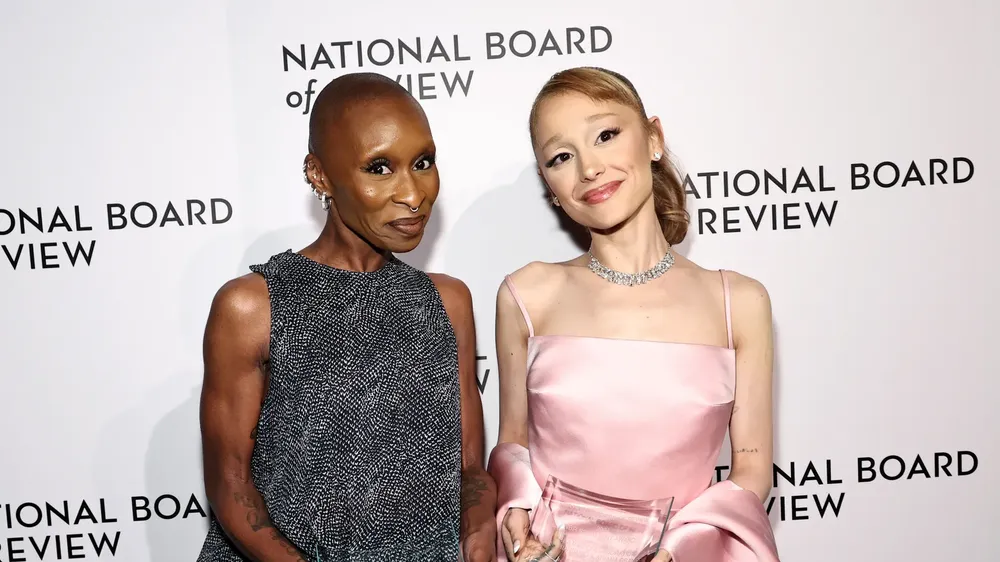
NEW YORK, NEW YORK - JANUARY 07: (L-R) Cynthia Erivo and Ariana Grande pose with the NBR Spotlight Award: Creative Collaboration for "Wicked" during The National Board of Review Annual Awards Gala at Cipriani 42nd Street on January 07, 2025 in New York City. Photo Credit: Jamie McCarthy
Cynthia Erivo has criticized the public scrutiny of her friendship with Ariana Grande, saying some commentators acted like “psychologists from their couches.” The remarks appeared in an interview with "The Guardian" published on October 27, 2026, and were reported by "Variety" the following day.
“It was interesting that there were many people who had become psychologists from their couches,” Erivo told "The Guardian".
She described what she perceived as a “weird” annoyance at the idea that two women could be friends, and recounted questions about why they were connected and whether “there must be something wrong with them.”
Erivo also challenged the attention paid to the pair’s emotions in public, asking: “Why are they showing emotion? How dare they cry? And how dare they laugh? And how dare they be emotive and alive?”
She called the situation a “double-edged sword,” adding that the two performers might have drawn criticism had they shown little emotion, too.
“I wish there was someone who could have been like, ‘Right, this is the proper balance of emotion that you should show,’” she said, using the imagined instruction to illustrate the impossible standard she felt the pair faced.
Friendship under the spotlight
The attention Erivo described followed the promotional campaigns for "Wicked" and its sequel, during which moments between the two actors became widely discussed online. "Variety" noted that viral moments included the co-stars hugging and crying, as well as a moment in which they pinched each other’s index fingers while “holding space.”
Erivo’s comments address public interpretations of those interactions; they do not establish what individual commentators believed or why they responded as they did. The distinction matters: the documented news is what Erivo said about the scrutiny, not an independent finding about the motives of everyone who commented on the actresses.
The “bodyguard” label
Erivo also discussed a red-carpet incident in Singapore, where a man grabbed Grande and Erivo moved to intervene. "Variety" reported that Erivo described the moment as terrifying and recalled her immediate response as: “Get this man away from us now.”
Afterward, some online commentary framed Erivo as Grande’s “bodyguard,” a characterization she said made her uncomfortable.
Erivo questioned why a protective reaction between friends was being described in those terms, saying she would have acted similarly for any friend and hoped a friend would do the same for her.
She connected the “bodyguard” framing to what she called misogyny and misogynoir, the latter referring to anti-Black misogyny. Her point, as reported in the interview, was that an ordinary act of care was being interpreted through assumptions about her appearance and identity.
A response to online interpretation
The interview puts Erivo’s objections in two related but distinct contexts: the public reading of her friendship with Grande and the reaction to her intervention at the Singapore event. In both, she objected to outsiders assigning meanings to her behavior and to the pair’s displays of emotion.
Her remarks do not ask audiences to avoid discussing public figures altogether; rather, she described the effects of having a friendship and emotional expression repeatedly analyzed. The interview offers her account of that experience, while the coverage by "Variety" independently confirms the central quotations and the Singapore incident she referenced.
Copyright EDGE Media Network. All rights reserved. This material may not be published, broadcast, rewritten, or redistributed.