Simu Liu Calls Out ‘Massive Hate Campaign’ as Hudson Williams Faces Backlash Over Resurfaced Swastika Photo
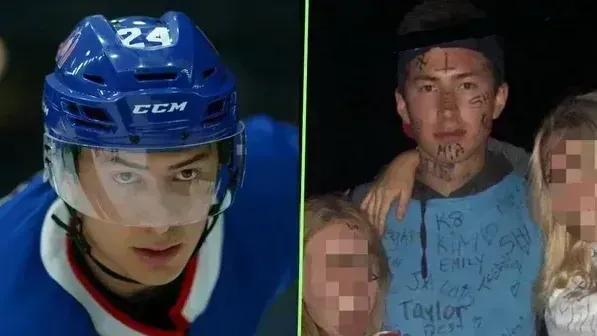
Photo Credit: HBO/X
Actor Hudson Williams, known for starring in the queer romance series Heated Rivalry, is facing intense criticism after old high school photos showing a swastika drawn on his forehead and other offensive markings on his clothes and skin resurfaced and circulated widely on social media in early June. In the images, reportedly taken during a teen gathering in Williams’ Canadian hometown, he appears in a blue polo shirt or T‑shirt covered in doodles, names, and symbols in marker, including a swastika on his forehead, an upside‑down cross, and the word “AIDS” written on his clothing and body.
Explanations from friends and unnamed sources
Williams has not yet released a direct, personal public statement on the controversy, but multiple outlets report that friends and sources close to the actor have tried to provide context for the photos. According to those sources, the images date back to a high school “campout” or annual tradition where teenagers allegedly wrote on each other’s shirts, faces, and bodies with markers, often while drinking, as a form of prank and initiation.
Friends quoted by outlets including TMZ, People and Us Weekly say Williams “had no idea” at the time that a swastika or other hateful markings were being drawn on him and that he did not author any of the offensive text himself. One friend told TMZ, in comments repeated across several reports, that “the markings do not and have never reflected Hudson’s beliefs, values, or character,” describing the group as “underage kids doing dumb things” while stressed that the behavior was “completely inexcusable.”
Sources cited by outlets including International Business Times and The Express Tribune say the actor “deeply regrets” the incident, understands why the resurfaced photos have caused hurt and disappointment, and does not condone or support any of the symbols or language visible in the images. Reporting also notes that, as of mid‑June, there has been no independent verification of when and where the photos were taken beyond these anonymous accounts, nor confirmation that the image was not altered, something some outlets explicitly flag.
Simu Liu’s defense and criticism of media coverage
As criticism of Williams surged, Marvel star Simu Liu used the social platform Threads to defend the younger actor and criticize what he called a “massive hate campaign” targeting actors of color when they reach new levels of visibility. Liu wrote that he has a “very specific trauma” from experiencing fabricated claims and “twisting things into a massive hate campaign” when he first became widely known through *Shang‑Chi and the Legend of the Ten Rings*, saying he has since noticed a recurring pattern whenever people of color experience a breakout moment.
In the same thread, Liu warned followers that “the internet is insane” and that “bad actors are everywhere,” advising people who participate in online discourse to “be careful” and “be smart.” He also directly criticized the coverage of the story by a digital outlet widely reported to be BuzzFeed, calling the piece “vile sensationalist” content and accusing the publication of targeting “people of colour for absolutely nothing” instead of evolving beyond clickbait.
Entertainment Weekly reports that Liu framed the intense focus on the teen photo as fitting into a broader online pattern of “massive hate campaign” that he believes disproportionately target actors of color when they gain popularity or take on high‑profile roles. In one post, translated and summarized by Croatian outlet Index.hr, Liu said he began to “recognise patterns” in how public figures who are not white are treated when they become a focus of attention, suggesting that Williams’ situation follows that pattern and emphasizing that the online environment can be hostile and distorting.
Divided reaction among fans and communities
Coverage from several outlets notes that online reactions to Williams’ resurfaced photos have been sharply divided, with some people arguing that the incident reflects serious harm and others contending that the behavior, while offensive, was the result of teenage recklessness. Critics quoted by news round‑ups say that “no amount of ‘he was young & immature’” can excuse what they see as an overt display of bigotry in using Nazi symbols and AIDS jokes, especially given the historic persecution of Jewish people and the disproportionate impact of HIV/AIDS on LGBTQ+ communities.
Supportive voices, including those amplified in TMZ‑cited accounts, describe the situation as “drunk kids doing dumb things” during an unsupervised teen event, while acknowledging in the same breath that the markings were “completely inexcusable” and that the hurt caused is real. Some reports mention that social media users have debated whether searching for and circulating private, years‑old images of public figures crosses ethical lines and risks weaponizing incomplete context against individuals, especially marginalized or racialized performers.
Within fan spaces for Heated Rivalry, reporting indicates that some followers have condemned the imagery and called for accountability, while others have emphasized Williams’ reported remorse and the statements from friends asserting that the markings do not align with his current values. Earlier this year, before the photos resurfaced, Williams and co‑star François Arnaud had jointly urged fans of the series not to share racist, homophobic, biphobic, misogynist, ageist, ableist, or otherwise bigoted comments, saying “none of us need your hateful ‘love,’” a stance that has now been revisited by observers in light of the current controversy.
Context of representation, accountability, and harm
The controversy comes at a time when Heated Rivalry and its cast have been widely discussed for their role in bringing LGBTQ+ relationships—and particularly queer romance narratives centered on men—to mainstream streaming audiences. Coverage notes that the resurfaced photos and Liu’s intervention land in an ongoing public conversation about how to balance accountability for harmful imagery and language with recognition of age, context, and the role of social media “pile‑ons,” especially when the subject is a person of color in a queer‑inclusive show.
Reports emphasize that none of the outlets quoting friends and unnamed sources suggest that the swastika or AIDS references are acceptable; instead, they describe Williams as now understanding the seriousness of the imagery, recognizing the pain it has caused, and “deeply regretting” the episode from his teenage years. For Jewish and LGBTQ+ communities, advocacy groups and commentators have long stressed that Nazi symbols and jokes about AIDS are tied to real histories of dehumanization and death, making their use—whether in jest or not—profoundly harmful, a point that is echoed by critics reacting to the Williams photos.
As of June 11, 2026, outlets including People, Entertainment Weekly, and The Express Tribune report that Williams’ representatives have not issued a formal, on‑the‑record statement or interview about the resurfaced photos, leaving the public narrative largely shaped by friends, anonymous sources, and the reactions of other public figures such as Simu Liu. Reporting also notes that there has not yet been independent authentication of the original source of the images beyond social media posts and the accounts of those close to the actor, which continues to be a point of discussion in media literacy and digital ethics conversations.
Copyright EDGE Media Network. All rights reserved. This material may not be published, broadcast, rewritten, or redistributed.