Tom Holland Says Dyslexia Has Kept Him From Hosting ‘SNL’: “I’m Just So Petrified”
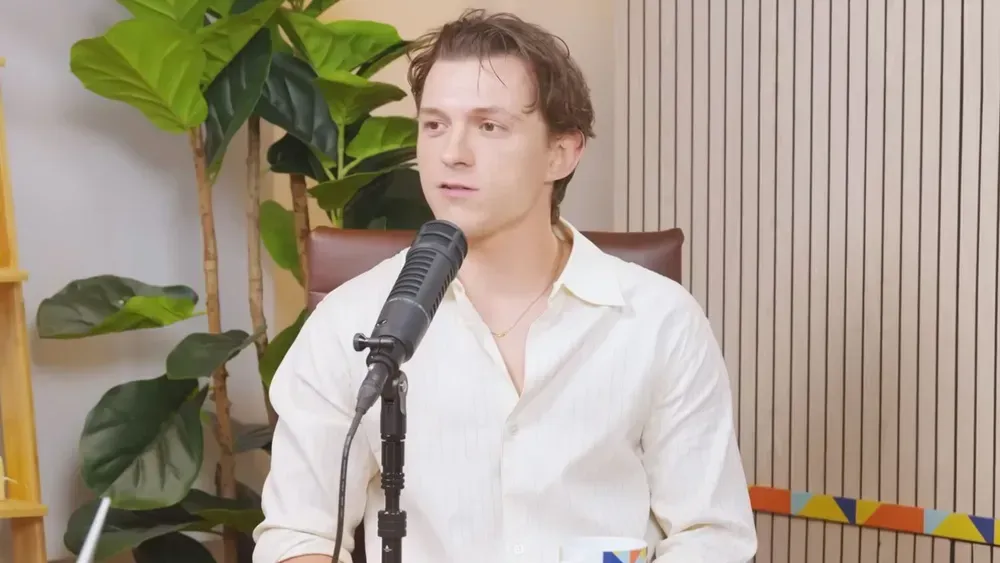
Photo Credit: Good Hang Pod
by Chris Tremblay Jun 3
4 MIN READ
Tom Holland, one of the most recognizable faces in contemporary blockbuster cinema, has explained why he has never taken up repeated offers to host NBC’s long-running sketch show Saturday Night Live. The English actor, best known globally for playing Peter Parker in Marvel’s Spider-Man films, said his dyslexia and the pressure of reading cue cards live on air have kept him away from the iconic Studio 8H stage.
In a recent appearance on Amy Poehler’s podcast Good Hang, Holland shared that SNL has reached out to him “a few times” over the years, but he has declined each invitation. While stressing that he loves the show and the idea of having fun on live television, he said the practical realities of SNL’s last‑minute rewrites and reliance on handwritten cue cards make the prospect “terrifying” for him.
Speaking with Poehler, herself a former SNL cast member and frequent host, Holland stated plainly, “I’m heavily dyslexic,” framing the condition as one of the main reasons he has “never done SNL.” He said he was eager to talk about dyslexia on the podcast, noting that it affects how he handles specific work situations rather than his overall ability to read.
Holland emphasized that he can read “fine” but that reading aloud creates a particular challenge. He described experiencing a “mental block” when asked to read in front of others, saying that in those moments, he can “freeze,” a reaction that is amplified under the pressure of live television.
Central to Holland’s reluctance is SNL’s traditional use of cue cards, which are often updated with changes shortly before or even during broadcast. On Good Hang, Poehler immediately connected his comment about dyslexia to the show’s paper cue cards, exclaiming “Because of the cue cards?!” as he confirmed that concern.
Holland said he is “just so petrified at the concept of trying to read something and they change,” explaining that the unpredictability of last‑minute edits is particularly stressful when combined with reading aloud on live television. He reiterated that SNL’s format, which leans heavily on performers reading directly from cue cards as scripts are revised, makes the prospect of hosting much more daunting than a fully pre‑scripted project.
Beyond SNL, Holland said that table reads are consistently the most challenging part of his work as an actor. He described read‑through days as his “worst day at work,” explaining that speaking lines aloud from the page in front of colleagues is where his dyslexia‑related difficulties tend to surface most sharply.
To manage this, Holland said he highlights his dialogue in advance and learns his lines ahead of time so that, in read‑throughs, he is “more skimming it than I am reading it.” That strategy, he suggested, is harder to apply in SNL’s live format, where changes may appear on cards seconds before lines have to be delivered.
Holland emphasized that he feels “really lucky” SNL has contacted him about hosting on multiple occasions. He confirmed that the show has reached out “a few times,” and that his refusals are not about disliking the series or resisting comedy, but about the fear of freezing on live television.
Describing his internal conflict, Holland said he loves the idea of “having fun and making a fool of yourself in such a fun, creative way” on SNL, but called the cue‑card element “the thing” he cannot get past. He characterized his overall feeling as being “just really scared” of the live reading requirement, even as he continues to perform in large‑scale films and stage productions.
Poehler, who spent years as a cast member on SNL and has returned as a host, responded to Holland with empathy and humor. Reports on their conversation highlight that she acknowledged the difficulty of reading the show’s fast‑changing cue cards, while also conveying reassurance drawn from her own experience.
Coverage of the podcast notes that Poehler suggested other performers with dyslexia have hosted SNL, implying that the show has a history of working with people who have similar access needs. Though specific names were not widely reported in these write‑ups, her reaction underscored that Holland’s hesitation exists within a broader context of performers navigating live television with diverse learning profiles.
Holland’s comments add a high‑profile voice to ongoing conversations about how the entertainment industry can better support people with dyslexia and other learning differences, particularly in high‑pressure live environments. While his main focus in the interview was personal, his remarks implicitly highlight how production formats — such as cue‑card‑driven live broadcasts — can either increase or reduce barriers for performers with dyslexia.
Entertainment outlets covering the story have framed Holland’s decision as a careful balance between professional opportunity and personal well‑being, rather than a rejection of comedy or live performance altogether. Articles note that he continues to take on demanding roles, including a planned appearance in Christopher Nolan’s film adaptation of The Odyssey, illustrating that his dyslexia shapes — but does not limit — the kinds of projects he chooses.
For fans who have wondered why a Marvel lead with a long list of talk‑show appearances has never fronted SNL, Holland’s explanation offers direct clarity. The actor’s description of feeling “petrified” by the idea of reading rapidly changing cue cards live contrasts with his otherwise confident public persona, underlining that on‑camera ease can coexist with specific access needs.
As of early June 2026, reports do not indicate any concrete plan for Holland to overcome these concerns and host SNL in the near future. Instead, his recent comments position him as a prominent figure openly discussing dyslexia in mainstream entertainment, while leaving open the possibility that different production approaches or personal comfort levels could someday change his calculation.
“I’m Heavily Dyslexic” — Holland’s Explanation
Speaking with Poehler, herself a former SNL cast member and frequent host, Holland stated plainly, “I’m heavily dyslexic,” framing the condition as one of the main reasons he has “never done SNL.” He said he was eager to talk about dyslexia on the podcast, noting that it affects how he handles specific work situations rather than his overall ability to read.
Holland emphasized that he can read “fine” but that reading aloud creates a particular challenge. He described experiencing a “mental block” when asked to read in front of others, saying that in those moments, he can “freeze,” a reaction that is amplified under the pressure of live television.
Fear of Cue Cards and Live Changes
Central to Holland’s reluctance is SNL’s traditional use of cue cards, which are often updated with changes shortly before or even during broadcast. On Good Hang, Poehler immediately connected his comment about dyslexia to the show’s paper cue cards, exclaiming “Because of the cue cards?!” as he confirmed that concern.
Holland said he is “just so petrified at the concept of trying to read something and they change,” explaining that the unpredictability of last‑minute edits is particularly stressful when combined with reading aloud on live television. He reiterated that SNL’s format, which leans heavily on performers reading directly from cue cards as scripts are revised, makes the prospect of hosting much more daunting than a fully pre‑scripted project.
“Worst Day at Work Is the Read-Through”
Beyond SNL, Holland said that table reads are consistently the most challenging part of his work as an actor. He described read‑through days as his “worst day at work,” explaining that speaking lines aloud from the page in front of colleagues is where his dyslexia‑related difficulties tend to surface most sharply.
To manage this, Holland said he highlights his dialogue in advance and learns his lines ahead of time so that, in read‑throughs, he is “more skimming it than I am reading it.” That strategy, he suggested, is harder to apply in SNL’s live format, where changes may appear on cards seconds before lines have to be delivered.
Grateful for Invitations, Afraid of Live Pressure
Holland emphasized that he feels “really lucky” SNL has contacted him about hosting on multiple occasions. He confirmed that the show has reached out “a few times,” and that his refusals are not about disliking the series or resisting comedy, but about the fear of freezing on live television.
Describing his internal conflict, Holland said he loves the idea of “having fun and making a fool of yourself in such a fun, creative way” on SNL, but called the cue‑card element “the thing” he cannot get past. He characterized his overall feeling as being “just really scared” of the live reading requirement, even as he continues to perform in large‑scale films and stage productions.
Amy Poehler’s Perspective and SNL’s History
Poehler, who spent years as a cast member on SNL and has returned as a host, responded to Holland with empathy and humor. Reports on their conversation highlight that she acknowledged the difficulty of reading the show’s fast‑changing cue cards, while also conveying reassurance drawn from her own experience.
Coverage of the podcast notes that Poehler suggested other performers with dyslexia have hosted SNL, implying that the show has a history of working with people who have similar access needs. Though specific names were not widely reported in these write‑ups, her reaction underscored that Holland’s hesitation exists within a broader context of performers navigating live television with diverse learning profiles.
Dyslexia, Visibility, and Live TV
Holland’s comments add a high‑profile voice to ongoing conversations about how the entertainment industry can better support people with dyslexia and other learning differences, particularly in high‑pressure live environments. While his main focus in the interview was personal, his remarks implicitly highlight how production formats — such as cue‑card‑driven live broadcasts — can either increase or reduce barriers for performers with dyslexia.
Entertainment outlets covering the story have framed Holland’s decision as a careful balance between professional opportunity and personal well‑being, rather than a rejection of comedy or live performance altogether. Articles note that he continues to take on demanding roles, including a planned appearance in Christopher Nolan’s film adaptation of The Odyssey, illustrating that his dyslexia shapes — but does not limit — the kinds of projects he chooses.
What Holland’s Revelation Means for Fans and Future Invitations
For fans who have wondered why a Marvel lead with a long list of talk‑show appearances has never fronted SNL, Holland’s explanation offers direct clarity. The actor’s description of feeling “petrified” by the idea of reading rapidly changing cue cards live contrasts with his otherwise confident public persona, underlining that on‑camera ease can coexist with specific access needs.
As of early June 2026, reports do not indicate any concrete plan for Holland to overcome these concerns and host SNL in the near future. Instead, his recent comments position him as a prominent figure openly discussing dyslexia in mainstream entertainment, while leaving open the possibility that different production approaches or personal comfort levels could someday change his calculation.
Copyright EDGE Media Network. All rights reserved. This material may not be published, broadcast, rewritten, or redistributed.