‘Saturday Night Fever’ Director Recalls Using Fake Call Sheets After 15,000 Fans Shut Down John Travolta Shoot
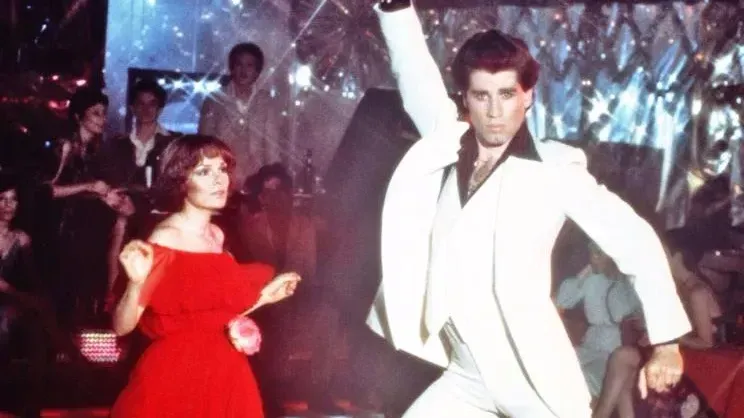
Photo Credit: Paramount
by Chris Tremblay Jun 1
6 MIN READ
Nearly half a century after “Saturday Night Fever” first brought disco culture and John Travolta’s white suit into global consciousness, director John Badham is shedding fresh light on how intense fan mania nearly derailed the production’s earliest days in Brooklyn. In a recent interview, Badham detailed how thousands of admirers descended on location shoots just to glimpse Travolta, forcing the crew to improvise extraordinary measures, including fake call sheets, to keep filming on track.
Badham, now in his mid‑80s, reflected on the experience while speaking about the legacy of the 1977 dance drama, which turned Travolta into an international movie star and helped cement disco as a defining cultural force of the late 1970s. His account revisits the film’s now‑legendary opening days of production, when crowd control rather than choreography posed the biggest challenge.
According to Badham, trouble began almost immediately on the first day of shooting exterior scenes in Brooklyn in 1977, when what started as a small cluster of onlookers quickly swelled into a crowd estimated at 15,000 people. He told the Hollywood Reporter’s “It Happened in Hollywood” podcast that fans were so numerous and enthusiastic they appeared in every camera angle, making it nearly impossible to capture even simple shots of Travolta’s character Tony Manero, such as buying a shirt in a local store.
Badham recounted that by lunchtime the production had effectively been shut down because any attempt to roll cameras produced images filled with cheering spectators rather than the carefully staged street scenes the script required. The director emphasized that the crowd was not hostile; instead, it resembled a spontaneous street party centered on Travolta’s sudden star power, which nonetheless made professional filmmaking nearly impossible for the crew.
The estimate of 15,000 fans aligns with long‑standing reports in production histories, which note that the opening days in Brooklyn rapidly turned into a mass gathering once word spread that the popular TV actor from “Welcome Back, Kotter” was filming nearby. Other retrospectives similarly describe a cascade effect in which a handful of school‑age fans grew into hundreds and then thousands, eventually forcing the team to pack up and leave for the day.
By the time “Saturday Night Fever” began principal photography, Travolta was already widely recognized in the United States for his role as wise‑cracking student Vinnie Barbarino on the hit sitcom “Welcome Back, Kotter.” Entertainment writers note that his television fame gave him a devoted fan base before he took on Tony Manero, meaning that a location shoot in a dense New York neighborhood quickly turned into a magnet for viewers eager to see him in person.
Film histories describe “Saturday Night Fever” as a relatively modest project at the outset, adapted from journalist Nik Cohn’s article “Tribal Rites of the New Saturday Night,” but one that became a global hit as soon as it reached cinemas. Cohn’s article itself was later revealed to be largely fabricated, but the film’s portrayal of working‑class youth seeking escape through disco resonated widely, turning Travolta into a symbol of a particular moment in urban, dance‑driven nightlife.
For Brooklyn residents in 1977, the presence of a primetime star filming on local streets offered both novelty and pride, further fueling the crowds that disrupted production. Later accounts from cast members, including Donna Pescow, suggest that people packed sidewalks and overran limited security as they tried to get close to the actor whose face they knew from television.
In response to the chaos, Badham and his team quickly realized that standard location security would not be enough; instead, they needed to change how, when, and where they shot exterior scenes. Production accounts, including a detailed “behind the camera” feature, say the crew began scheduling outdoor shots as early in the morning as possible—often at or shortly after dawn—so they could finish before word spread and crowds arrived.
Multiple sources report that the production also resorted to generating fake call sheets, internal documents that usually list where and when scenes will be filmed and which cast members are required on set. By circulating misleading schedules that suggested filming would occur at later times or different locations, the team hoped to misdirect any fans who might gain access to information about the shoot.
Badham explained that the early‑morning approach worked well at first, allowing the camera department to secure usable footage before significant crowds gathered. Entries in fan and studio wikis echo his recollection, noting that by combining dawn shoots with fake call sheets, production was “usually” able to finish planned exteriors before Travolta’s presence could draw large numbers of onlookers.
However, Badham said that residents eventually “figured out” the deception embedded in the call sheets, which meant more drastic tactics were needed to maintain a workable filming environment. Once people realized that the official schedules might be false, the reliability of the crew’s decoy paperwork diminished, and each new exterior shoot risked becoming another uncontrolled fan event.
To keep the crowds guessing, Badham described an additional strategy involving duplicate vehicles meant to distract fans and onlookers. He said the team arranged for two identical cars associated with Travolta’s character: one would be loaded with people and sent conspicuously down the street to draw attention, while the “real” car carrying the actor would head elsewhere so filming could continue without swarms of spectators.
This decoy technique functioned as a mobile version of the fake call sheets—essentially a moving misdirection, aimed at separating Travolta from the largest concentration of fans long enough to shoot key moments. Together with early‑morning schedules and interior fallback sets, these tactics allowed the crew to maintain a semblance of normal production despite the actor’s rapidly escalating fame.
Earlier making‑of documentaries and location retrospectives have confirmed that filming was conducted entirely on location in Brooklyn, including at the now‑demolished 2001 Odyssey disco, which magnified the logistical challenges of working in real neighborhoods filled with residents and passersby. Those sources also reiterate that false call sheets and crack‑of‑dawn calls became standard tools for the production team as they navigated an unusually intense form of local celebrity attention.
“Saturday Night Fever” ultimately opened in December 1977 to critical and commercial success, with Travolta receiving an Academy Award nomination for Best Actor and the film’s soundtrack, led by the Bee Gees, becoming one of the best‑selling albums of all time. The movie’s depiction of disco culture helped propel the genre into the mainstream, while its gritty portrayal of working‑class life in Brooklyn gave it a lasting cultural resonance that continues to draw new audiences.
Production histories now commonly note the contrast between the film’s modest initial ambitions and its global impact, emphasizing how an early, relatively low‑budget project unexpectedly had to cope with superstar‑level attention for its lead actor. The stories of fake call sheets, decoy cars, and dawn shoots now form part of the film’s mythology, illustrating how a local neighborhood production transformed into a global phenomenon before filming even wrapped.
Badham’s latest recollections dovetail with earlier interviews he has given about the making of the film, including conversations around its 40th anniversary and the release of a director’s cut for home viewing. In those discussions, the director has repeatedly highlighted both the artistic ambitions of the project and the logistical difficulties created by shooting a story about nightlife and identity in real, working‑class neighborhoods.
For contemporary filmmakers, the anecdotes offer a reminder that location work involving highly recognizable performers can quickly attract crowds far beyond what a production might anticipate. They also underscore how, even in the late 1970s—long before social media—word of mouth was enough to bring thousands of people to a single block, reshaping the practical realities of shooting a feature film.
Badham’s account focuses on the mechanics of crowd management rather than on personal drama, emphasizing how crew ingenuity—rather than confrontation—allowed the production to move forward. In revisiting those days, he presents Travolta’s fans as enthusiastic rather than threatening, highlighting the ways in which passionate audiences can both celebrate and complicate the work of filmmaking.
A first day shut down by fans
According to Badham, trouble began almost immediately on the first day of shooting exterior scenes in Brooklyn in 1977, when what started as a small cluster of onlookers quickly swelled into a crowd estimated at 15,000 people. He told the Hollywood Reporter’s “It Happened in Hollywood” podcast that fans were so numerous and enthusiastic they appeared in every camera angle, making it nearly impossible to capture even simple shots of Travolta’s character Tony Manero, such as buying a shirt in a local store.
Badham recounted that by lunchtime the production had effectively been shut down because any attempt to roll cameras produced images filled with cheering spectators rather than the carefully staged street scenes the script required. The director emphasized that the crowd was not hostile; instead, it resembled a spontaneous street party centered on Travolta’s sudden star power, which nonetheless made professional filmmaking nearly impossible for the crew.
The estimate of 15,000 fans aligns with long‑standing reports in production histories, which note that the opening days in Brooklyn rapidly turned into a mass gathering once word spread that the popular TV actor from “Welcome Back, Kotter” was filming nearby. Other retrospectives similarly describe a cascade effect in which a handful of school‑age fans grew into hundreds and then thousands, eventually forcing the team to pack up and leave for the day.
Why Travolta mania hit so hard
By the time “Saturday Night Fever” began principal photography, Travolta was already widely recognized in the United States for his role as wise‑cracking student Vinnie Barbarino on the hit sitcom “Welcome Back, Kotter.” Entertainment writers note that his television fame gave him a devoted fan base before he took on Tony Manero, meaning that a location shoot in a dense New York neighborhood quickly turned into a magnet for viewers eager to see him in person.
Film histories describe “Saturday Night Fever” as a relatively modest project at the outset, adapted from journalist Nik Cohn’s article “Tribal Rites of the New Saturday Night,” but one that became a global hit as soon as it reached cinemas. Cohn’s article itself was later revealed to be largely fabricated, but the film’s portrayal of working‑class youth seeking escape through disco resonated widely, turning Travolta into a symbol of a particular moment in urban, dance‑driven nightlife.
For Brooklyn residents in 1977, the presence of a primetime star filming on local streets offered both novelty and pride, further fueling the crowds that disrupted production. Later accounts from cast members, including Donna Pescow, suggest that people packed sidewalks and overran limited security as they tried to get close to the actor whose face they knew from television.
How fake call sheets became a survival tool
In response to the chaos, Badham and his team quickly realized that standard location security would not be enough; instead, they needed to change how, when, and where they shot exterior scenes. Production accounts, including a detailed “behind the camera” feature, say the crew began scheduling outdoor shots as early in the morning as possible—often at or shortly after dawn—so they could finish before word spread and crowds arrived.
Multiple sources report that the production also resorted to generating fake call sheets, internal documents that usually list where and when scenes will be filmed and which cast members are required on set. By circulating misleading schedules that suggested filming would occur at later times or different locations, the team hoped to misdirect any fans who might gain access to information about the shoot.
Badham explained that the early‑morning approach worked well at first, allowing the camera department to secure usable footage before significant crowds gathered. Entries in fan and studio wikis echo his recollection, noting that by combining dawn shoots with fake call sheets, production was “usually” able to finish planned exteriors before Travolta’s presence could draw large numbers of onlookers.
However, Badham said that residents eventually “figured out” the deception embedded in the call sheets, which meant more drastic tactics were needed to maintain a workable filming environment. Once people realized that the official schedules might be false, the reliability of the crew’s decoy paperwork diminished, and each new exterior shoot risked becoming another uncontrolled fan event.
Decoy cars and quick getaways
To keep the crowds guessing, Badham described an additional strategy involving duplicate vehicles meant to distract fans and onlookers. He said the team arranged for two identical cars associated with Travolta’s character: one would be loaded with people and sent conspicuously down the street to draw attention, while the “real” car carrying the actor would head elsewhere so filming could continue without swarms of spectators.
This decoy technique functioned as a mobile version of the fake call sheets—essentially a moving misdirection, aimed at separating Travolta from the largest concentration of fans long enough to shoot key moments. Together with early‑morning schedules and interior fallback sets, these tactics allowed the crew to maintain a semblance of normal production despite the actor’s rapidly escalating fame.
Earlier making‑of documentaries and location retrospectives have confirmed that filming was conducted entirely on location in Brooklyn, including at the now‑demolished 2001 Odyssey disco, which magnified the logistical challenges of working in real neighborhoods filled with residents and passersby. Those sources also reiterate that false call sheets and crack‑of‑dawn calls became standard tools for the production team as they navigated an unusually intense form of local celebrity attention.
Long‑term legacy of a chaotic shoot
“Saturday Night Fever” ultimately opened in December 1977 to critical and commercial success, with Travolta receiving an Academy Award nomination for Best Actor and the film’s soundtrack, led by the Bee Gees, becoming one of the best‑selling albums of all time. The movie’s depiction of disco culture helped propel the genre into the mainstream, while its gritty portrayal of working‑class life in Brooklyn gave it a lasting cultural resonance that continues to draw new audiences.
Production histories now commonly note the contrast between the film’s modest initial ambitions and its global impact, emphasizing how an early, relatively low‑budget project unexpectedly had to cope with superstar‑level attention for its lead actor. The stories of fake call sheets, decoy cars, and dawn shoots now form part of the film’s mythology, illustrating how a local neighborhood production transformed into a global phenomenon before filming even wrapped.
Badham’s latest recollections dovetail with earlier interviews he has given about the making of the film, including conversations around its 40th anniversary and the release of a director’s cut for home viewing. In those discussions, the director has repeatedly highlighted both the artistic ambitions of the project and the logistical difficulties created by shooting a story about nightlife and identity in real, working‑class neighborhoods.
For contemporary filmmakers, the anecdotes offer a reminder that location work involving highly recognizable performers can quickly attract crowds far beyond what a production might anticipate. They also underscore how, even in the late 1970s—long before social media—word of mouth was enough to bring thousands of people to a single block, reshaping the practical realities of shooting a feature film.
Badham’s account focuses on the mechanics of crowd management rather than on personal drama, emphasizing how crew ingenuity—rather than confrontation—allowed the production to move forward. In revisiting those days, he presents Travolta’s fans as enthusiastic rather than threatening, highlighting the ways in which passionate audiences can both celebrate and complicate the work of filmmaking.
Copyright EDGE Media Network. All rights reserved. This material may not be published, broadcast, rewritten, or redistributed.