Jessica Simpson Tells Fans Drinking “Wasn’t Numbing My Pain, It Was Causing More” as She Marks Nearly Eight Years Sober
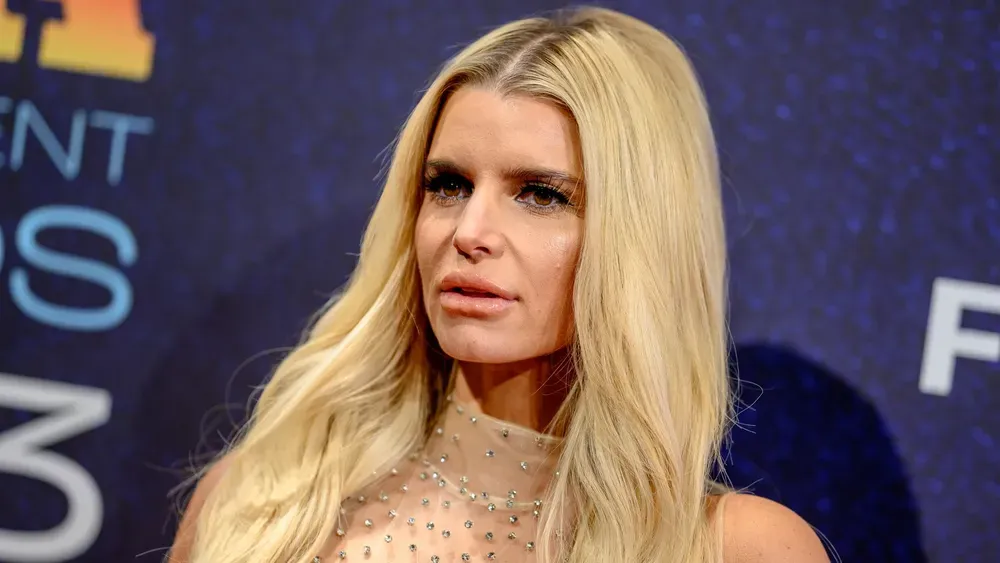
NEW YORK, NEW YORK - NOVEMBER 29: Jessica Simpson attends the 37th Annual Footwear News Achievement Awards at Cipriani South Street on November 29, 2023 in New York City. (Photo by Roy Rochlin/Getty Images)Photo Credit: Roy Rochlin
Performing at the Yaamava’ Resort & Casino in Highland, California, on Tuesday, June 2, Jessica Simpson paused between songs to speak directly about her history with alcohol and the reality of long-term sobriety. The 45-year-old singer, fashion designer, and author described herself as “a work in progress” as she introduced an unreleased track, “Give It All Away,” co-written with songwriter Linda Perry.
Simpson concluded the onstage reflection with an appeal for self-compassion, encouraging audience members to “have a little grace” for themselves and assuring them that “everything is gonna be OK if you just give it all away,” echoing the song’s title and theme. In a separate report on the same performance, she was quoted as explaining that during her drinking years she became “somebody that I was afraid of, somebody I did not know and understand,” language that underscored how disorienting that period felt to her in retrospect.
Background and Context
Simpson has spoken publicly for several years about her decision to stop drinking after what she has described as a personal breaking point on Halloween 2017. In her 2020 memoir “Open Book,” she detailed how alcohol became a way to self-medicate the trauma of childhood sexual abuse and the pressures of early fame, before ultimately contributing to a version of herself she no longer recognized.
In past interviews, Simpson has described waking up after that 2017 Halloween party and realizing that alcohol had left her “an unrecognizable version of myself,” prompting her to commit to sobriety. She later wrote that to reclaim her “light” and move forward without regret, she needed to stop drinking because it kept her “mind and heart circling in the same direction,” leaving her exhausted and unable to process her pain in a way that led to growth.
Her memoir and subsequent interviews have addressed the stigma surrounding labels like “alcoholism” and “alcoholic,” with Simpson stressing that the deeper work involved learning to accept failure, pain, and self-sabotage rather than focusing solely on the substance. She has said that “the drinking wasn’t the issue” so much as the fact that she “didn’t love” herself or respect her own power, framing her recovery as part of a broader journey toward self-worth.
Marking milestones and challenging stigma
As of late 2025, Simpson publicly marked eight years of sobriety in an Instagram post that was subsequently reported by several entertainment and news outlets, reflecting on the ways alcohol had once “blocked” her dreams and silenced her intuition. She wrote that choosing sobriety allowed her to live more fully “in the pursuit of God’s purpose” for her life and that she now felt “clear” and “driven by faith,” emphasizing surrender rather than struggle as the source of her strength.
In those reflections, Simpson described how alcohol once chased her “circulating fears of complacency” and left her overthinking her creative decisions, particularly in recording sessions in Los Angeles around 2016 and 2017. She said that after she stopped drinking, those fears diminished and it became easier to access her authentic artistic voice, even as she stepped away from the pursuit of conventional pop “hits.”
Simpson has also used social media to push back on speculation about her sobriety, responding in 2024 to an Instagram comment that urged her to “STOP DRINKING” by stating that she had not “wanted or touched alcohol since October 2017” and calling that choice “the best decision” for herself and her family. In that reply, which was widely shared, she thanked the commenter for their concern but said they had her “very misunderstood,” and she emphasized that she could still feel hurt by judgmental remarks even after years of working to block out “destructive noise.”
“Drinking was causing more pain”
The June 2 performance comments about drinking “causing more pain” echoed ideas Simpson has expressed in earlier essays and interviews, but this time she linked them directly to new music that explicitly addresses her recovery. She introduced “Give It All Away” as a song about learning to release the burdens and self-sabotaging patterns that once kept her stuck, telling the Yaamava’ audience that “it felt right” to share it after describing her ongoing work in therapy and self-reflection.
Onstage, she reflected that she had not understood “all of the traumas” she was holding onto until she began looking inward, saying that the process of confronting those experiences was “really painful” but necessary. She also linked her sobriety to her role as a parent of three children, explaining that, during her drinking years, she did not feel like a good role model and that this realization was part of what motivated her to step away from alcohol.
Her message to the crowd emphasized progress rather than perfection, as she described herself as continuing to learn and encouraged others to extend that same patience to themselves. By framing sobriety as an everyday choice rather than a completed task, Simpson aligned her story with many recovery narratives that stress ongoing commitment, including for LGBTQ+ people and other marginalized communities who may face additional stressors around stigma, identity, and visibility.
Broader resonance of her story
Simpson’s public reflections have often intersected with broader conversations about mental health, trauma, and substance use, particularly among women navigating public scrutiny of their bodies, relationships, and parenting. By speaking openly about childhood sexual abuse, self-medication, and the pressure to appear “fine” in public, she has contributed to a growing body of celebrity testimony that challenges the idea that success and suffering are mutually exclusive.
Her comments have also been reported alongside reminders that many people in recovery, including LGBTQ+ people, face judgment and speculation about their sobriety, sometimes from strangers online. In response, Simpson has stressed compassion even for those who post hurtful remarks, saying she feels “compassion for the opinionated hate” and emphasizing that “nobody is alone” in wanting to feel or do better, a sentiment that aligns with inclusive, person-first approaches to recovery and mental health.
As she continues to perform and develop new projects, Simpson has framed her sobriety as integral to her creative work and personal life rather than as a separate chapter. The recent performance in California, with its frank admission that “drinking wasn’t numbing my pain, it was causing more,” suggests that her upcoming music may continue to draw on that lived experience in ways that resonate with audiences navigating their own paths toward healing, whether around addiction, trauma, or the challenges of living openly as themselves.
Copyright EDGE Media Network. All rights reserved. This material may not be published, broadcast, rewritten, or redistributed.