John Lithgow Describes J.K. Rowling as “Deeply Empathetic” While Reiterating Disagreements Over Her Views on Transgender People
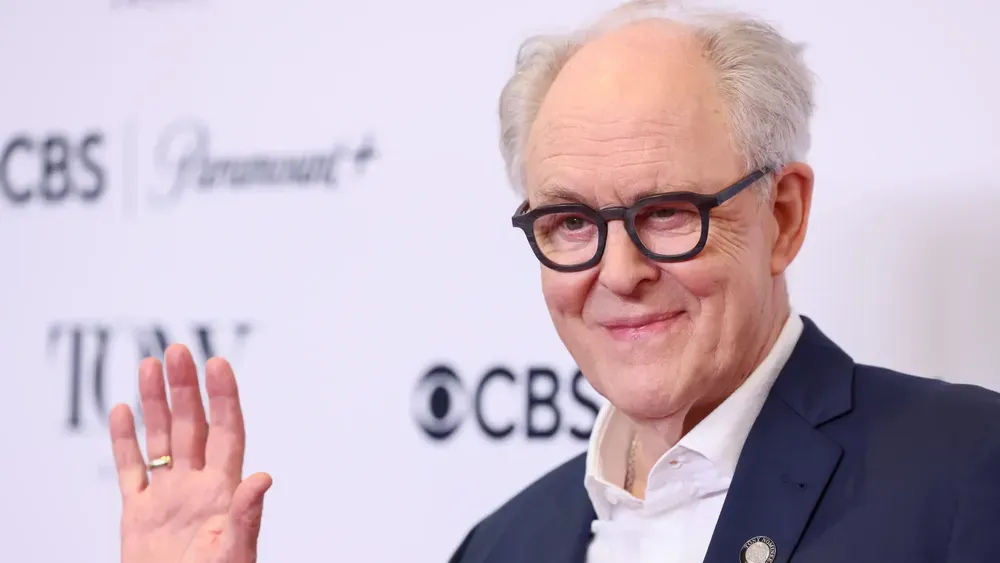
NEW YORK, NEW YORK - MAY 14: John Lithgow attends The 79th Annual Tony Awards Meet The Nominees Press Event At Sofitel New York at Sofitel New York on May 14, 2026 in New York City. Photo Credit: Jemal Countess
In a newly published interview, John Lithgow described JK Rowling as “a deeply empathetic person” while discussing her views on transgender people and the ongoing controversy around the Harry Potter franchise. Lithgow said he believes Rowling’s creation of the Harry Potter universe shows a strong commitment to empathy and love, even as he reiterated that he disagrees with some of her stated views on trans issues.
In the same piece, the interviewer noted that Lithgow has previously been vocal about supporting transgender rights, pointing to his latest film role as a grandfather of a trans child as an example of his engagement with stories centered on gender diversity. The article also highlighted that some viewers and LGBTQ+ advocates have expressed confusion or frustration that a performer who has publicly affirmed trans communities chose to take a high‑profile role in a franchise so closely associated with Rowling.
Background: “ironic and inexplicable” comments
Lithgow’s latest remarks follow a series of interviews earlier in 2026 in which he described Rowling’s views on transgender rights as “ironic and somewhat inexplicable” in light of the themes he sees in the Harry Potter books. Speaking at the Rotterdam Film Festival after a screening of his film “Jimpa,” he said the series is “so much about acceptance,” “good versus evil,” and “kindness versus cruelty,” and that this made her public positions confusing to him.
At Rotterdam, Lithgow told the audience he takes the topic of transgender rights “extremely seriously” and that he has read Rowling’s comments but has never met her in person. He noted that he finds it upsetting when people are “vehemently opposed” to his participation in the TV adaptation because of Rowling’s record, insisting that in the Harry Potter canon he sees “no trace of transphobic sensitivity.”
Entertainment outlets across the political spectrum have reported on Lithgow’s comments, with SFFGazette and Fox News both quoting his description of Harry Potter as a “great meditation on kindness and empathy and acceptance.” In these reports, he is quoted as saying that both young and older readers love the Harry Potter stories and that their emotional core lies in rejecting bigotry and cruelty.
Debates over Rowling’s record and representation
Rowling’s views on transgender rights have been at the center of public debate since 2020, as she has repeatedly expressed concerns about how gender recognition and access to women‑only spaces are being redefined in law and policy. These statements, many of which were published on social media and in longform essays, have drawn strong criticism from transgender people and LGBTQ+ advocates, who argue that her interventions contribute to a hostile climate for trans communities.
In response, Rowling’s supporters contend that her focus is on the protection of women’s rights and single‑sex spaces, and they reject characterizations of her as transphobic. Right‑leaning outlets such as Fox News and Townhall have framed criticisms of her positions as part of a broader conflict over “gender ideology,” often describing her as a defender of women‑only protections.
Lithgow has attempted to navigate this polarized environment by affirming transgender people and criticizing parts of Rowling’s record while also questioning how some of her comments have been portrayed in media. In an April 2026 interview reported by Fox News, he said he disagreed with “much” of what Rowling has said but argued that “much of it…has been twisted and misrepresented” and that she has “sort of doubled down on it at her own cost.”
Lithgow’s work with trans‑inclusive stories
Lithgow’s comments about empathy come alongside his work on “Jimpa,” a film in which he plays a grandfather to a trans grandchild, premiering to audiences that include many LGBTQ+ people and allies. Out.com has reported that he believed his allyship was already clear from a career that includes roles in projects exploring gender and queerness, citing films such as “According to Garp,” “Love Is Strange,” and the recent “Jimpa.”
In a profile drawing on his comments to The New York Times, Out.com reported that Lithgow once considered quitting the Harry Potter series over Rowling’s views but ultimately decided to stay, saying he knew that “every interview” about the project would involve questions about trans rights and Rowling. The same piece notes that Lithgow has explicitly stated he does not share Rowling’s views and that he sees Harry Potter as “clearly on the side of the angels, against intolerance and bigotry.”
The Week’s timeline of Rowling’s public statements includes Lithgow among several cast members and commentators who have weighed in on the controversy around the new TV adaptation. That timeline notes his insistence that Rowling is “not really involved” in the HBO production and his view that many criticisms directed at him for accepting the role of Dumbledore overlook the distinction he draws between the author’s politics and the values he reads in her fiction.
Reaction from LGBTQ+ audiences and fans
PinkNews reports that some LGBTQ+ readers and viewers, including transgender people and allies, remain skeptical of attempts to separate the Harry Potter brand from Rowling’s statements, noting that the franchise continues to generate revenue and cultural influence for the author. In that context, Lithgow’s description of Rowling as “deeply empathetic” has been read by some as an effort to foreground the values of the fictional world while acknowledging his distance from her public commentary.
At the same time, coverage in outlets such as Fox News has emphasized Lithgow’s remarks that much of Rowling’s record has been “twisted,” using his words to support a narrative that media and activists have unfairly portrayed her as hostile to transgender people. Commentators in conservative media have framed his position as evidence that criticism of Rowling is motivated more by ideology than by a careful reading of her full body of work.
Out.com’s reporting underscores that, for many LGBTQ+ fans, the question is not whether individual actors like Lithgow personally support transgender people, but how participation in large, Rowling‑connected projects affects visibility, safety, and representation for trans communities. In this view, Lithgow’s praise of Rowling’s empathy exists alongside ongoing discussions about accountability, power, and the responsibility of high‑profile creatives to consider the impact of their professional choices on marginalized groups.
What Lithgow’s stance suggests going forward
Lithgow’s repeated focus on empathy, both in his description of Rowling and in his own work, positions him as a prominent example of how artists associated with controversial figures attempt to negotiate their roles. Across interviews, he has consistently presented himself as someone who supports transgender rights, disagrees with parts of Rowling’s record, and yet feels strongly connected to the emotional and ethical framework of the Harry Potter stories.
As the HBO series moves forward and “Jimpa” reaches wider audiences following its Sundance‑linked premiere, debates over Rowling’s influence and the responsibilities of collaborators are likely to continue in both mainstream and LGBTQ+ media. Lithgow’s characterization of Rowling as “deeply empathetic” adds another layer to that ongoing conversation, illustrating how different stakeholders interpret the same body of work and public statements through sharply divergent lenses.
Copyright EDGE Media Network. All rights reserved. This material may not be published, broadcast, rewritten, or redistributed.