Meg Stalter Marks Pride With Campy Club Single ‘GAY’
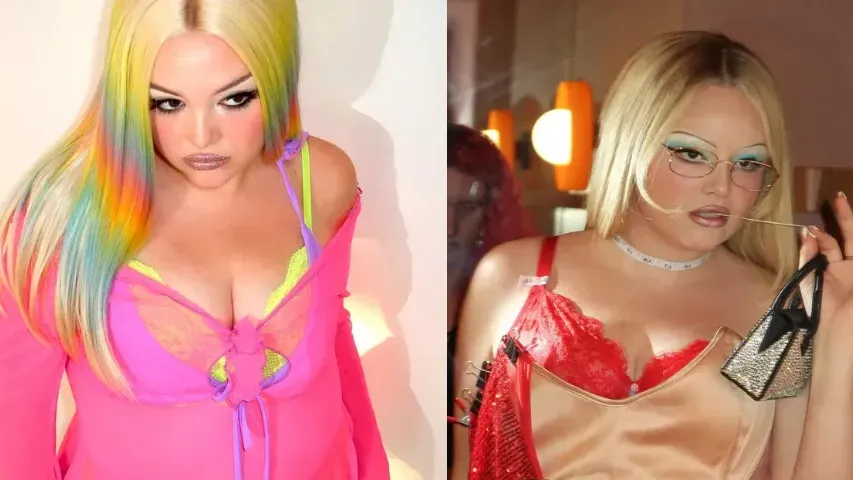
Photo Credit: Meg Stalter / Instagram
by Chris Tremblay Jun 10
4 MIN READ
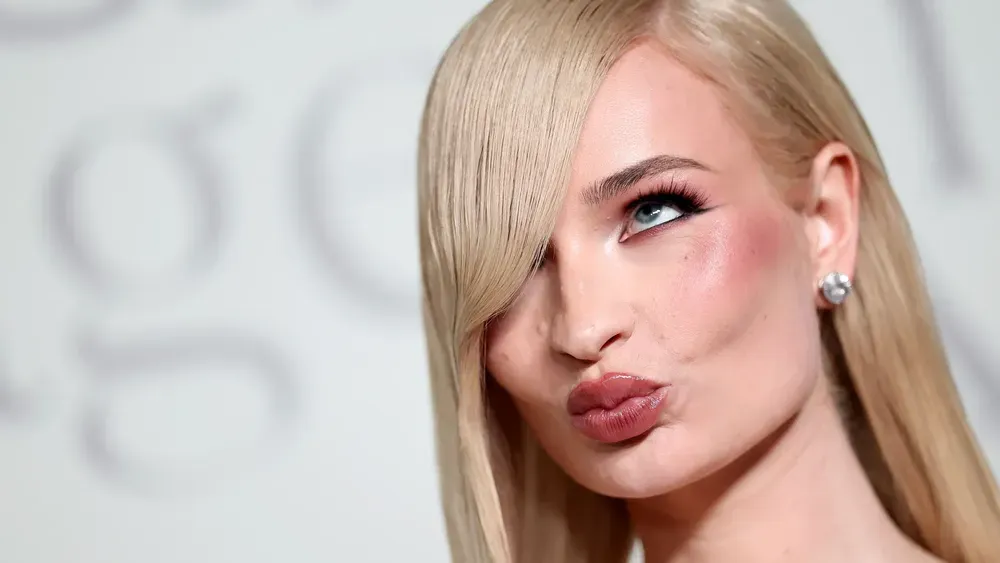
Meg Stalter, best known to many television viewers as Kayla Schaeffer on the HBO Max comedy Hacks, has officially expanded her creative portfolio with the release of her second single, “GAY.” Released in early June 2026, the track arrives in sync with global Pride Month festivities and is being framed by queer media outlets as an instant Pride anthem designed for crowded dance floors and celebratory playlists.
The single follows Stalter’s debut track “Prettiest Girl in America,” which kicked off her pop era in May as part of the lead-up to her forthcoming album Crave, due later in the summer. Together, the releases signal a sustained, musically driven project rather than a one-off bit, even as Stalter continues to lean into the offbeat humor that made her famous online and on television.
From its opening line, “GAY” establishes itself as a deliberately unsubtle celebration of queerness and Pride. The song begins with Stalter declaring “I love gay,” followed by the tongue‑in‑cheek promise, “I know you guys wanted a gay song / Honey, you’re gonna be gaying up and down when you hear this one,” setting a campy tone that embraces repetition and hyperbole as tools for joy.
The track centers primarily on queer women’s experiences, reflecting Stalter’s own identity as a bisexual person currently in a relationship with a woman. At the same time, the lyrics intentionally widen their focus, punctuated by the line “Protect the dolls, and the serve, and the they,” which offers direct affirmation to drag queens, transgender people, and nonbinary people, integrating contemporary queer slang alongside an inclusive roll call.
Stylistically, “GAY” draws on electronic dance‑pop with an emphasis on vocal fry, exaggerated intonation, and a “bimbo‑core” sensibility reminiscent of early 2010s club pop. Critics have noted that the song’s sound and writing place it in the lineage of irreverent queer party tracks that mix comedy and hedonism while still functioning as straightforward, high‑energy dance music.
Stalter first became widely known to LGBTQ+ audiences with her 2021 viral “Hi Gay” video, a satirical faux‑advertisement in which she played an over‑eager ally addressing gay consumers, a clip that went on to be widely shared during Pride season and helped cement her status as a queer comedy favorite. That early sketch already linked Stalter’s persona to Pride‑adjacent humor, and “GAY” extends that relationship into a polished pop format that intentionally blurs the line between comedic bit and earnest celebration.
In interviews around her debut single “Prettiest Girl in America,” Stalter and collaborators described her album Crave as a project she co‑writes, with production contributions from Matias Mora and Jesse Thomas, indicating that her move into music is structured and collaborative rather than purely improvisational. The new single “GAY” appears on streaming platforms under Stalter’s artist account, with credits listing her as the performer and Mora as mixing engineer and producer, underscoring its status as a formally released track rather than a novelty upload.
Stalter announced the song’s arrival directly to fans on Instagram, writing in all caps, “SHE’S GAY AND SHE’S COOL AND SHE’S AWESOME! Our Gay song called Gay is out NOW!” and linking to the single. That message framed the release as communal—“our Gay song”—and leaned into the same exaggerated enthusiasm that characterizes her on‑screen and online persona.
The release of “GAY” comes during a high‑profile period across Stalter’s career in television, theater, and music. The most recent season of Hacks—the Emmy‑winning series in which she plays chaotic assistant Kayla—has just completed its run, keeping her visibility high among mainstream audiences while she introduces herself to listeners as a recording artist.
In parallel, Stalter is preparing to take over the title role in the Broadway production of Oh, Mary! next month, expanding her presence into live theater at the same moment her music career ramps up. Her debut album Crave is slated for release later this summer, with “Prettiest Girl in America” and “GAY” serving as its first two singles and suggesting a record steeped in club‑ready production and character‑driven writing.
Coverage in LGBTQ+ and entertainment outlets has highlighted that “GAY” captures the “deranged, carefree fun” associated with Stalter’s comedy, even as her goals—whether a long‑term pivot to music or a multi‑medium performance project—remain open to interpretation. Vulture previously described the broader Stalter pop venture as walking a line where it is “hard to tell…whether this is an actual attempt to pivot, or an extended bit,” emphasizing that the ambiguity is part of the appeal for audiences who enjoy her unpredictable style.
While comprehensive streaming numbers and chart positions for “GAY” had not been widely reported in the days immediately following its June release, the song has already been featured in queer media as a recommended Pride Month track and framed as a likely staple for club DJs during June events. Australian LGBTQ+ outlet Star Observer similarly referred to it as an “iconic Pride Month club track,” underscoring expectations that the single will resonate particularly within queer nightlife spaces.
Commentary from outlets covering the single places emphasis on its affirming and inclusive language, noting how Stalter uses humor not to mock queer communities but to amplify queer joy, solidarity, and a sense of collective in‑jokes. The instruction embedded in the lyrics—“Make sure this song never ends ”—has been read as a tongue‑in‑cheek plea for DJs to keep it in rotation throughout Pride season and beyond.
As an out bisexual performer whose fan base includes many LGBTQ+ people, Stalter’s choice to title the song simply “GAY” and fill it with direct references to drag queens, transgender people, nonbinary people, and queer women fits into a broader trend of artists creating anthems that speak explicitly to queer audiences. For listeners seeking Pride music that foregrounds camp, humor, and inclusivity, “GAY” offers a deliberately exaggerated yet affirming soundtrack to celebration.
Lyrics that revel in queer joy
From its opening line, “GAY” establishes itself as a deliberately unsubtle celebration of queerness and Pride. The song begins with Stalter declaring “I love gay,” followed by the tongue‑in‑cheek promise, “I know you guys wanted a gay song / Honey, you’re gonna be gaying up and down when you hear this one,” setting a campy tone that embraces repetition and hyperbole as tools for joy.
The track centers primarily on queer women’s experiences, reflecting Stalter’s own identity as a bisexual person currently in a relationship with a woman. At the same time, the lyrics intentionally widen their focus, punctuated by the line “Protect the dolls, and the serve, and the they,” which offers direct affirmation to drag queens, transgender people, and nonbinary people, integrating contemporary queer slang alongside an inclusive roll call.
Stylistically, “GAY” draws on electronic dance‑pop with an emphasis on vocal fry, exaggerated intonation, and a “bimbo‑core” sensibility reminiscent of early 2010s club pop. Critics have noted that the song’s sound and writing place it in the lineage of irreverent queer party tracks that mix comedy and hedonism while still functioning as straightforward, high‑energy dance music.
From viral “Hi Gay” to full pop era
Stalter first became widely known to LGBTQ+ audiences with her 2021 viral “Hi Gay” video, a satirical faux‑advertisement in which she played an over‑eager ally addressing gay consumers, a clip that went on to be widely shared during Pride season and helped cement her status as a queer comedy favorite. That early sketch already linked Stalter’s persona to Pride‑adjacent humor, and “GAY” extends that relationship into a polished pop format that intentionally blurs the line between comedic bit and earnest celebration.
In interviews around her debut single “Prettiest Girl in America,” Stalter and collaborators described her album Crave as a project she co‑writes, with production contributions from Matias Mora and Jesse Thomas, indicating that her move into music is structured and collaborative rather than purely improvisational. The new single “GAY” appears on streaming platforms under Stalter’s artist account, with credits listing her as the performer and Mora as mixing engineer and producer, underscoring its status as a formally released track rather than a novelty upload.
Stalter announced the song’s arrival directly to fans on Instagram, writing in all caps, “SHE’S GAY AND SHE’S COOL AND SHE’S AWESOME! Our Gay song called Gay is out NOW!” and linking to the single. That message framed the release as communal—“our Gay song”—and leaned into the same exaggerated enthusiasm that characterizes her on‑screen and online persona.
A busy year across TV, Broadway, and music
The release of “GAY” comes during a high‑profile period across Stalter’s career in television, theater, and music. The most recent season of Hacks—the Emmy‑winning series in which she plays chaotic assistant Kayla—has just completed its run, keeping her visibility high among mainstream audiences while she introduces herself to listeners as a recording artist.
In parallel, Stalter is preparing to take over the title role in the Broadway production of Oh, Mary! next month, expanding her presence into live theater at the same moment her music career ramps up. Her debut album Crave is slated for release later this summer, with “Prettiest Girl in America” and “GAY” serving as its first two singles and suggesting a record steeped in club‑ready production and character‑driven writing.
Coverage in LGBTQ+ and entertainment outlets has highlighted that “GAY” captures the “deranged, carefree fun” associated with Stalter’s comedy, even as her goals—whether a long‑term pivot to music or a multi‑medium performance project—remain open to interpretation. Vulture previously described the broader Stalter pop venture as walking a line where it is “hard to tell…whether this is an actual attempt to pivot, or an extended bit,” emphasizing that the ambiguity is part of the appeal for audiences who enjoy her unpredictable style.
Pride playlists and community reception
While comprehensive streaming numbers and chart positions for “GAY” had not been widely reported in the days immediately following its June release, the song has already been featured in queer media as a recommended Pride Month track and framed as a likely staple for club DJs during June events. Australian LGBTQ+ outlet Star Observer similarly referred to it as an “iconic Pride Month club track,” underscoring expectations that the single will resonate particularly within queer nightlife spaces.
Commentary from outlets covering the single places emphasis on its affirming and inclusive language, noting how Stalter uses humor not to mock queer communities but to amplify queer joy, solidarity, and a sense of collective in‑jokes. The instruction embedded in the lyrics—“Make sure this song never ends ”—has been read as a tongue‑in‑cheek plea for DJs to keep it in rotation throughout Pride season and beyond.
As an out bisexual performer whose fan base includes many LGBTQ+ people, Stalter’s choice to title the song simply “GAY” and fill it with direct references to drag queens, transgender people, nonbinary people, and queer women fits into a broader trend of artists creating anthems that speak explicitly to queer audiences. For listeners seeking Pride music that foregrounds camp, humor, and inclusivity, “GAY” offers a deliberately exaggerated yet affirming soundtrack to celebration.
Copyright EDGE Media Network. All rights reserved. This material may not be published, broadcast, rewritten, or redistributed.