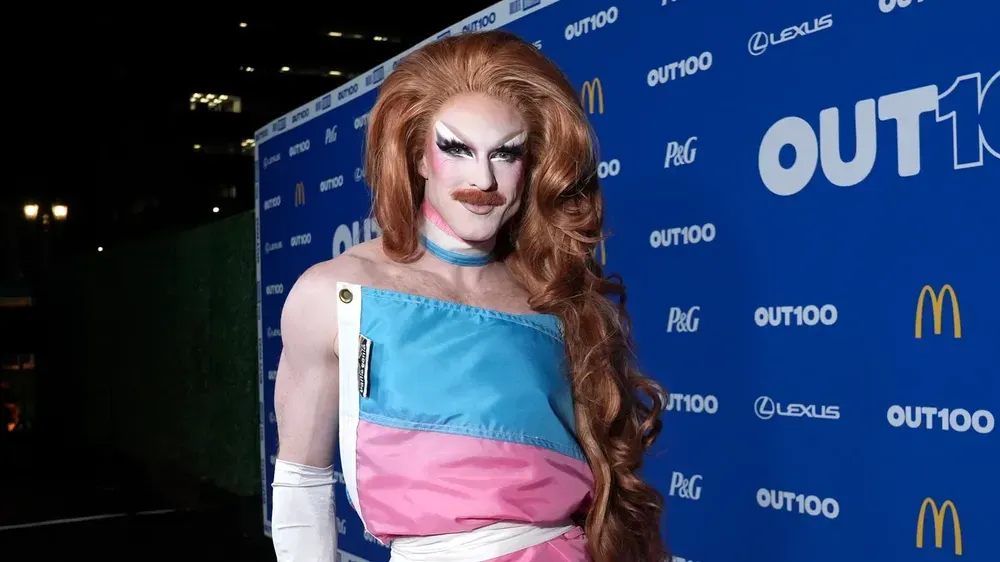
Kim Petras Reflects on Early Media Exposure of Her Transition: “I Kind of Regret” Talking as a Child

BEL AIR, CALIFORNIA - OCTOBER 23: Kim Petras attends the InStyle Imagemaker Awards 2025 at a Private Residence on October 23, 2025 in Bel Air, California. Photo Credit: Monica Schipper
In a recent interview, pop singer Kim Petras said she “kind of regret” talking so openly about her gender transition in German media when she was a child, explaining that the early spotlight blurred boundaries around her privacy even as she felt unashamed at the time. Petras, who discussed her transition on German television at around age 12–13, reflected that the experience left her navigating public fascination with her body and identity while still trying to grow up.
Background and new remarks
The comments came in an interview with music magazine The FADER about Petras’s upcoming independent album Detour, which follows her split from major label Republic Records and marks a deliberate shift toward more personal songwriting. In that conversation, Petras described Detour as a project where she feels “in control again” artistically and emotionally, after a period of frustration with label delays and leaked music.
Discussing the song “Brutalist,” she said it may be the first time she has spoken so directly in her music about her trans identity and about traveling across Germany with her father to access hormone therapy as a young teenager. She linked those memories to the broader story of how, from her early teens onward, she became a familiar public figure in German media as one of the most visible transgender young people in the country.
A childhood in the spotlight
Petras first drew widespread attention in Germany when, at around 13, she appeared on the television program Stern TV to talk about her medical gender transition and her efforts to access gender-affirming surgery earlier than the usual legal age of 18. She went on to feature in documentaries and talk shows discussing her journey, which led some outlets to refer to her as the “world’s youngest transsexual,” language she and many advocates now regard as outdated and stigmatizing.
In the new interview, Petras said that when she first spoke to the media she was “12 talking about it,” adding: “I kind of regret because privacy was really blurred,” though she emphasized that at the time she felt “really unashamed” and saw her openness as simply stating facts about her life. She has previously described how that media attention could feel dehumanizing, telling LGBTQ+ outlet PinkNews in 2020 that as a teenager she was “minimised to genitals” in coverage and that the experience was “disgusting.”
The singer has also spoken about the intense bullying she endured growing up, saying in past interviews that she was suicidal as a child and that being believed and supported by her parents was crucial to her survival. In a 2022 video conversation, she recalled becoming a “joke” on German TV after early documentary appearances and said that the experience made her retreat into her room and focus on music as an escape.
Regret, pride, and blurred boundaries
Petras’s choice of the word “regret” in her latest remarks has drawn attention because she has often expressed pride in her transition and in advocating for access to care, even while criticizing how media framed her story. In the new coverage, she stresses that she still believes she made “the right choices” about her transition and remains proud of them “to this day,” underscoring that her misgivings are about exposure and privacy rather than about being transgender or accessing gender-affirming care.
PinkNews reports that Petras describes a tension between her desire to help other transgender people by sharing her story and the way media attention turned her into a symbol or target at a very young age. She has said in earlier interviews that as a teenager she participated in multiple documentaries because she “wanted to help people” and believed she had a responsibility to be a visible example for others without supportive families.
At the same time, Petras has described how that visibility could feel like a loss of control, noting that headlines often reduced her to her transition and that some doctors and commentators scrutinized her body rather than her wellbeing. In the FADER interview, she connects those early experiences to a broader worry about how much of herself to share now, saying she still wrestles with how to talk about being transgender in interviews without having it overshadow her work or alienate parts of the transgender community.
“A weird climate… especially about trans kids”
Petras’s reflections are also explicitly tied to current debates about transgender youth, particularly in the United States, where she now lives and works. PinkNews notes that she told The FADER that “now that in America, there’s so much shame around sex” and that sexual education is treated as taboo, which she contrasted with her childhood straightforwardness about her transition.
She described the current atmosphere as a “weird climate right now especially about trans kids in particular,” adding that “they’re the enemy right now,” a phrase she used to capture how transgender children and adolescents have become focal points in political and media conflicts. While the interview does not delve into specific legislation, multiple U.S. states in recent years have proposed or enacted restrictions on access to gender-affirming care for minors, a backdrop that informs the resonance of her comments.
By revisiting her own early experiences in the public eye, Petras pointed to questions about how much pressure is placed on transgender children to explain themselves and to serve as spokespersons, particularly when political rhetoric frames them as a problem to be solved rather than as young people entitled to privacy and care. Her comments highlight that, for some transgender adults, looking back on childhood media exposure can involve complicated feelings—gratitude for the support that made transition possible, pride in surviving and thriving, and discomfort about how much of their story became public property before they were fully able to consent.
From early advocate to Grammy winner
Beyond the current discussion, Petras has become one of the most prominent transgender pop artists in the world, achieving mainstream recognition with the 2022 single “Unholy,” a collaboration with Sam Smith that later won a Grammy for Best Pop Duo/Group Performance. In her Grammy acceptance speech, she thanked her mother for believing her when, as a child, she told her family she was a girl, emphasizing that this support helped keep her alive.
Throughout her career, Petras has alternated between foregrounding and downplaying her trans identity in her public persona, noting in a 2020 interview that she initially tried not to talk about it in order to avoid having her artistry reduced to her gender. She has said she later re-evaluated that approach after hearing from LGBTQ+ fans who felt let down by the lack of explicit acknowledgment, describing the balance between visibility and privacy as “a very hard” one.
In music interviews over the past few years, Petras has explained that she wants her songs to offer escape and joy, especially for young LGBTQ+ listeners who may be dealing with bullying or family rejection, mirroring the way pop music helped her when she felt isolated at school. The decision to address her trans identity more directly on *Detour* appears to be part of this evolving relationship with her own story, as she experiments with ways to be honest about her past without re-opening the harms of earlier media scrutiny.
What her comments mean for debates on youth visibility
Petras’s remarks do not directly prescribe policy or speak for all transgender people, but they highlight several themes that recur in discussions about young people’s rights and representation. First, her distinction between regretting blurred privacy and affirming the correctness of her transition underscores that regret about exposure is different from regret about being transgender or accessing care.
Second, her memories of being turned into a symbol or spectacle as a teen resonate with concerns raised by advocates who caution that media and political narratives can instrumentalize transgender children, either to advance restrictive agendas or to seek inspirational stories, without fully centering their safety and autonomy. Third, her characterization of the U.S. climate as one where trans kids are treated as “the enemy” reflects worries among LGBTQ+ organizations about the impact of hostile rhetoric on young people’s mental health and willingness to seek support.
As discussion of her FADER interview circulates, Petras’s story offers a high-profile example of how a transgender child’s early decision—or opportunity—to speak publicly can shape the rest of their life, in both empowering and painful ways. Her reflections invite ongoing questions for families, journalists, and policymakers about how to ensure that transgender children who choose visibility can do so with informed consent, robust support, and the option to reclaim privacy as they grow up.
Copyright EDGE Media Network. All rights reserved. This material may not be published, broadcast, rewritten, or redistributed.