Adrianne Curry Calls Out Tyra Banks’ Netflix Lawsuit Over ‘America’s Next Top Model’ Docuseries Edit
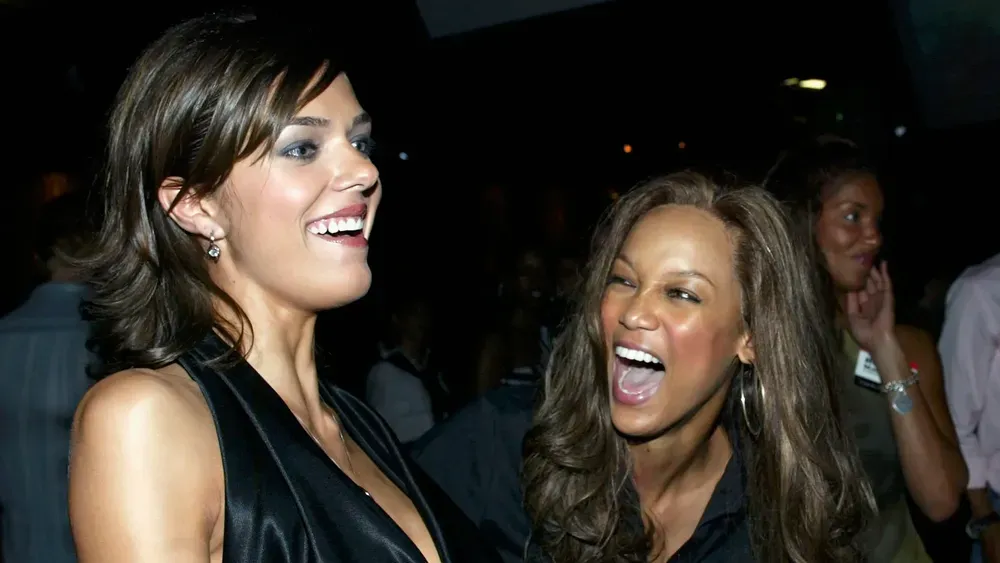
HOLLYWOOD - JULY 22: (L to R) Supermodels Adrianne Curry and Tyra Banks attend the UPN 2003 Summer Press Tour Party at Club One Seven on July 22, 2003 in Hollywood, California. Photo Credit: Frederick M. Brown
Tyra Banks has filed a lawsuit against Netflix and other production partners over her portrayal in the recent docuseries Reality Check: Inside America’s Next Top Model, alleging that selective editing created a misleading narrative about her conduct on the long‑running competition show. The three‑part documentary, which revisits the show’s treatment of contestants and the broader culture of early‑2000s reality TV, has already prompted renewed scrutiny of power dynamics, racialized beauty standards, and the emotional toll on participants, including LGBTQ+ contestants whose stories of pressure and misrepresentation have circulated widely online.
The suit names Netflix alongside docuseries co‑directors and related production entities, and Banks is said to be seeking a jury trial and unspecified punitive damages, though the exact monetary amount has not been made public. As of mid‑June, Netflix and the producers had not issued detailed public responses to the legal filing, leaving much of the public narrative to be shaped by former contestants and online reaction.
Adrianne Curry’s Sharp Response: ‘Welcome to the Party’
Adrianne Curry, who won Cycle 1 of America’s Next Top Model in 2003, has emerged as one of the most prominent voices reacting to Banks’ lawsuit, using social media videos to question the former host’s stance on editing. In an Instagram video, Curry said she had “read that Tyra Banks is suing Netflix because she didn’t like being edited,” before breaking into laughter and adding, “Bitch, for real, girl?” and the line “Welcome to the party, pal,” a reference to Bruce Willis’ character in Die Hard.
Curry’s remarks explicitly link Banks’ frustration over being “edited” to the long‑standing grievances of contestants who say their own words and actions were reshaped by producers for dramatic effect. She has previously explained that she declined to participate in the Netflix docuseries at all because she feared her comments would be cut and rearranged into a narrative she could not control, describing a lack of trust in reality‑TV editing practices after her experience on the show and other programs.
In January, Curry said on X that she found it “absurd” to analyze the series “over 20 years later with a woke lens,” even as she acknowledged experiencing hunger, financial instability, and intense pressure during production, underscoring the complicated relationship many alumni have with the franchise. Her current reaction to the lawsuit builds on that history: Curry positions Banks’ complaint as a case of a powerful producer encountering the same editing tactics that contestants—some of them queer, gender‑nonconforming, or otherwise marginalized—say shaped how they were seen by millions of viewers.
A History of Skepticism Toward the Docuseries
Curry’s latest comments come after months of mixed messaging from her about the Netflix project, which she has alternately criticized and used as a springboard to reflect on her time on ANTM. In late January, she confirmed she had “no intention” of joining the docuseries, titled Reality Check: Inside America’s Next Top Model, saying she worried that her remarks would be molded into a pre‑set narrative and that she preferred to avoid the intense public judgment that often follows outspoken reality‑TV alumni.
At the same time, she has repeatedly described the conditions of filming as harsh, saying in one Spanish‑language interview that contestants “were starving every day” and speculating that the new documentary might serve as “damage control and a launch platform” for Banks and the franchise. She has also recounted feeling misled about what winning the series would mean for her modeling career, telling one outlet that she had been promised mentoring from supermodels like Gisele Bündchen and Banks and a major career path that never materialized after cameras stopped rolling.
Curry’s commentary extends to other figures from the show, including judges and creative staff who, she argues, were equally involved in decisions now being framed as solely Banks’ responsibility. In various posts, she has criticized what she calls a “festival of cover‑ups” around the franchise, while still saying she forgives those involved and remains grateful for the opportunities the show provided—an ambivalence that reflects wider tensions for many reality‑TV alumni who are also navigating ongoing careers, families, and, for some, queer and trans community ties shaped by that early visibility.
Other Alumni Say Banks Is Getting ‘A Taste of Her Own Medicine’
Curry is not alone in her reaction to Banks’ lawsuit. Angelea Preston, a former contestant whose win was controversially rescinded years ago after producers discovered she had previously done escort work, told Entertainment Weekly that if Banks truly believes the documentary created a “false narrative” through editing, then “now she knows how we feel.” Preston described the situation as “karma,” arguing that many contestants felt misrepresented by the original series’ editing choices, including how their anger, vulnerability, or queerness were framed for maximum drama.
Preston has a long history of challenging the franchise; she previously attempted to sue Banks and the show’s producers for damages after losing her title, alleging that the handling of her past work and the narrative constructed around it harmed her career and personal life. In her latest comments, she rhetorically asked if Banks wants Netflix to release the full footage of the docuseries interview and pressed the host about whether any potential legal win could translate into compensation for former contestants who say they were harmed.
The voices of Curry, Preston, and others are resonating with audiences who have long questioned the ethics of reality television, especially formats that prominently feature young women, queer contestants, and people of color navigating high‑stakes competitions under constant surveillance. The docuseries includes allegations of racism, fat‑shaming, and other forms of discrimination, and it has prompted fresh discussions about the responsibility of producers, networks, and streamers to safeguard participants’ mental health and avoid exploitative portrayals.
Curry’s Complex Defense of Banks and the Larger Conversation on Accountability
Even as she mocks Banks’ lawsuit, Curry has also, at times, defended the former host against what she views as disproportionate “cancel culture” backlash in the wake of Reality Check. Earlier this year, she published a lengthy statement arguing that “being a d***head isn’t illegal” and saying she does not believe Banks deserves to be “canceled,” stressing that she has chosen to forgive Banks and other producers for how they treated her and for effectively erasing her from the show’s official legacy.
Curry has also said she respects Banks for not issuing what she sees as a performative apology in response to public pressure, telling followers in one video that Banks “isn’t sorry” and “owes you nothing,” and arguing that forcing people to publicly express remorse they do not feel amounts to a “struggle session.” That framing has drawn criticism and support; some viewers interpret it as minimizing the harm alleged by contestants, while others see it as a call to distinguish between genuinely abusive behavior and the often‑harsh realities of the fashion and television industries two decades ago.
For LGBTQ+ fans and former contestants, the conversation around Banks’ lawsuit and Curry’s reaction is layered onto memories of how queer and gender‑nonconforming people were depicted on early‑2000s reality TV—often as stereotypes, “villains,” or emotional cautionary tales. While recent reality series have made strides in centering contestants’ self‑described identities and boundaries, the docuseries and subsequent lawsuit underscore how editing power and contractual control still largely rest with producers and platforms, not with the people whose lives and identities are being televised.
As Banks pursues her claims in court and Netflix weighs its response, Curry’s pointed “Welcome to the party, pal” encapsulates a broader sentiment among alumni: that reality‑TV participants—whether aspiring models, queer creatives, or young people seeking visibility—have long lived with the consequences of editing choices they did not control. The lawsuit ensures that, for now, the questions raised by Reality Check—about accountability, consent, and who gets to shape the final story—will continue to play out not just on screen, but in court and across social media.
Copyright EDGE Media Network. All rights reserved. This material may not be published, broadcast, rewritten, or redistributed.