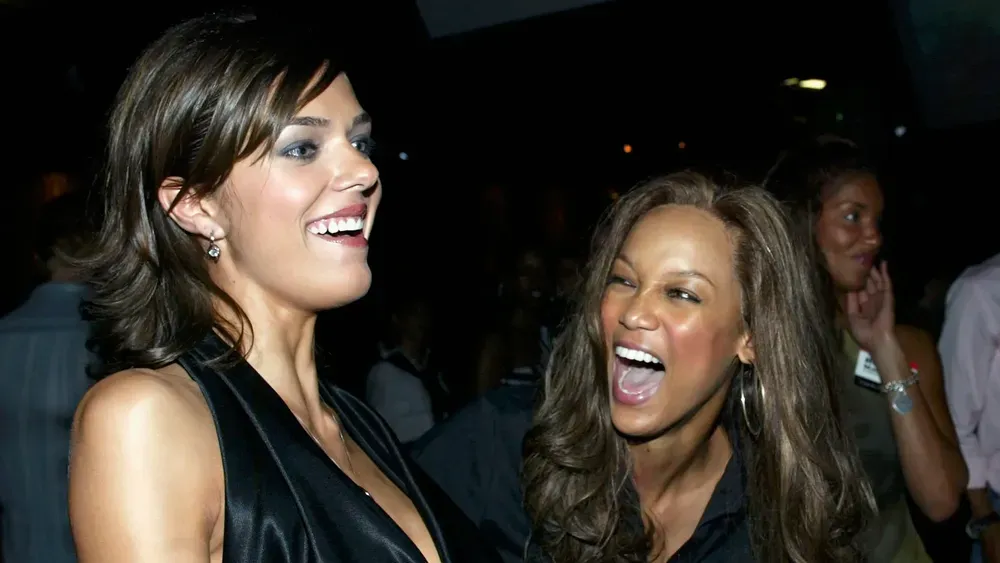
Sister Act Star Wendy Makkena Says She Secretly Played Mary Robert as Queer and Attracted to Whoopi Goldberg’s Deloris
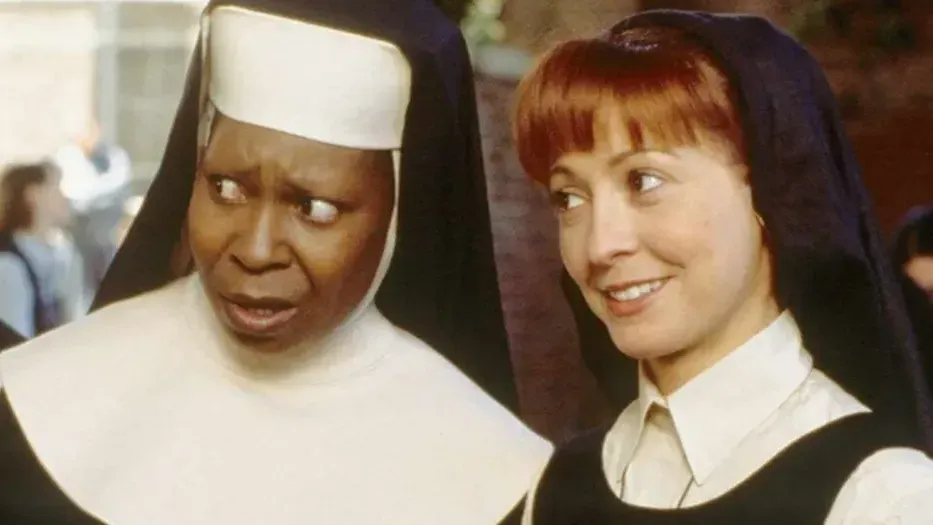
Photo Credit: Disney
by Chris Tremblay Jun 17
4 MIN READ
Actor Wendy Makkena has shared that while filming Sister Act she chose to play Sister Mary Robert as a character with “an attraction” to Whoopi Goldberg’s Deloris, a decision she kept to herself on set at the time. In a new interview on the You Might Know Her From podcast, Makkena explained that she used this internal queer motivation to make sense of Mary Robert’s deep fascination with Deloris, who arrives at the convent under a false identity.
Makkena said she asked herself how to justify Mary Robert being “obsessed” with Deloris and decided that an unspoken, perhaps subconscious attraction would give the relationship more emotional texture. She emphasized that no one involved in the production, including Goldberg, was aware she was playing the role this way, describing it as “an internal little secret” that guided her performance without altering the script or overt blocking.
In Sister Act, Makkena’s Mary Robert begins as a very quiet, sheltered novice nun who struggles to project her voice and assert herself within the convent’s rigid hierarchy. Over the course of the film, she is drawn toward Deloris, a flamboyant lounge singer hiding in the convent as Sister Mary Clarence as part of a witness protection arrangement, whose boldness and musicality help Mary Robert step into her own power.
Makkena told the podcast that she imagined Mary Robert being unconsciously and subconsciously drawn to Deloris in a way the innocent young nun would not fully understand, particularly given her limited experience of the world and the cloistered environment. She suggested that this quiet attraction, never explicitly acknowledged in the film, added stakes to Mary Robert’s journey and helped explain why Deloris becomes such a catalytic figure in her life, inspiring her to sing solo and challenge expectations.
Makkena’s comments dovetail with long-standing queer readings of Sister Act that have circulated among LGBTQ+ viewers and writers, who have often noted the film’s resonances with stories of self-discovery, chosen family, and life inside restrictive institutions. A 2020 essay on LGBTQ+ site Hornet argued that the film’s narrative—about Deloris hiding her true identity in a religious setting, clashing with authority, and ultimately being celebrated for her authenticity—has been particularly meaningful to queer audiences who grew up in conservative or religious environments.
According to Makkena, LGBTQ+ media noticed the chemistry between Mary Robert and Deloris early on, even if mainstream coverage did not center it. She recalled being told after the movie’s release that Out magazine had commented on the “sexual tension” between the two characters in its review, and remembered feeling surprised and pleased that critics had picked up on what she had intended as a subtle subtext.
Released in 1992, Sister Act became one of the most commercially successful comedies of the early 1990s, pairing Goldberg’s lead performance with an ensemble that included Maggie Smith, Kathy Najimy, Mary Wickes, and Harvey Keitel. The film follows Deloris Van Cartier, a Reno lounge singer who witnesses a mob killing and is placed in protective custody in a San Francisco convent, where she reinvents the convent choir with Motown-infused arrangements that draw crowds and media attention.
For many LGBTQ+ viewers, the story of a performer hiding who she is to survive, only to find freedom when she embraces her showy, camp sensibilities, has echoed common themes in queer life narratives. The film’s emphasis on chosen community, mutual support among women in religious life, and the joyful transformation of a rigid institution through music has helped cement its status as a queer favorite, even without explicit LGBTQ+ characters or plot lines.
In her recent remarks, Makkena said the attraction she imagined between Mary Robert and Deloris functioned as a kind of acting “secret,” something performers often use to ground their characters’ emotional stakes even when those motivations are never spelled out in dialogue. She indicated that this internal backstory helped her calibrate Mary Robert’s looks, reactions, and growing confidence around Deloris, allowing her to play the dynamic as more than simple hero worship or platonic admiration.
The choice also highlights how, in an era with less direct LGBTQ+ representation in mainstream family films, some actors quietly built queer subtext into their performances as a way of honoring experiences that could not be plainly written into scripts at the time. For many viewers, learning that Makkena intentionally played Mary Robert with an underlying attraction to Deloris may affirm interpretations they have held for decades, providing a rare instance where an actor explicitly confirms a queer reading that had previously lived mostly in fan conversations and specialized media.
The original film’s popularity led to a 1993 sequel, Sister Act 2: Back in the Habit, and eventually to a stage musical adaptation, expanding the story’s reach across generations and geographies. In recent years, Disney has been developing a third Sister Act movie, with Goldberg attached to return as Deloris, signaling enduring interest in the franchise and its themes of reinvention, community, and joyful defiance.
Makkena’s new comments arrive at a time when audiences and critics increasingly revisit older works through a contemporary lens, reassessing how LGBTQ+ subtext, camp performance styles, and coded narratives have shaped the canon of popular film. For LGBTQ+ people who grew up with Sister Act, her acknowledgment that Mary Robert’s devotion to Deloris carried an element of attraction may deepen the film’s existing resonance, illustrating how queer meaning has often been present on screen even when it could not yet be plainly named.
How queerness shaped Mary Robert
In Sister Act, Makkena’s Mary Robert begins as a very quiet, sheltered novice nun who struggles to project her voice and assert herself within the convent’s rigid hierarchy. Over the course of the film, she is drawn toward Deloris, a flamboyant lounge singer hiding in the convent as Sister Mary Clarence as part of a witness protection arrangement, whose boldness and musicality help Mary Robert step into her own power.
Makkena told the podcast that she imagined Mary Robert being unconsciously and subconsciously drawn to Deloris in a way the innocent young nun would not fully understand, particularly given her limited experience of the world and the cloistered environment. She suggested that this quiet attraction, never explicitly acknowledged in the film, added stakes to Mary Robert’s journey and helped explain why Deloris becomes such a catalytic figure in her life, inspiring her to sing solo and challenge expectations.
Queer readings and LGBTQ+ audiences
Makkena’s comments dovetail with long-standing queer readings of Sister Act that have circulated among LGBTQ+ viewers and writers, who have often noted the film’s resonances with stories of self-discovery, chosen family, and life inside restrictive institutions. A 2020 essay on LGBTQ+ site Hornet argued that the film’s narrative—about Deloris hiding her true identity in a religious setting, clashing with authority, and ultimately being celebrated for her authenticity—has been particularly meaningful to queer audiences who grew up in conservative or religious environments.
According to Makkena, LGBTQ+ media noticed the chemistry between Mary Robert and Deloris early on, even if mainstream coverage did not center it. She recalled being told after the movie’s release that Out magazine had commented on the “sexual tension” between the two characters in its review, and remembered feeling surprised and pleased that critics had picked up on what she had intended as a subtle subtext.
A hit film with enduring LGBTQ+ resonance
Released in 1992, Sister Act became one of the most commercially successful comedies of the early 1990s, pairing Goldberg’s lead performance with an ensemble that included Maggie Smith, Kathy Najimy, Mary Wickes, and Harvey Keitel. The film follows Deloris Van Cartier, a Reno lounge singer who witnesses a mob killing and is placed in protective custody in a San Francisco convent, where she reinvents the convent choir with Motown-infused arrangements that draw crowds and media attention.
For many LGBTQ+ viewers, the story of a performer hiding who she is to survive, only to find freedom when she embraces her showy, camp sensibilities, has echoed common themes in queer life narratives. The film’s emphasis on chosen community, mutual support among women in religious life, and the joyful transformation of a rigid institution through music has helped cement its status as a queer favorite, even without explicit LGBTQ+ characters or plot lines.
Subtext, ‘secrets,’ and on‑screen representation
In her recent remarks, Makkena said the attraction she imagined between Mary Robert and Deloris functioned as a kind of acting “secret,” something performers often use to ground their characters’ emotional stakes even when those motivations are never spelled out in dialogue. She indicated that this internal backstory helped her calibrate Mary Robert’s looks, reactions, and growing confidence around Deloris, allowing her to play the dynamic as more than simple hero worship or platonic admiration.
The choice also highlights how, in an era with less direct LGBTQ+ representation in mainstream family films, some actors quietly built queer subtext into their performances as a way of honoring experiences that could not be plainly written into scripts at the time. For many viewers, learning that Makkena intentionally played Mary Robert with an underlying attraction to Deloris may affirm interpretations they have held for decades, providing a rare instance where an actor explicitly confirms a queer reading that had previously lived mostly in fan conversations and specialized media.
Legacy and a possible future for ‘Sister Act’
The original film’s popularity led to a 1993 sequel, Sister Act 2: Back in the Habit, and eventually to a stage musical adaptation, expanding the story’s reach across generations and geographies. In recent years, Disney has been developing a third Sister Act movie, with Goldberg attached to return as Deloris, signaling enduring interest in the franchise and its themes of reinvention, community, and joyful defiance.
Makkena’s new comments arrive at a time when audiences and critics increasingly revisit older works through a contemporary lens, reassessing how LGBTQ+ subtext, camp performance styles, and coded narratives have shaped the canon of popular film. For LGBTQ+ people who grew up with Sister Act, her acknowledgment that Mary Robert’s devotion to Deloris carried an element of attraction may deepen the film’s existing resonance, illustrating how queer meaning has often been present on screen even when it could not yet be plainly named.
Copyright EDGE Media Network. All rights reserved. This material may not be published, broadcast, rewritten, or redistributed.